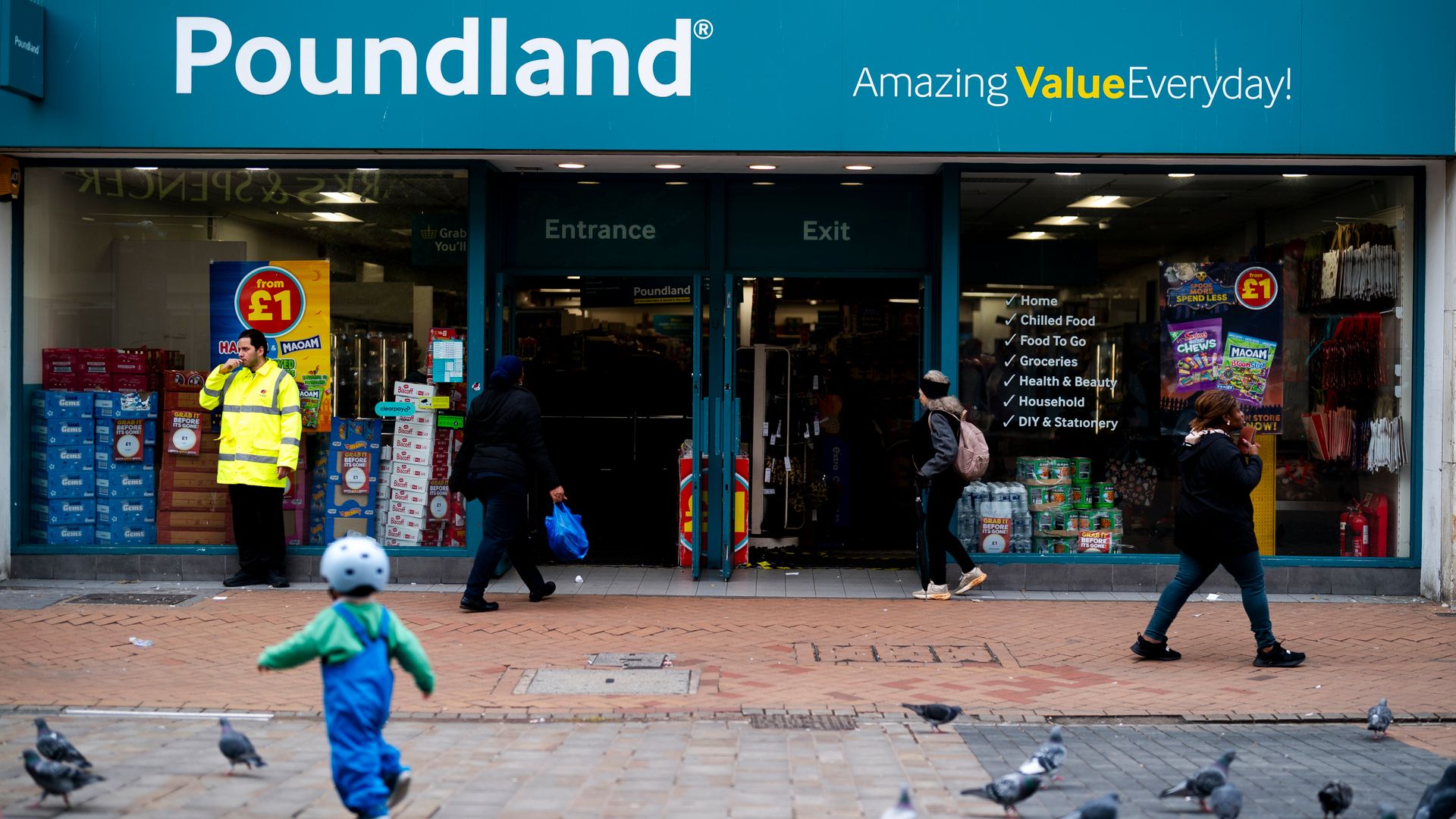
Walk down almost any British high street on a Tuesday morning, past the shuttered bank branches and the boarded-up department stores, and you will still find the green and yellow glow of a Poundland. Inside, the fluorescent lights hum over aisles stacked with multipack crisps, washing-up liquid, and birthday cards. To the millions of families counting every penny at the checkout, those shelves represent stability. They represent the quiet certainty that a pound—or a couple of pounds—still buys something tangible in an economy that feels increasingly rigged against ordinary households.
Behind those brightly lit aisles, however, a far darker drama has been unfolding in boardrooms and parliamentary committee rooms. Recently making waves lately: The Winter Fuel Payment Architecture and Household Liquidity Mechanics.
Just hours before executives were due to face a grueling interrogation by Members of Parliament over the collapse of the discount retailer and the loss of thousands of jobs, Poundland’s owner abruptly released ten million pounds into the business. On paper, it reads like a dry corporate filing—a last-minute liquidity injection designed to smooth over an awkward afternoon in Westminster. In reality, it is a story about corporate brinkmanship, the fragility of high-street retail, and what happens when the fate of thousands of working people hangs on a stopwatch.
The Anatomy of a Last-Minute Rescue
To understand why ten million pounds suddenly materialized on the eve of a parliamentary grilling, picture a familiar household scenario. Further information regarding the matter are covered by Harvard Business Review.
Imagine a landlord who has neglected a leaking roof for months while collecting rent. The tenants are cold, the ceiling is sagging, and local housing inspectors have finally scheduled an inspection for nine o'clock on Monday morning. At eight-thirty, the landlord shows up with a bucket of plaster and a fresh coat of paint. The fix is real, and it stops water from dripping onto the floor for a few days, yet nobody in the room mistakes the timing for generosity.
That is the dynamic playing out between Poundland, its ownership structure following its tumultuous restructuring and sale to Gordon Brothers, and the UK Parliament's Business and Trade Committee.
For months, the retailer had been bleeding cash. Rising employer National Insurance contributions, stubbornly high commercial rents, and fierce competition from supermarkets like Aldi and Lidl had squeezed margins until there was nothing left to cut. When Poundland entered restructuring proceedings, the human toll was immediate and brutal. Hundreds of stores faced closure. Thousands of shop-floor workers—people who had spent years unloading pallets at five in the morning and comforting stressed shoppers at the tills—were suddenly staring at redundancy notices.
Parliament noticed. And when Parliament notices, subpoenas and summonses follow.
Members of the Business and Trade Committee wanted answers. Why had a household name on the British high street been pushed to the edge? Where had the money gone during years of complex financial engineering under its previous parent, Pepco Group, and its subsequent handover to restructuring specialists? Most urgently, were workers being left to shoulder the losses while corporate owners walked away unscathed?
Hours before the committee gavel came down, the ten-million-pound transfer cleared.
Suddenly, the executives walking into the committee room had a talking point. They could point to fresh capital. They could argue they were actively backing the turnaround rather than asset-stripping a wounded giant. The timing was not a coincidence; it was choreography.
What Ten Million Pounds Actually Buys on the High Street
Ten million pounds sounds like an astronomical sum when you are standing in an aisle debating whether to buy the two-pack of batteries or the four-pack. To a family budgeting seventy pounds a week for groceries, ten million pounds is several lifetimes of security.
In the brutal mathematics of national retail, however, ten million pounds is barely enough to keep the lights on for a long weekend.
Consider the scale of a chain like Poundland. Even after aggressive store closures, a national discount retailer operates hundreds of sites across the United Kingdom, employs well over ten thousand people, and moves millions of units of stock every single day. The weekly wage bill alone runs into the millions. Add business rates, energy bills for vast retail spaces, haulage fuel for lorries criss-crossing the motorway network, and supplier invoices that must be paid on strict thirty-day terms, and that ten-million-pound lifeline evaporates faster than rain on summer tarmac.
I remember standing inside a discount store in the Midlands during the winter of 2023, watching a store manager named Sarah—let us call her Sarah to protect her privacy, though her story belongs to hundreds of managers across Britain—try to explain to her team why deliveries had slowed down. The shelves in the household aisle had gaps the size of refrigerators. Customers were wandering in, looking around in confusion, and walking back out empty-handed.
"When the stock stops coming, the trust breaks," she told me, leaning against a metal roll-cage in the stockroom while the hum of the loading bay door rattled the walls. "People come here because they know we'll have the basics. The second they think we're going under, they stop coming in. And once they stop coming in, you can't save the shop."
That is the invisible terror of retail restructuring. A shop does not die when the bailiffs change the locks. It dies months earlier, the moment suppliers lose nerve and demand cash upfront, leaving shelves half-empty and shoppers looking elsewhere.
The ten-million-pound release was designed to stop that spiral—at least temporarily. It signals to nervous suppliers of toiletries, tinned food, and cleaning products that invoices will be honored. It buys breathing room for payroll. Most importantly, it buys political insulation during a high-stakes public hearing.
The Illusion of the Discount Boom
There is a persistent myth in British economic commentary that discount retailers thrive during a cost-of-living crisis. On the surface, the logic seems airtight: when households feel poorer, they trade down from mid-market supermarkets to pound shops.
Reality is far messier.
During the inflation surge of the past few years, the very shoppers Poundland relied upon did not simply trade down—they stopped buying discretionary items altogether. A shopper who once popped in for toothpaste and walked out with a novelty mug, three bags of sweets, and a garden ornament began buying only the toothpaste. And toothpaste, sold at rock-bottom prices, carries almost zero profit margin.
Meanwhile, the cost of running a physical store exploded.
Think of a corner shop trying to sell penny sweets while the landlord doubles the rent and the council triples the bin collection fee. You cannot raise the price of a penny sweet to five pence without losing every child on the street, yet if you keep the price at a penny, every sale loses you money.
Poundland faced an acute version of this trap. Having already abandoned its famous single-price-point model years earlier—introducing multi-tier pricing at two, three, and five pounds—the brand lost the crystal-clear simplicity that had made it iconic. Shoppers no longer knew instantly what anything cost. At the exact same moment, German discounters Aldi and Lidl were expanding into town centers, offering fresh fruit, bakery items, and household staples under one roof at prices Poundland struggled to match.
By the time Pepco Group offloaded the struggling UK division to restructuring firm Gordon Brothers, the business was no longer a growth engine. It was a turnaround patient on life support.
Why Westminster Was Watching So Closely
When MPs summon retail executives to Westminster, the atmosphere in the committee room is thick with historical memory. British politicians are haunted by the ghosts of BHS, Debenhams, Wilko, and Woolworths.
Each of those collapses followed a painfully familiar script. First came years of complex ownership changes, debt loading, or strategic drift. Then came warnings from trade unions that went unheeded. Finally, a sudden administration announcement left thousands of workers with statutory redundancy pay, shattered high streets with massive empty storefronts, and saddled the taxpayer with tens of millions of pounds in unpaid pension and redundancy liabilities.
The collapse of Wilko in 2023 left a particularly raw scar across British towns. Over twelve thousand workers lost their jobs, and four hundred high street stores went dark almost overnight. In former industrial towns and coastal communities, Wilko had been the anchor tenant—the store that brought footfall to the butcher, the baker, and the local café next door. When Wilko vanished, the surrounding streets withered.
MPs looking at Poundland saw the exact same dominoes lining up.
If Poundland were to suffer a chaotic collapse, the damage would stretch far beyond its own payroll. Local councils would lose millions in business rates. Landlords—including pension funds holding commercial property portfolios—would be stuck with cavernous empty units that nobody else wants to lease. And for low-income families already stretched to breaking point, the disappearance of affordable everyday essentials would act like a stealth tax on survival.
This is why the grilling in Parliament mattered so much. MPs were not merely asking about balance sheets; they were testing whether the new owners intended to rebuild a viable retailer or simply manage a slow, profitable wind-down while extracting whatever value remained in the leases and inventory.
Releasing ten million pounds hours before the hearing was a tactical masterstroke of optics. It forced MPs to pivot from asking "Why are you starving this company of cash?" to "Is ten million pounds anywhere near enough?"
The Gap Between Boardroom Strategy and the Shop Floor
Watch any parliamentary select committee hearing involving distressed retailers, and you will notice a jarring disconnect in language.
Executives speak in the sanitized vocabulary of corporate finance: footprint optimization, working capital facilities, rent reductions, turnaround runways, and portfolio rationalization. Every phrase sounds bloodless, clinical, and rational.
Down on the shop floor, those exact same words translate into sleepless nights.
Footprint optimization means a store in a Welsh valley or a northern market town closes its doors forever, leaving a fifty-eight-year-old cashier wondering who will hire her at her age. Rent reductions mean tense standoffs with commercial landlords that leave staff wondering week to week whether the locks will be changed on Monday morning. Turnaround runway means doing the work of three people because departing colleagues are never replaced.
I find myself conflicted whenever I watch these corporate rescue dramas unfold. On one hand, capitalism requires mechanisms to restructure failing businesses; forcing owners to pour endless money into unprofitable stores simply delays the inevitable and can drag down the healthy parts of a company. Without tough decisions, every single job is lost rather than a fraction of them.
On the other hand, there is something deeply unsettling about the asymmetry of risk. Financial backers structure their investments through layers of holding companies, secured loans, and management fees that protect their downside even when a turnaround falters. Shop-floor workers have no holding company. Their entire livelihood is tied to Friday's payslip.
When ten million pounds arrives at the eleventh hour, workers are expected to feel grateful. And in the immediate moment, relief is real—bills get paid, deliveries arrive, and the shutter stays up for another month. Yet relief is not the same thing as security.
What Happens After the Cameras Leave Westminster
The danger with high-profile parliamentary interventions is that public attention moves on the moment the hearing ends. Cameras pack up, headlines shift to the next political crisis, and the hard, unglamorous work of retail survival returns to the shadows.
For Poundland, the ten-million-pound injection is merely the opening whistle of a brutal second half.
To survive in the modern British retail environment, the chain has to answer a fundamental existential question: what is Poundland for when everything no longer costs a pound?
If it tries to compete head-on with Aldi and Lidl on groceries, it loses on fresh food and scale. If it tries to compete with Amazon and Temu on general merchandise, it loses on convenience and price. Its only surviving superpower is immediacy and local presence—being the friendly, accessible store right on the corner where a parent can grab school socks, shower gel, and a pack of biscuits in five minutes without navigating a massive retail park.
Capturing that space requires investment—not just emergency cash to plug holes, but sustained capital for clean stores, reliable stock levels, fair wages, and technology that keeps shelves full. Ten million pounds clears the immediate hurdle before Parliament, yet turning around a national retailer requires hundreds of millions in operational commitment and years of patience.
The Quiet Stakes on Every Corner
Step back into that brightly lit Poundland aisle on a rainy Tuesday morning.
Near the front entrance, an elderly man counts out coins from a worn leather purse to pay for a loaf of bread, a tin of soup, and a packet of tea bags. Two aisles over, a young mother in a hospital uniform grabs baby wipes and washing powder on her way home from a night shift. At the checkout, a teenager in a green polo shirt scans each item with practiced speed, greeting regulars by name.
None of them watched the live stream from the parliamentary committee room. None of them read the regulatory filings detailing the ten-million-pound capital release or analyzed the debt covenants held by private restructuring firms.
They simply walked through the automatic doors, saw that the shelves were stocked, paid for what they needed, and walked back out into the drizzle—trusting that the green and yellow sign above the door will still be lit tomorrow morning.