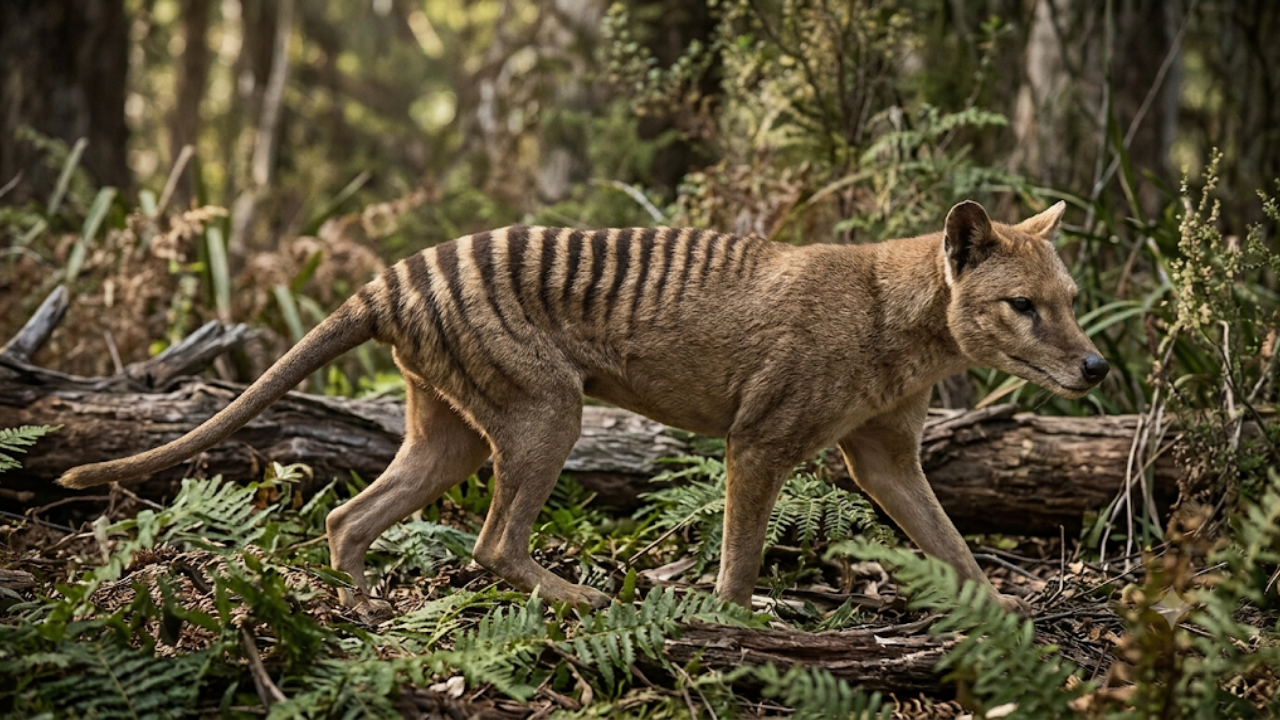
The conventional narrative surrounding the extinction of the thylacine (Thylacinus cynocephalus), or Tasmanian tiger, follows a comfortable, politically correct script. In this version of history, greedy, ignorant 19th-century sheep farmers panicked over fabricated losses, successfully lobbied a compliant government to institute a bounty, and ruthlessly wiped out a harmless marsupial apex predator based on a lie. It is a story of human malice, environmental innocence, and a tragic misunderstanding.
It is also a profound oversimplification that ignores basic ecological mechanics and historical data. Recently making headlines in related news: The Theater of Distraction and the Unheard Voices of Muzaffarabad.
For decades, popular science writers and modern researchers have fallen over themselves to prove that the thylacine was physically incapable of killing sheep. They point to jaw-stress models and cranial studies to argue that the animal lacked the bite force to bring down livestock. They claim the "sheep-killer" label was pure myth. This lazy consensus does a disservice to history and ecology. The eradication of the Tasmanian tiger was not a hysteria-driven accident; it was the inevitable result of an ecological collision between an specialized apex predator and an introduced, defenseless prey base. To understand why the thylacine vanished, we have to stop treating past agriculturalists like cartoon villains and start looking at how predators actually behave when their environment is disrupted.
The Bite Force Fallacy
The cornerstone of the modern "innocent thylacine" argument rests heavily on morphometric modeling. A widely cited 2011 study by Dr. Stephen Wroe and his team at the University of New South Wales utilized finite element analysis to simulate mechanical stresses on the thylacine skull. The findings showed that the thylacine had a relatively weak jaw compared to placental carnivores like wolves or spotted hyenas. The conclusion jumped on by the media was immediate: the thylacine could only hunt small prey, like wallabies and possums, and therefore could not have been a major threat to sheep. More details into this topic are covered by NBC News.
This is where the logic falls apart. A predator does not need the bone-crushing jaws of a spotted hyena to kill a domestic sheep.
Domestic sheep (Ovis aries) are not agile, wild bighorns. They are highly selective, slow-moving, selectively bred blocks of protein. They possess zero natural defense mechanisms against a large mammalian carnivore. A 15-to-30 kilogram thylacine did not need to crush a sheep's femur; it merely needed to sever the carotid artery or suffocate the animal via a throat bite—tactics utilized by numerous extant predators with specialized, narrow skulls.
Furthermore, skull mechanics do not account for behavioral flexibility. When Europeans introduced millions of sheep to the Tasmanian plains, they altered the biomass of the island. Basic optimal foraging theory dictates that a predator will choose the highest caloric reward for the lowest metabolic cost. Ambushing a fenced, defenseless lamb or a stressed ewe requires far less energy than chasing a wild, agile macropod through dense scrub.
To claim the thylacine never targeted sheep because its jaw was narrow is like claiming a cheetah cannot kill an impala because its skull is optimized for speed rather than raw crushing power. It ignores the reality of opportunistic predation.
The Van Diemen's Land Company Records Lack Context
Critics of the historical record frequently point to the archives of the Van Diemen's Land (VDL) Company, the massive agricultural enterprise established in northwestern Tasmania in the 1820s. Skeptics note that the company’s official ledgers attributed thousands of sheep deaths to "the hyena" (the colonial term for the thylacine), but contemporary analysts suspect these numbers were inflated by corrupt shepherds covering up their own negligence, theft, or losses to feral dogs.
Let’s dismantle this premise. Did shepherds steal sheep? Absolutely. Were feral dogs a massive problem? Unquestionably. But using shepherd corruption to completely dismiss thylacine predation is bad data analysis.
Historical accounts from the VDL Company detail specific patterns of wounding that do not align with canine attacks. Feral dogs hunt in packs, often tearing at the hindquarters of sheep, leaving messy, ragged wounds and scattered flocks. Thylacines, by contrast, were largely solitary or paired ambush hunters. Colonial accounts frequently describe sheep found dead with clean punctures to the neck and the vascular system targeted—classic signs of a solitary stalk-and-strike predator.
More importantly, the sheer volume of livestock introduced created an ecological sink. By 1830, Tasmania held over a million sheep. The native grasslands were overgrazed, driving down the populations of smaller native marsupials that the thylacine relied upon. The apex predator faced a stark binary choice: starve, or adapt to the new, abundant white-wooled target grazing in its territory.
The Real Drivers of Extinction
If the thylacine did kill sheep, does that justify the government bounty that ran from 1888 to 1909? No. But it shifts the blame from "irrational human hysteria" to a predictable, structural conflict over resources. The focus on the bounty system as the sole executioner of the species misses the broader, more lethal systemic forces at play.
The thylacine was already on an evolutionary tightrope. Genetic studies, including the sequencing of the thylacine genome by Feigin et al. (2018), revealed that the species had been suffering from a severe, long-term decline in genetic diversity for millennia before humans ever arrived with livestock. They were an island population with a dangerously restricted gene pool, making them exceptionally vulnerable to environmental shocks.
When Europeans arrived, they did three things that doomed the thylacine far faster than any bounty hunter’s rifle:
- Habitat Fragmentation: The conversion of fertile hunting grounds into manicured sheep runs disrupted the corridors the thylacine used to move between the coast and the dense interior forests.
- Prey Depletion: Intensive hunting of kangaroos and wallabies by settlers directly stripped the thylacine of its primary evolutionary food source.
- Disease Introduction: In the early 1900s, a sudden, sweeping disease resembling distemper decimated both the wild thylacine populations and those held in captivity.
The bounty system paid out 2,184 carcasses over more than two decades. While significant, that number alone is insufficient to wipe out a stable, widespread apex predator across a rugged, largely inaccessible island the size of West Virginia or Ireland. The bounty was the visible symptom of a deeper malady: the total collapse of the thylacine's ecological niche.
| Factor | Primary Impact on Thylacine Population | Historical Misconception |
|---|---|---|
| Habitat Loss | Isolated populations, preventing genetic exchange. | Secondary to hunting. |
| Bounty System | Direct culling of remaining breeding adults. | The sole cause of extinction. |
| Epi-faunal Disease | Sudden, catastrophic population crash in the 1900s. | Largely ignored or downplayed. |
| Prey Substitution | Forced reliance on livestock due to native prey depletion. | Thylacines ignored sheep entirely. |
Dismantling the "Harmless Marsupial" Myth
The modern urge to rebrand the thylacine as a completely benign, harmless creature is driven by a desire for historical self-flagellation rather than objective biology. We see this pattern across modern conservation: when an animal goes extinct, we attempt to absolve it of any predatory friction with human enterprise to make its loss feel more tragic.
But this romanticism hurts conservation efforts today. By pretending that apex predators never cause economic harm, biologists lose credibility with the agricultural communities that actually live alongside wildlife.
Consider modern parallels. Farmers in the American West face genuine economic losses from gray wolves. Norwegian sheep farmers lose thousands of animals annually to wolverines and lynx. When urban conservationists dismiss these losses as trivial or fabricated, it creates an adversarial relationship that undermines real protection efforts.
The thylacine was a large, carnivorous predator. It was built to kill. When humans placed millions of defenseless, slow-moving animals into its backyard while simultaneously shooting its natural prey, the thylacine did exactly what any apex predator would do: it hunted the sheep.
The Wrong Lesson From History
The lesson of the Tasmanian tiger is not that 19th-century farmers were uniquely evil or blinded by superstition. The lesson is that when you introduce intensive agriculture into an isolated ecosystem, conflict with the resident apex predator is an mathematical certainty, not a misunderstanding.
By framing the thylacine’s demise as a simple story of a "fake myth," we ignore the real structural changes required to keep large carnivores alive alongside human industry. We substitute complex ecosystem management with a comforting fairy tale about human ignorance.
The farmers weren't entirely wrong about the thylacine targeting their livelihoods. Their solution—total eradication—was devastating, but their assessment of the threat was rooted in the reality of an ecosystem undergoing violent disruption. If we keep pretending predators don't predate when their environment is destroyed, we will keep failing to protect the ones we have left.