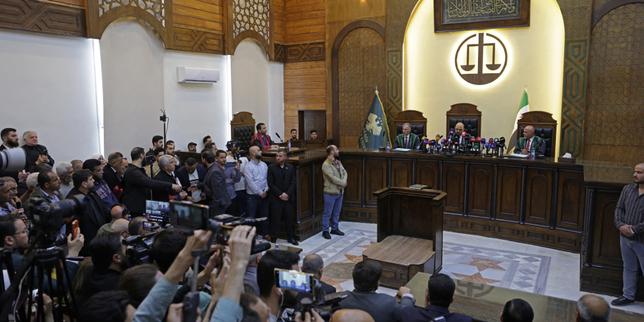
Holding power to account isn't just about cuffing the person who pulled the trigger. Real justice digs deeper. For years, legal systems faced a frustrating wall when tackling mass atrocities. They could easily pin crimes on low-level soldiers or regional commanders. Yet, the architects sitting behind mahogany desks stayed untouchable. They hid behind bureaucratic layers, indirect orders, and institutional silence.
That script is flipping right now.
The Shift Toward Moral Culpability
Syrian legal proceedings are shifting gears. Courts are beginning to target the moral responsibility behind the brutal crimes committed under the Al-Assad regime. This isn't just a minor procedural tweak. It is a fundamental rewiring of how accountability works in a fractured state.
Think about how oppressive systems actually function. Dictatorships rarely operate through explicit, written orders to commit war crimes. Instead, they rely on a culture of impunity. They create an environment where violence is expected, rewarded, and protected. High-ranking officials, propagandists, financiers, and ideologues build the scaffolding of terror. They don't always fire the weapon. They make the weapon acceptable to use.
Targeting moral responsibility means prosecutors are finally chasing the architects of complicity.
Moving Beyond Direct Complicity
For the longest time, international and domestic courts leaned heavily on direct physical proof. If you couldn't place a suspect at the scene of a massacre, sealing a conviction felt nearly impossible. That standard left entire command chains walking free.
The current legal evolution in Syrian accountability spaces changes the evidentiary burden. Prosecutors are building cases around intellectual authorship and systemic contribution. They are asking hard questions about policy design.
- Who funded the detention facilities?
- Who drafted the decrees that weaponized the judiciary?
- Who broadcast the dehumanizing rhetoric that turned neighbors into targets?
These choices carry massive weight. When you design a machine of state violence, you own the bodies it breaks. Courts are starting to treat administrative and ideological enablement as the severe crime it truly is.
The Hurdles of Transitional Justice
Let's be completely honest about the challenges here. This path is messy. Rebuilding a shattered legal framework while political tensions remain high creates enormous friction.
Independent legal monitors frequently point out the risks of politicized prosecutions. When a judiciary has been compromised for decades, restoring trust takes immense time and structural independence. Judges cannot simply bend to populist anger. Every verdict must stand on unshakeable documentation, victim testimonies, and rigorous cross-examination. Otherwise, the trials risk looking like victors' justice rather than legitimate accountability.
Evidence gathering remains a logistical nightmare. Countless records were destroyed, hidden, or scattered across international borders as the conflict dragged on. Investigators rely heavily on smuggled documents, digital forensics, and the courage of defectors who risked execution to save paper trails.
What This Means for Future War Crimes Trials
The implications stretch far beyond Damascus. Legal experts across the globe are watching these developments closely. If domestic courts in post-conflict zones successfully prosecute moral and structural complicity, it sets a powerful global precedent.
International tribunals often move at a glacial pace. They are expensive, distant, and frequently detached from the local populations who suffered the most. Localized justice—even when imperfect and rebuilding from the ground up—restores a vital sense of agency to survivors. It places the history back into the hands of the people who lived it.
Holding the intellectual authors of state terror accountable sends a stark message to future autocrats. You cannot hide behind your subordinates. You cannot sanitize your hands by delegating brutality to others. When the regime falls, the architecture of your crimes will be dismantled piece by piece, and the people who drew the blueprints will stand in the dock.