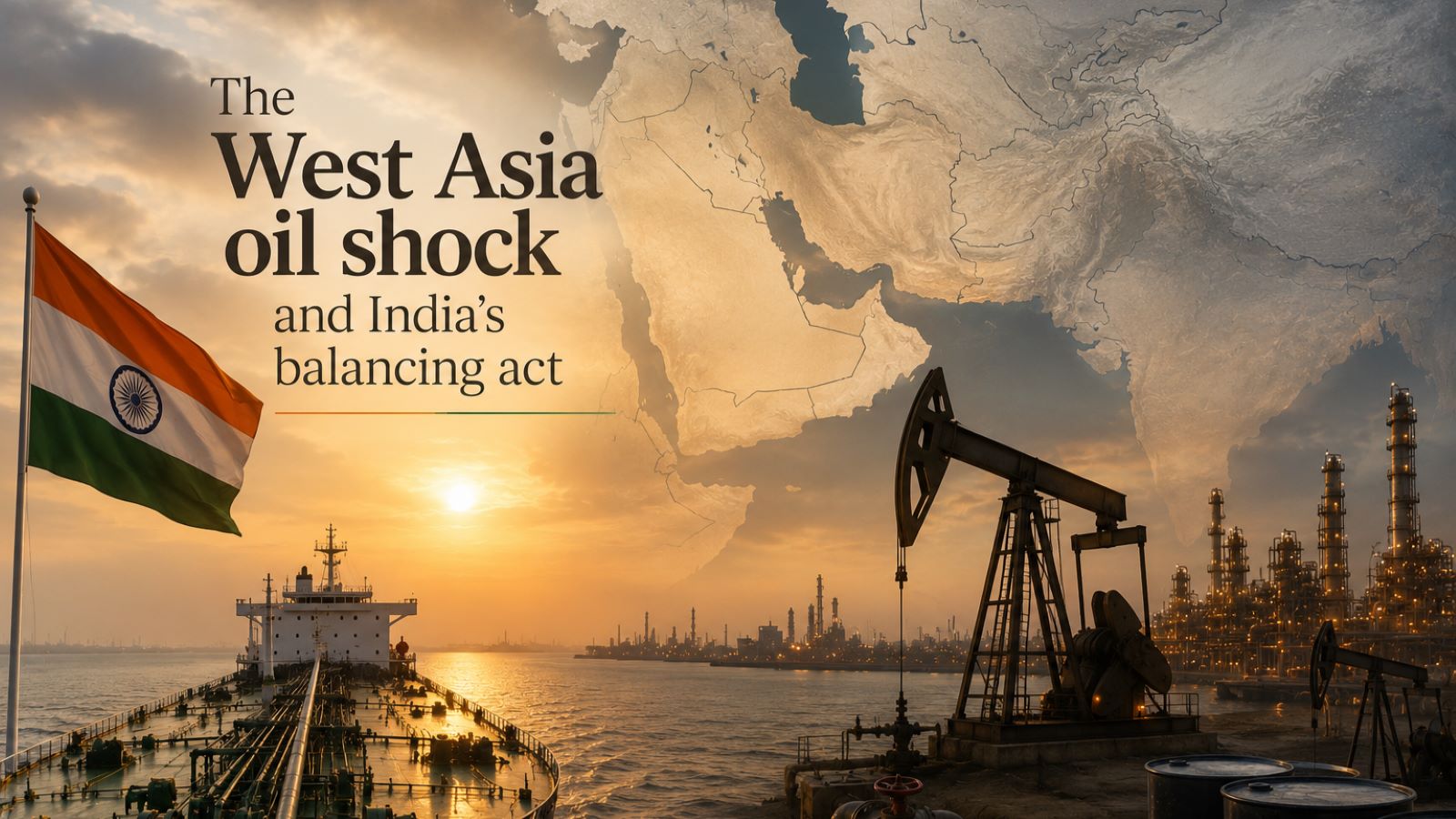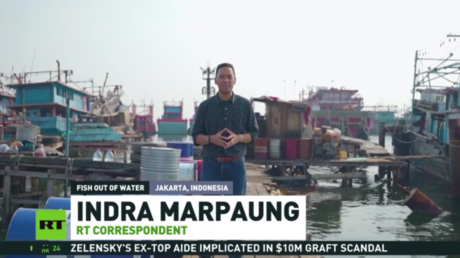
The Strait of Hormuz functions as the primary pressure point for global energy security, yet its impact on the Indonesian fishing industry reveals a secondary, more insidious crisis: the total breakdown of price-sensitive, energy-intensive maritime supply chains. When the Strait experiences a surge in geopolitical friction, the Indonesian fishing sector does not simply face higher fuel costs. It undergoes a structural failure where the marginal cost of production exceeds the market value of the catch, effectively halting the industry's economic engine. This crisis is a function of three intersecting variables: fuel price elasticity, cold chain integrity, and the debt-to-equity ratios of local fishing cooperatives.
The Fuel-to-Catch Correlation
The Indonesian fishing fleet is characterized by its heavy reliance on subsidized and non-subsidized diesel. In an environment where the Strait of Hormuz—handling roughly 21% of global petroleum liquids—faces disruption, the global Brent crude benchmark experiences immediate volatility. For an Indonesian vessel, this translates to a shift in the Total Operational Cost (TOC) equation.
Under normal conditions, fuel accounts for 60% to 70% of a voyage’s expenses. When the Strait is restricted, two distinct economic pressures emerge:
- Immediate OpEx Inflation: The price per liter of diesel rises, narrowing the profit margin on every kilogram of tuna, mackerel, or snapper landed.
- The Point of Negative Return: Unlike land-based manufacturing, fishing cannot easily scale down operations once a vessel has departed. If the price of oil spikes mid-voyage, the value of the anticipated catch may no longer cover the cost of the return trip.
This creates a "Ghost Fleet" scenario. Owners keep vessels at port because the risk of a loss-making voyage outweighs the potential for profit. This isn't a mere dip in production; it is a systematic cessation of activity.
Thermal Integrity and the Energy-Export Nexus
Indonesian fisheries are not just a harvest industry; they are a sophisticated logistics network dependent on continuous refrigeration. The "Cold Chain" represents the most vulnerable link in the event of an energy crisis. From the moment fish are pulled from the water until they reach export hubs in Jakarta or Surabaya, they require constant temperature regulation.
The second-order effect of a Hormuz crisis is the surge in electricity and cooling costs. Small-to-medium enterprises (SMEs) that manage ice production and cold storage facilities operate on razor-thin margins. When energy costs spike, these facilities often reduce operations or raise prices to a level that small-scale fishermen cannot afford. The result is a rapid increase in post-harvest loss.
If the cold chain breaks at any point due to energy rationing or cost-prohibitive fuel, the product degrades from "Export Quality" to "Local Market Quality" or "Waste." The price difference between these categories is often 400% to 500%. A disruption in the Middle East effectively devalues the physical assets of an Indonesian fisherman before the product even hits the shore.
The Debt Trap of the Traditional Cooperative
The Indonesian fishing industry is built on a foundation of informal and semi-formal credit. Middlemen, or tengkulak, provide the upfront capital for fuel, bait, and supplies in exchange for the right to purchase the catch at a predetermined, often discounted, rate.
The Hormuz crisis weaponizes this debt structure. As fuel costs rise, the amount of credit required for a single voyage increases. However, the global market price for fish does not necessarily rise in tandem with oil prices—it is often dictated by consumer demand in Japan, Europe, and the US, which may be cooling due to the same energy-induced inflationary pressures.
- Credit Contraction: Middlemen, sensing the heightened risk of a vessel returning with a net loss, stop lending.
- Asset Seizure: Fishermen who cannot repay the fuel debts from previous voyages face the repossession of their gear or boats.
- Labor Displacement: As boats remain docked, thousands of crew members lose their daily income, leading to a localized economic depression in coastal regions.
This is not a temporary inconvenience; it is a destruction of capital. When the debt cycle breaks, the industry loses its ability to restart quickly even after the Strait of Hormuz stabilizes.
Structural Vulnerability in Maritime Logistics
The Strait of Hormuz crisis also triggers a "War Risk Insurance" premium for all vessels operating in the broader Indo-Pacific and Indian Ocean regions. While Indonesia is geographically distant from the Persian Gulf, the global nature of maritime insurance means that shipping containers carrying Indonesian fish exports to the West face increased freight rates.
The logic follows a clear path:
- Increased tension in the Middle East leads to higher insurance premiums for all tankers and cargo ships.
- Shipping lines pass these costs to the exporters.
- Indonesian exporters, unable to compete with South American or African suppliers who face different logistical routes, see their orders canceled.
This creates a supply glut in the domestic Indonesian market. While this might temporarily lower fish prices for local consumers, it destroys the revenue base needed to maintain the national fishing infrastructure.
Quantifying the Strategic Pivot
To mitigate the impact of the next inevitable Hormuz disruption, the Indonesian fishing industry must move away from its current high-entropy model toward a "Resilience-First" framework. This requires a transition from fuel-heavy artisanal methods to a more integrated, energy-efficient industrial standard.
The primary strategic move involves the Decoupling of Energy and Cold Storage. By investing in solar-powered ice plants and decentralized cold storage units, the industry can insulate its post-harvest value from the volatility of the global oil market. Currently, the industry is tethered to the price of a barrel of oil; until that link is severed at the storage level, the sector remains a hostage to Middle Eastern geopolitics.
Furthermore, the government must move from "Fuel Subsidies" to "Credit Guarantees." Subsidies are a reactive measure that drains the national budget during a crisis. Credit guarantees, however, allow the industry to maintain liquidity during a 30-to-60-day price spike, preventing the collapse of the cooperative system and ensuring that the fleet can return to the water the moment the geopolitical tension eases.
The crisis in the Strait of Hormuz is a diagnostic tool. It has diagnosed the Indonesian fishing industry as being over-leveraged, energy-inefficient, and logistically fragile. The solution is not to wait for the Strait to clear, but to rebuild the industry’s internal mechanics so that a price spike in the Persian Gulf no longer translates to a total shutdown in the Java Sea.