Geopolitical announcements regarding sovereign resource acquisitions routinely obscure the operational reality of extraction economics behind nominal figures. When political leadership claims majority control over 65 billion barrels of proven reserves, evaluating the validity of that claim requires stripping away the rhetoric and examining the capital expenditure, fluid dynamics, and legal structures that govern heavy crude exploitation. Sovereign control on paper does not translate into barrels in a refinery without addressing the underlying thermodynamic and financial constraints of extra-heavy oil fields.
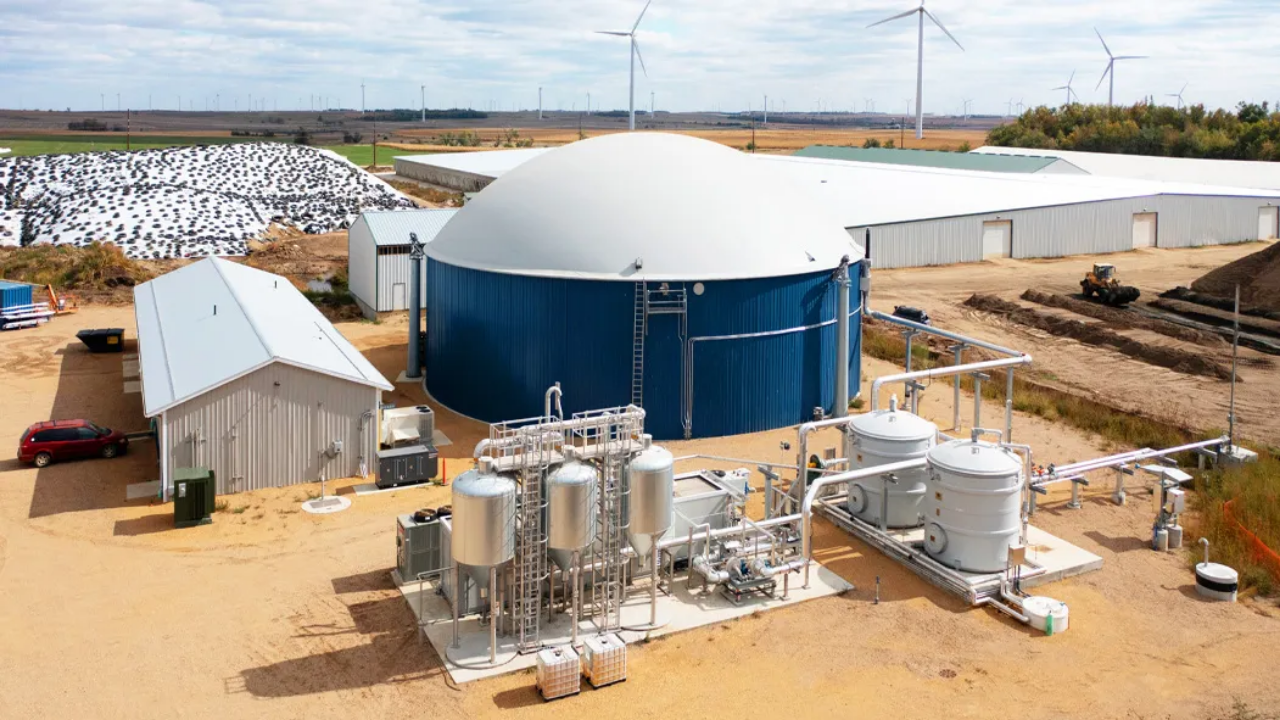
The Orinoco Belt in Venezuela contains massive hydrocarbon deposits, yet classifying these reserves as economically viable assets requires a fundamental understanding of viscosity. Unlike light, sweet crude found in standard shale formations, Venezuelan extra-heavy oil behaves more like semi-solid bitumen at reservoir temperatures. Extracting this fluid demands massive inputs of heat, specialized diluents, and upgrading infrastructure before it can even enter a conventional pipeline network. The assumption that political agreements instantly mobilize these reserves ignores the physical friction of the extraction process. Without multi-billion dollar capital outlays for steam-assisted gravity drainage or coker units, the oil remains an unrecoverable asset trapped in sandstone matrices. For another view, read: this related article.
Capital allocation defines the boundary condition of any resource extraction strategy. Claims that such agreements occur at no cost to domestic taxpayers mask the private sector risk profiles required to make the fields operational. Private energy corporations evaluate capital projects based on return on capital employed, sovereign risk indices, and long-term expropriation probabilities. When an administration coordinates a framework promising nearly 100 billion dollars in private investment, that capital is not deployed unconditionally. It depends on enforceable legal frameworks, guaranteed export pathways, and predictable tax regimes. If private operators perceive that the governance structure is unstable or temporary, the capital expenditure stalls, regardless of executive decrees or bilateral statements.
Resource nationalism and historical asset expropriation create structural friction that standard commercial contracts cannot easily resolve. Decades prior, nationalization policies altered the operational landscape, leading to international arbitration and the withdrawal of major international oil companies. Re-entering these fields requires navigating legacy liabilities and contested ownership claims. When a foreign state secures a direct stake in localized oil fields, it assumes the role of both regulator and operator, blurring the lines between statecraft and commercial enterprise. This dual role complicates liability distribution when infrastructure fails or environmental remediation is required. Further analysis on this trend has been shared by Financial Times.
The claim that securing these reserves directly and substantially lowers domestic gasoline prices misrepresents how global commodity markets price crude. Refineries on the United States Gulf Coast are technically optimized for heavy sour crudes, a configuration historically reliant on Mexican and Venezuelan feedstocks. Accessing Venezuelan heavy crude alters regional refinery feedstock slates, potentially reducing input costs for specific coastal refiners. However, global benchmark pricing responds to aggregate supply and demand elasticities, shipping logistics, and refining capacity constraints rather than bilateral ownership declarations. A localized supply adjustment does not automatically transmit into nationwide pump price reductions unless global marginal costs shift downward.
Geopolitical positioning plays a primary role in these arrangements, extending beyond simple commodity accounting. Denying rival global powers access to strategic energy corridors remains an implicit driver of hemispheric resource policy. By establishing dominant operational footholds in nations with extensive reserves, administrative frameworks seek to lock out competing state-backed enterprises from Eastern hemispheres. This strategy prioritizes supply security and supply chain insulation over pure market arbitrage. However, securing exclusive access comes with the permanent overhead of maintaining regional stability and protecting vulnerable extraction infrastructure from asymmetric disruption.
Operationalizing a degraded energy sector requires addressing severe structural decay in power grids, diluent availability, and port facilities. Venezuela's baseline production capacity fell significantly over preceding years due to chronic underinvestment and maintenance neglect. Restoring output from under a million barrels per day to historical norms involves a multi-year engineering remediation timeline. Field logistics cannot be accelerated purely through executive mandates or diplomatic pressure. Equipment procurement, specialized drilling talent acquisition, and pipeline safety certifications dictate the actual speed at which hydrocarbons reach international tankers.
Evaluate the feasibility of any sovereign resource acquisition by auditing the three core vectors of execution: the engineering timeline for infrastructure rehabilitation, the cost of capital required for heavy crude upgrading, and the legal durability of the operating contracts against future regime transitions. Prioritize direct inspection of corporate capital expenditure filings over public executive statements to determine whether extraction operations are genuinely expanding or merely existing as diplomatic placeholders.