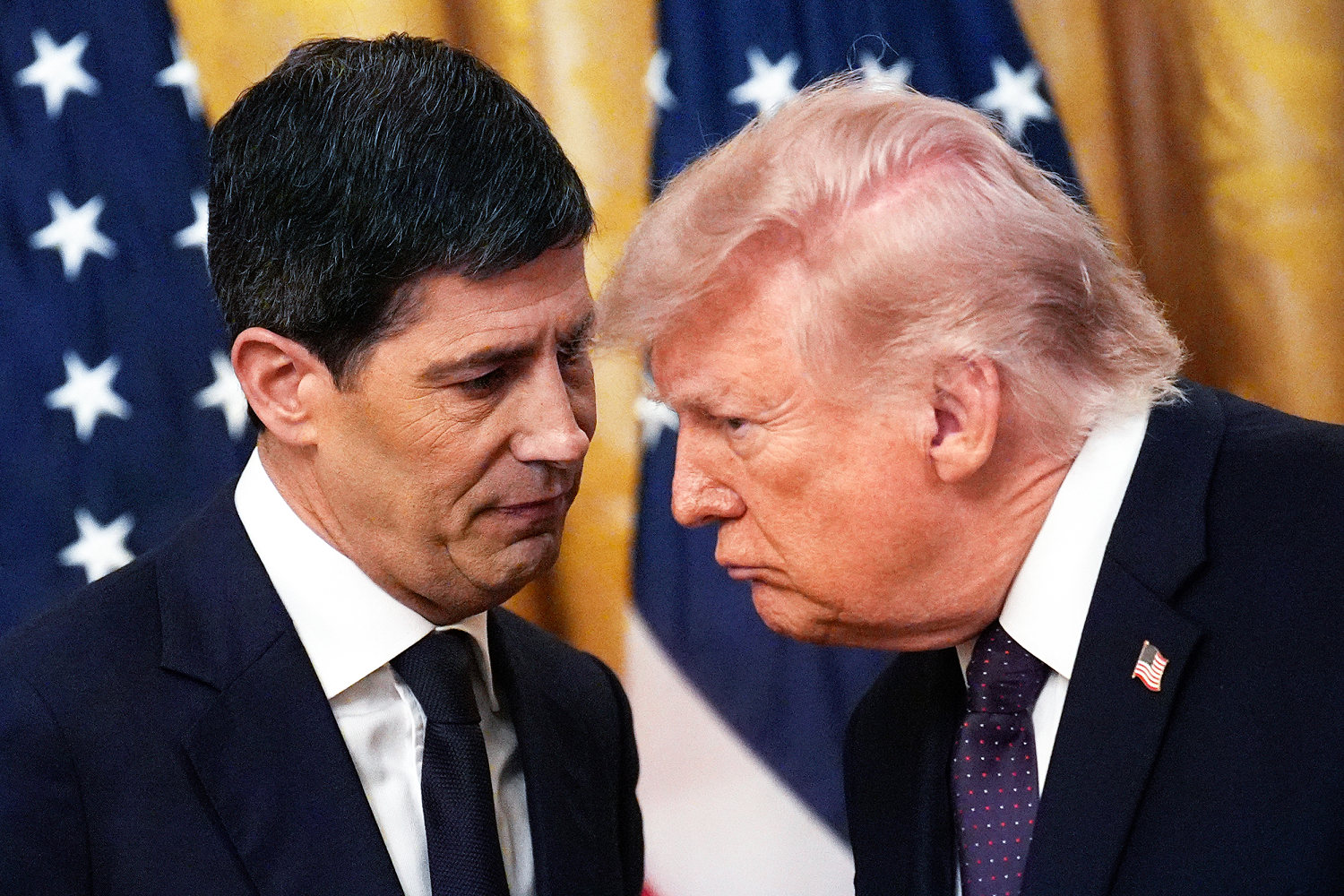
Bilateral negotiations between sovereign economic superpowers rarely center on sudden breakthroughs; instead, they function as high-stakes calibration exercises designed to map tolerance thresholds before a principals-level summit. The meeting between United States Treasury Secretary Scott Bessent and Chinese Vice Premier He Lifeng in New York establishes a mechanical framework for managing structural friction ahead of discussions between President Donald Trump and President Xi Jinping.
Understanding the utility of this ministerial engagement requires analyzing the mechanics of state-level economic signaling, regulatory guardrails, and supply chain dependencies.
The Architecture of Pre-Summit Signaling
Sub-cabinet and ministerial dialogues prior to a presidential summit serve three distinct functions: identifying non-negotiable red lines, testing market reactions to proposed tariff truces, and pre-packaging technical deliverables to ensure the principals have concrete outcomes to announce.
When Treasury leadership meets with counterpart economic planners, the discourse shifts away from public posturing toward the mechanics of balance sheets, capital flows, and export controls. The establishment of bilateral communication channels regarding advanced technologies—specifically artificial intelligence model testing, risk evaluation, and incident alert mechanisms—illustrates a functional shift toward risk mitigation. Rather than attempting to harmonize divergent national industrial policies, both nations are constructing firewalls to prevent technical misunderstandings from escalating into systemic macroeconomic shocks.
The Economic Cost Function of Tariff Truces
A temporary stabilization of tariff rates or a procedural pause in retaliatory escalation alters corporate planning horizons. For multinational enterprises operating across trans-Pacific supply chains, uncertainty regarding trade barriers functions as a tax on capital expenditure.
When fiscal and monetary authorities establish dialogue mechanisms such as proposed boards of trade and investment, they provide corporations with a limited window of predictability. However, this mechanism contains inherent limitations. A temporary truce does not resolve structural imbalances, such as persistent manufacturing overcapacity in specific industrial sectors or strategic divergence in technological standards.
The economic cost function driving these talks involves balancing domestic political imperatives against the deflationary drag of prolonged trade friction. For Washington, the objective remains leveraging market access to secure structural concessions regarding intellectual property protection and industrial subsidies. For Beijing, the priority is maintaining external demand stability while insulating domestic technological sectors from extraterritorial sanctions.
Strategic Divergence in Technology Governance
The integration of artificial intelligence risk management into high-level economic talks marks a departure from traditional trade negotiations centered solely on physical goods and agricultural quotas. Both economic systems recognize that unmanaged friction in foundational technologies creates asymmetric vulnerabilities.
The mechanism agreed upon—involving technical teams holding regular operational talks to refine testing frameworks and safety protocols—represents an attempt to codify rules of the road for dual-use innovations. Yet, the divergence in state philosophy remains stark. The United States approaches governance through the lens of national security and export controls, whereas China integrates technology policy directly into long-term industrial planning. Consequently, bilateral dialogue operates not as a convergence of ideology, but as a mechanism for de-escalation when commercial imperatives collide with geopolitical competition.
Operational Outlook for Bilateral Stability
The utility of the New York dialogue lies in its capacity to bound uncertainty rather than eliminate structural rivalry. As preparations for the Trump-Xi summit proceed, the metrics of success will not be measured by comprehensive treaties, but by the absence of uncalculated escalation.
Future stability depends entirely on the operational efficacy of the newly established communication channels during periods of acute geopolitical stress. If technical teams can utilize these channels to contain regulatory disputes before they manifest as market-disrupting restrictions, the ministerial framework will have achieved its structural objective. If these channels remain purely performant, market participants must price in a return to baseline volatility immediately following the presidential meetings.