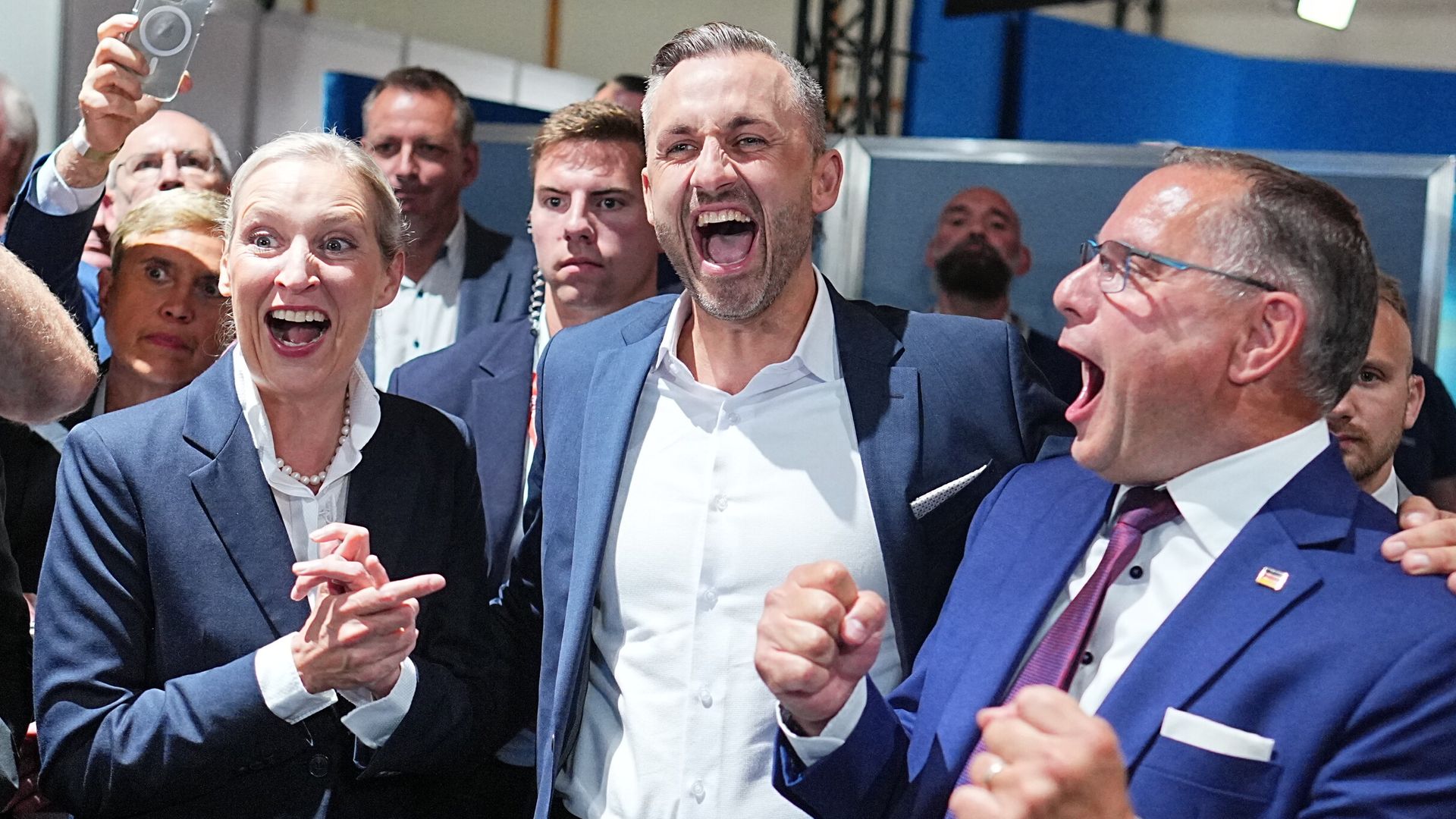
The emergence of Alternative for Germany as a primary fixture in European politics represents a structural realignment of the post-reunification voting bloc rather than a transient electoral protest. To decode the mechanics of this political entity, one must separate the foundational economic grievances of 2013 from the subsequent operational pivots that institutionalized its presence across federal and state legislatures. Standard journalistic summaries treat the organization as a monolithic ideological block. A rigorous institutional breakdown reveals a fractured coalition driven by distinct economic anxieties, demographic protectionism, and geopolitical revisionism.
The origin vector of the party was rooted strictly in monetary policy critique. Established during the sovereign debt crisis by academic economists and business figures, the initial platform rejected the structural mechanisms of the eurozone, specifically targeting inter-state fiscal bailouts and single-currency monetary expansion. This early phase operated on ordoliberal principles, arguing that southern European deficit spending violated market discipline and imposed asymmetric risk on German taxpayers.
When the European Central Bank maintained its monetary stance, the internal power dynamics of the party shifted. Academic founders were systematically sidelined by nationalist factions who recognized that monetary critique possessed a low ceiling for mass mobilization. The 2015 migration shock provided the necessary catalyst for structural transformation. By pivoting from balance-sheet mechanics to border sovereignty, the organization captured an untapped market segment of voters alienated by mainstream consensus politics.
The modern platform operates on three distinct operational pillars that dictate its electoral appeal, particularly in eastern federal states.
The first pillar is demographic protectionism, anchored by the concept of ethnonational identity and exclusionary citizenship criteria. The party operationalizes this through strict opposition to multiculturalism, advocating for the cessation of family reunification rights for asylum seekers and the implementation of systematic repatriation programs for individuals lacking permanent legal status. This stance directly challenges the post-war German constitutional consensus on human dignity and asylum provisions.
The second pillar focuses on institutional dismantling of European integration, frequently branded as sovereignty reclamation. The platform moves past mere currency skepticism to advocate for a total renegotiation of supranational authority, up to and including withdrawal from the European Union institutional architecture. This economic nationalism combines protectionist trade barriers with demands for massive domestic tax cuts and the complete elimination of inheritance levies, appealing directly to small-to-medium enterprise owners squeezed by regulatory compliance costs.
The third pillar involves a revisionist foreign policy framework that rejects Atlanticist security alignment in favor of a continental sphere of influence. Strategic documents and public statements from party leadership favor the immediate termination of economic sanctions against Russia, normalization of bilateral energy dependencies, and a reduction of foreign military interventions. This geopolitical stance exploits regional anxieties regarding military escalation and economic dislocation caused by severed supply chains.
The institutional persistence of the party is maintained through a disciplined digital distribution network. While mainstream competitors rely on traditional broadcast media and municipal town halls, the organization engineered a distributed communication apparatus centered on short-form video platforms, maximizing algorithmic distribution to bypass traditional journalistic gatekeepers. This direct-to-consumer digital infrastructure accelerates grievance propagation, allowing local branches to coordinate messaging without central authorization.
Mainstream containment strategies rely exclusively on the political firewall, known locally as the Brandmauer, which prohibits any form of legislative coalition-building or executive cooperation between traditional parties and the far-right bloc. This cordon sanitaire prevents direct executive governance at the federal level and most state jurisdictions. However, the firewall carries an asymmetric cost. By excluding the largest opposition force from administrative responsibility, mainstream parties insulate the organization from the operational compromises inherent in governance, allowing it to function as a permanent, unblemished receptacle for anti-establishment sentiment.
To neutralize the structural momentum of Alternative for Germany, mainstream political architects must transition from defensive exclusion to proactive structural reform. This requires dismantling the administrative bottlenecks in housing, energy pricing, and municipal service delivery that generate the underlying economic precarity upon which populist mobilization thrives, while simultaneously confronting the systemic divergence in wealth and infrastructure between eastern and western federal states.