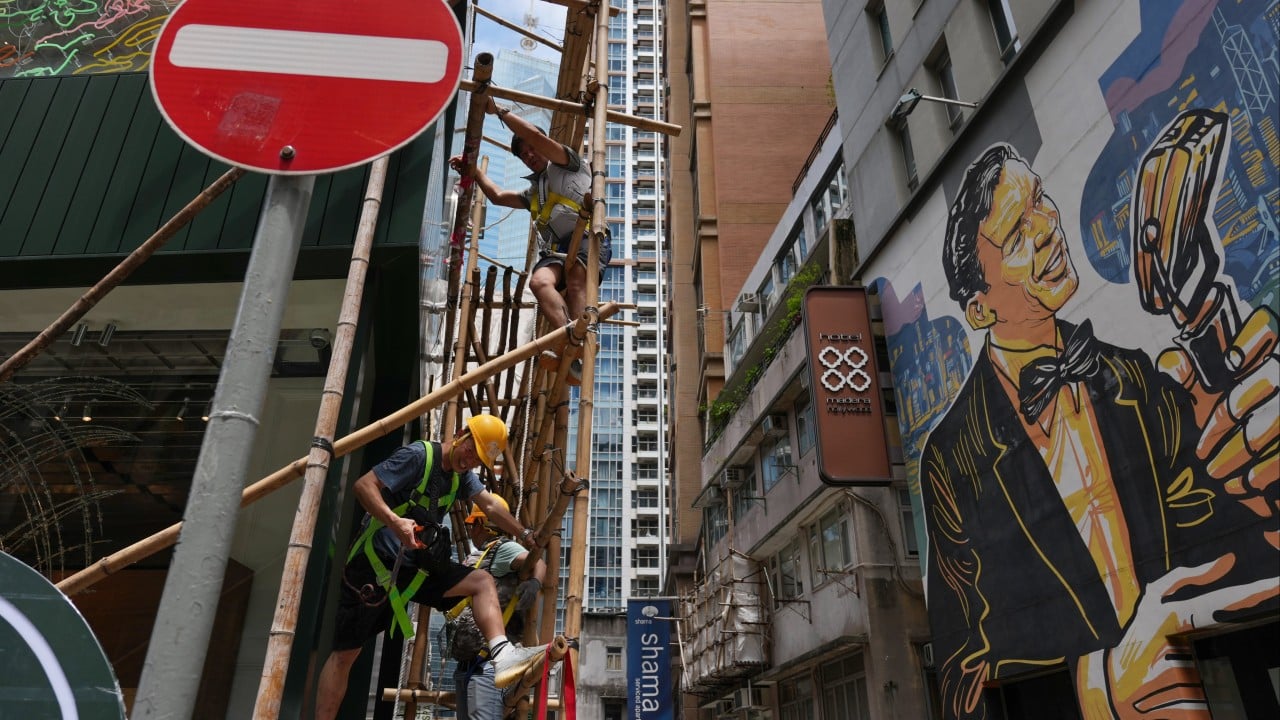
Urban development in dense metropolitan environments relies on a delicate balance between project velocity and structural risk mitigation. In Hong Kong, despite regulatory frameworks and localized penalties, the construction sector continues to register persistent industrial injuries and fatalities. Conventional safety paradigms focus heavily on downstream behavioral enforcement—such as personal protective equipment audits, post-incident penalties, and reactive site inspections. This approach treats safety as an operational overlay rather than an intrinsic engineering parameter. To shift the injury curve downward, safety must be embedded directly into project conception through systematic design choices.
The Cost Function of Downstream Compliance
Relying on behavioral compliance creates diminishing returns. When safety protocols depend entirely on worker vigilance in high-pressure environments, failure rates correlate directly with operational fatigue and time constraints. Project timelines structured around aggressive milestones create latent system vulnerabilities. Workers navigate congested spaces where temporary works, logistics staging, and heavy machinery intersect.
The economic model of traditional safety management relies on deterrence. Fines and stop-work orders act as lagging indicators. They measure a failure that has already occurred rather than predicting structural exposure. When safety is treated as a compliance checklist administered at the worksite level, the underlying geometry of the project remains hazardous. Workers absorb the friction of poorly planned sequencing through physical exposure. True risk reduction requires shifting capital expenditure and engineering effort upstream, neutralizing hazards before equipment ever reaches the site.
Upstream Integration Variables
Eliminating high-risk exposure zones requires restructuring the relationship between temporary works and permanent structures. Prefabrication and modular construction reduce onsite labor hours in elevated or confined spaces. By shifting fabrication processes to controlled offsite environments, project managers eliminate the environmental variables that trigger site accidents, such as adverse weather conditions and spatial congestion.
Engineering out risk involves specific structural interventions during the planning phase:
- Geometric optimization that minimizes the need for working at height through ground-level assembly methods.
- Mechanical erection sequences that restrict human presence beneath suspended loads or near live operational corridors.
- Interface mapping that resolves spatial conflicts between multiple trade contractors before physical mobilization begins.
- Automated logistics routing that separates pedestrian worker pathways from heavy transport zones.
These variables alter the baseline probability of an incident. Instead of relying on a worker to notice a falling object hazard, engineering design mandates physical containment barriers or eliminates overhead exposure entirely.
Technological Telemetry and Predictive Analytics
Integrating digital tools into design phases changes the mechanics of hazard identification. Building Information Modeling allows engineers to simulate site logistics, crane swing radii, and structural stability under load long before ground breaks. When combined with sensor telemetry and vision-based intrusion detection systems, digital twins provide real-time feedback loops that identify operational drift.
Real-time spatial monitoring systems flag unauthorized personnel entering designated danger zones around heavy machinery or deep excavations. However, telemetry functions best when it verifies spatial boundaries established during the design phase. Technology should not compensate for fundamental architectural flaws in site layout. Digital monitoring acts as an early warning layer, validating that the physical safety margins built into the initial models are maintained during execution.
Procurement and Contractual Alignment
Engineering intent fails when project delivery models incentivize speed over safety margins. Traditional lowest-bid tender processes force contractors to compress temporary works budgets and minimize safety engineering overhead to remain competitive. Restructuring procurement requires embedding safety metrics into the tender evaluation matrix, weighting structural innovation and prefabrication ratios equally with cost and schedule parameters.
Main contractors and project owners must share operational liability. When contracts specify exact milestones without accounting for safety design integration, project teams bypass protocols to meet deadlines. Aligning financial incentives with risk elimination transforms safety from a cost center into a primary design constraint, matching structural load-bearing requirements in priority.
Mandate design-phase hazard elimination reviews as a legal prerequisite for project commencement, tying engineering sign-offs directly to structural permits.