Modern macroeconomic analysis often mistakes policy intent for structural reality. When external observers evaluate the deceleration of China's economic output, commentary typically defaults to broad anxieties regarding an impending global contagion or superficial assertions about consumer confidence. This perspective misses the underlying mechanics. The structural deceleration currently observed in Beijing's output is not an accidental byproduct of cyclical weather patterns or temporary market corrections; it is the mathematical result of an investment-led growth model that has systematically exhausted its productive capital returns.
Deconstructing the current trajectory requires moving past official GDP velocity figures and examining the balance sheet mechanics of local governments, the structural yield of industrial capital allocation, and the inescapable transmission channels of domestic demand compression.
The Mechanics of Capital Misallocation and Debt Overhang
The primary engine of China’s rapid industrialization for over two decades was capital formation funded through credit expansion. Local government financing vehicles, provincial authorities, and state-owned enterprises directed capital into infrastructure, real estate, and heavy industrial capacity. This mechanism operated efficiently when the marginal product of capital remained high—meaning every yuan of debt deployed generated a corresponding or superior expansion in productive output.
That mathematical relationship inverted years ago. As non-financial sector debt climbed toward triple-digit percentages relative to gross domestic product, driven primarily by debt-financed property construction and municipal projects, the efficiency of new capital dropped sharply. Local government financing vehicles relied heavily on land sales to service existing liabilities. When property values stagnated and residential construction volumes contracted, the primary revenue stream underpinning local municipal balance sheets dried up.
This creates a structural bottleneck. Local authorities cannot easily pivot to consumer-side fiscal stimulus because their immediate priority is debt maintenance rather than household income transfer. Consequently, fiscal packages continue to target supply-side metrics—long-term bonds for industrial upgrades, manufacturing tech enhancements, and heavy infrastructure—rather than broad-based domestic consumption. The state is doubling down on the exact mechanism that produced the overcapacity problem in the first place, operating on the institutional belief that manufacturing scale equates to ultimate economic security.
The Export Substitution Loop and Global Market Friction
Because domestic consumption remains structurally suppressed—manifested in sluggish retail sales growth and weak household purchasing power—manufacturers face an acute domestic realization problem. Goods produced within China cannot be fully absorbed domestically at price points that maintain factory margins.
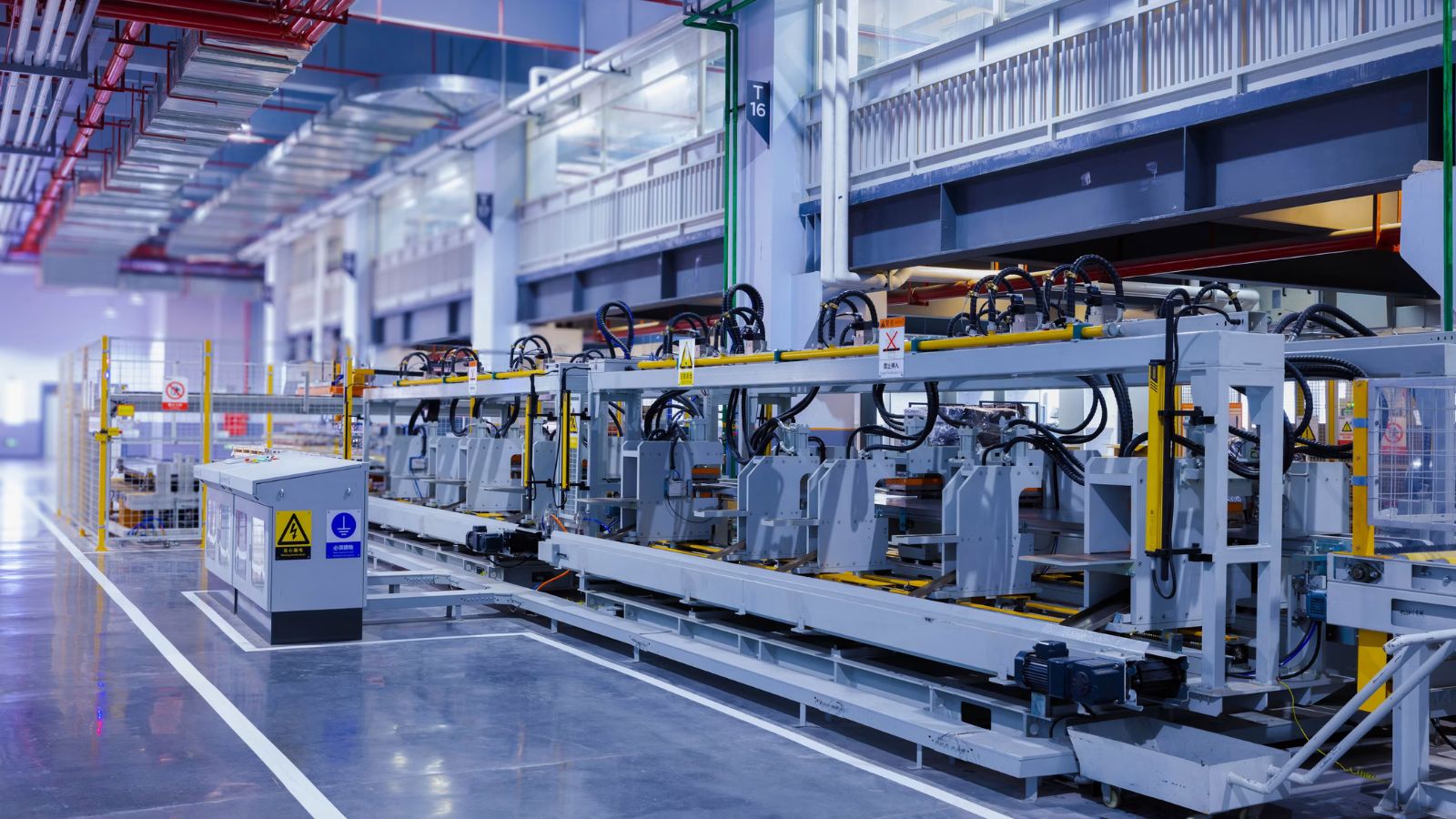
To prevent widespread industrial default and inventory gridlock, excess production is diverted outward. This structural reality explains why industrial policy continues to funnel capital into advanced manufacturing sectors such as electric vehicles, solar infrastructure, and industrial robotics. Subsidized production scales output far beyond domestic clearing capacity, turning international markets into the primary sink for Chinese industrial surplus.
The systemic consequence for trading partners is an asymmetric price deflation vector. As Chinese exports flood global markets in sectors ranging from automotive components to consumer technology, foreign manufacturers are forced to compete against price points that do not reflect standard market cost-of-capital constraints. In regions like Europe, this dynamic compresses operating margins for legacy industrial sectors, resulting in structural job losses and factory downsizing, particularly within automotive and heavy manufacturing supply chains.
International monetary institutions frequently frame this dynamic as a dangerous global imbalance. From a purely mechanical standpoint, however, it represents a transfer of deflationary pressure from an over-leveraged domestic economy to external trading partners. Foreign tariffs and trade restrictions attempt to erect walls against this flow, but these administrative barriers merely redirect the surplus toward less-protected emerging markets, increasing trade friction on a global scale.
The Demographic Drag on Long-Term Productivity
Beyond balance sheet debt and industrial overcapacity, the structural ceiling on China's long-term growth is set by demographic regression. The legacy effects of population policies have resulted in a rapidly aging workforce and a shrinking cohort of prime-age labor.
Traditional catch-up growth relies on labor migration from low-productivity agricultural sectors to high-productivity urban manufacturing. As the rural surplus labor pool depletes, the wage arbitrage that previously gave Chinese manufacturing an unassailable cost advantage begins to narrow. Maintaining output growth under these conditions requires a transition toward capital-deepening, automation, and artificial intelligence integration.
While state-backed programs successfully accelerate the adoption of industrial robotics and smart manufacturing hubs, capital substitution for labor encounters diminishing returns when aggregate consumer demand contracts. Automated assembly lines scale output efficiently, but if domestic and international buyers face restrictive purchasing power, increased unit production volume only exacerbates inventory gluts and deepens factory-gate price deflation.
Strategic Forecast and Execution Playbook
The trajectory of this economic model points toward a protracted period of low nominal growth, characterized by persistent industrial overcapacity and defensive monetary interventions. Beijing will likely avoid a sudden, catastrophic financial collapse due to the state's tight control over the banking sector and domestic capital accounts. However, avoidance of systemic collapse does not equate to dynamic health.
Allocators and policymakers must discard the assumption that consumer-driven rebalancing is imminent. Strategic positioning requires preparing for a sustained environment of export-driven trade friction, currency undervaluation debates, and localized credit restructuring. The structural limits of state-led investment are clear: capital can manufacture physical output indefinitely, but it cannot artificially manufacture solvent demand in the absence of deep, structural wealth redistribution to the household sector.
China's Economy: Resilience, innovation and opportunities
This video provides contextual discussion on China's industrial policy evolution, new quality productive forces, and economic performance metrics heading into the current year.