Electoral Coalition Equilibrium and Strategic Leverage
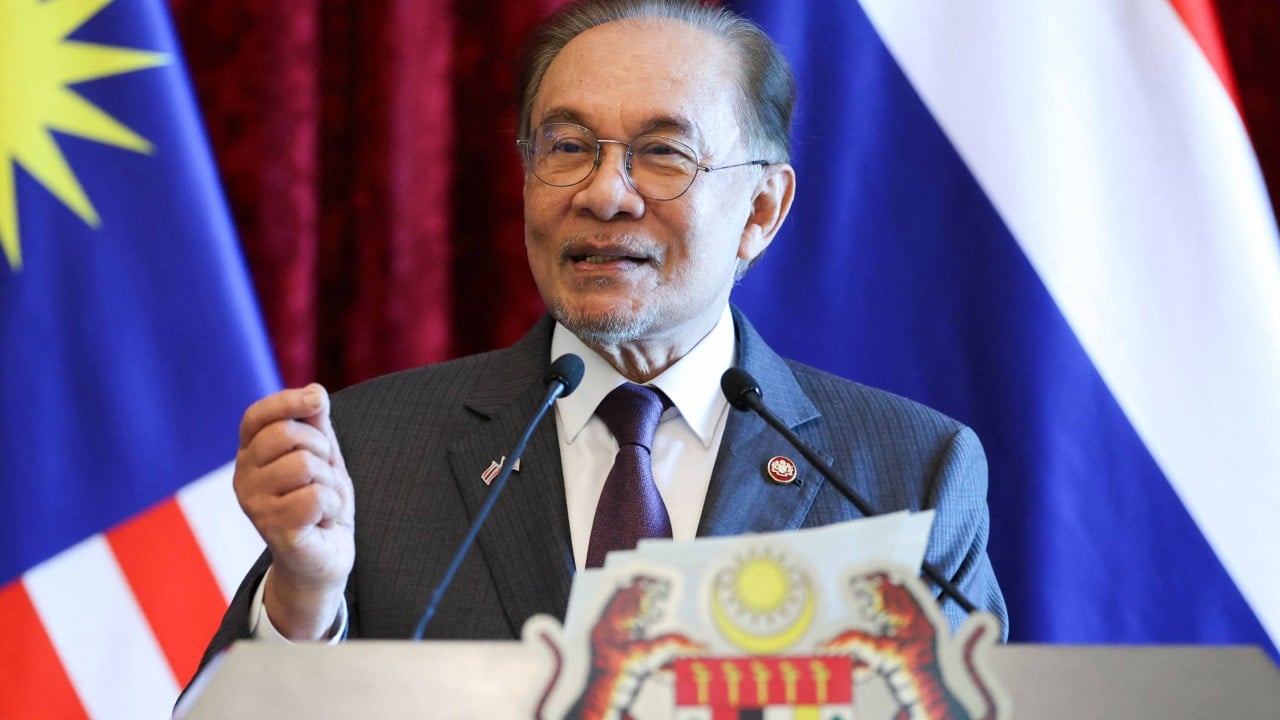
Multi-party government stability in fractured parliamentary systems depends on the strategic alignment of competing executive incentives rather than shared ideological consensus. When Malaysian Prime Minister Anwar Ibrahim issued an ultimatum to coalition partners—enforcing alignment or demanding resignation—he exposed the structural fragility inherent in the Pakatan Harapan (PH) and Barisan Nasional (BN) alliance. Formed out of necessity following the hung parliament of the November 2022 general election, this unity administration operates under conflicting institutional pressures.
To quantify the operational viability of this arrangement ahead of critical state elections, it is necessary to examine the coalition through three core analytical dimensions:
- The Mandate Trade-off Matrix: The structural tension between retaining core reformist voters and placating conservative coalition partners.
- The Federal-State Asymmetry: The strategic divergence between national cabinet unity and sub-national electoral competition.
- The Defection Penalty Calculation: The exact threshold where the risk of coalition collapse outweighs the benefits of holding cabinet portfolios.
The Trilemma of Coalition Discipline
Governing coalitions composed of traditional adversaries face an inherent impossibility theorem. A coalition can simultaneously optimize only two of the following three parameters: policy coherence, ideological integrity, and legislative majority.
When Anwar’s administration prioritized legislative majority to reach the 112-seat threshold in the 222-seat Dewan Rakyat, it automatically sacrificed policy coherence and ideological integrity. The coalition's structural configuration forces each constituent party to negotiate distinct political payoffs.
1. The Reformist Penalty (Pakatan Harapan)
Pakatan Harapan, led by the People's Justice Party (PKR) and the Democratic Action Party (DAP), derived its historical mandate from anti-corruption platforms and institutional reform. By integrating UMNO—the anchor party of Barisan Nasional whose leadership faced extensive judicial scrutiny—PH incurred an immediate loss in credibility among its urban, reform-minded voter base. Every compromise on institutional reform designed to keep UMNO within the executive fold diminishes PH's electoral efficiency in its core constituencies.
2. The Identity Dilemma (UMNO / Barisan Nasional)
UMNO’s survival strategy requires capturing Malay-majority rural seats. However, its partnership with DAP—a predominantly ethnic Chinese-backed party long framed by UMNO's grass-roots as an existential rival—creates a profound voter migration risk. Malay voters seeking opposition alternatives migrate toward Perikatan Nasional (PN), the alliance formed by Parti Pribumi Bersatu Malaysia (Bersatu) and Parti Islam Se-Malaysia (PAS). Consequently, UMNO faces a diminishing return on power: staying in government preserves executive patronages but accelerates its grassroots erosion to PN.
3. The Minority Arbitrage (Borneo Blocs)
Regional coalitions such as Gabungan Parti Sarawak (GPS) and Gabungan Rakyat Sabah (GRS) function as veto players. Unbound by West Malaysian ideological rifts, these blocs extract maximum concessions in federal revenue allocation, infrastructure development, and constitutional autonomy under the 1963 Malaysia Agreement (MA63). Their participation is transactional, tied strictly to federal stability and financial transfers rather than political loyalty.
The Dynamics of Electoral Cannibalization
The tension within the ruling coalition reaches its peak during state-level elections. In the federal framework, PH and BN share executive power in Putrajaya; on the ground, their electoral machineries overlap across contested seats.
The mechanism driving this friction is seat allocation reciprocity. In traditional coalition structures, incumbency determines seat retention. In a hybrid coalition composed of historic rivals, incumbency protection generates three severe structural bottlenecks:
- Grassroots Disengagement: Local party cadres refuse to mobilize for former adversaries, leading to reduced voter turnout in key swing districts.
- Internal Sabotage and Independent Candidacies: Disgruntled party leaders passed over during seat allocations run as independents or covertly direct field operations to support opposition candidates.
- Voter Transferability Breakdown: Voters aligned with PH do not automatically transfer their votes to BN candidates when instructed by party leadership, and vice versa.
The math of electoral transferability in recent state contests demonstrates that party-level agreements fail to command voter-level compliance. When PH voters are asked to back an UMNO candidate, a significant percentage abstain or defect to third parties. Conversely, conservative Malay voters aligned with UMNO routinely refuse to vote for DAP candidates, opting instead for PAS or Bersatu. This asymmetry turns electoral cooperation into a zero-sum game where joint campaigning actively yields seats to the opposition.
Quantifying the Defection Threshold
A coalition partner will remain within the government only as long as the expected value of remaining in power exceeds the expected value of joining the opposition or forcing an early election.
The mathematical formulation of this decision node rests on four variables:
- $V_e$: Executive value derived from ministerial appointments, budgetary control, and statutory authority.
- $E_c$: Electoral cost incurred in future polls due to association with unpopular coalition policies.
- $P_s$: Probability of securing a ruling majority in an alternative coalition configuration.
- $R_l$: Risks associated with legal prosecution, institutional isolation, or loss of state patronages upon leaving office.
A party defecting from the coalition requires the following condition to hold true:
$$E_c + R_l < (P_s \times V_e)$$
When Anwar issued his discipline ultimatum, he directly manipulated the value of $R_l$ (raising the legal and political risk of dismissal) while signaling that cabinet ministers attempting to hedge their options would face immediate loss of $V_e$. By demanding absolute compliance, the Prime Minister attempted to artificially inflate the structural cost of exit.
However, this enforcement mechanism carries profound institutional limits. Threatening dismissal against coalition partners functions only when the leading party possesses enough internal seats to absorb the loss. Because PKR and PH do not hold a standalone majority, invoking party discipline against a major bloc like UMNO or DAP risks triggering a cascade of resignations that immediately collapses the parliamentary majority.
Internal Fracture and Strategic Realignment
The primary threat to the stability of the administration stems not only from external opposition attacks, but from internal party fragmentation. The emergence of splinter factions and the resignation of high-profile strategists within PKR highlight growing dissatisfaction with the government's pragmatic compromises.
When key reformist figures distance themselves from executive policy, they create an ideological alternative for disappointed urban voters. This splits the non-conservative vote share into two distinct segments:
- Systemic Pragmatists: Voters willing to tolerate coalition compromises to prevent an Islamist or ultra-conservative opposition from taking power.
- Reform Absolutists: Voters who reject compromises on anti-corruption and governance standards, choosing either to abstain or support third-party entrants.
This fragmentation creates a severe tactical disadvantage during state elections. While Perikatan Nasional maintains a disciplined, ideologically aligned voter base across the Malay heartlands, the ruling coalition must defend its position on two fronts: preventing Malay voter migration to PN on the right, while stemming urban voter attrition to independent reformist platforms on the left.
Strategic Scenarios for Electoral Stability
To navigate upcoming electoral tests and prevent a collapse of executive authority, the coalition leadership must select one of three distinct operational plays.
Scenario A: Full Electoral Cartelization
The coalition formalizes a permanent electoral pact, transforming PH and BN into a single unified bloc across both state and national elections.
- Mechanism: A binding seat-sharing agreement, joint manifestos, and unified candidate selection committees.
- Limitation: Triggers high voter friction. Hardline supporters on both sides reject the artificial union, driving turnout down and boosting opposition efficiency in swing seats.
Scenario B: Asymmetric Competition with Federal Immunity
The coalition permits open competition at the state level while maintaining an explicit non-aggression pact at the federal cabinet level.
- Mechanism: Parties contest seats independently in state elections, allowing local branches to preserve their distinct brand identities, while agreeing not to withdraw support from the Prime Minister in Putrajaya regardless of state outcomes.
- Limitation: Highly unstable. State-level political attacks inevitably erode personal and operational relationships between cabinet ministers, eventually bleeding into federal policymaking.
Scenario C: Tactical Reshuffle and Early Mandate
The Prime Minister utilizes executive prerogative to launch a controlled cabinet reshuffle, stripping uncooperative elements of key portfolios, followed by a strategic dissolution of parliament to secure an refreshed mandate.
- Mechanism: Reclaiming the political initiative by forcing all constituent parties into an immediate choice between full alignment or total electoral exposure.
- Limitation: High vulnerability. If macroeconomic conditions, inflation pressures, or public sentiment favor the opposition, an early national poll risk converting a temporary coalition friction into a total loss of power.
Operational Execution Plan for Coalition Survival
The survival of the unity government depends on replacing rhetorical threats of resignation with strict structural mechanisms that align individual party incentives with coalition longevity.
- Establish a Codified Dispute Resolution Mechanism: Replace informal political signaling with a formalized council of party presidents operating under binding arbitration rules for policy disputes and cabinet appointments.
- Decouple Federal Patronage from State Alignments: Grant state-level party branches autonomous authority to negotiate local alliances without triggering federal cabinet dismissals, neutralizing internal sabotage during state polls.
- Execute Focused Policy Wins in Core Constituencies: Shift government focus from broad ideological messaging to targeted economic deliverables—addressing cost-of-living pressures, wage growth, and targeted subsidies—to restore voter confidence across both urban reformist and rural Malay demographics.
The Prime Minister’s demand for discipline addresses the symptom of coalition instability, but leaves the underlying structural incentives unchanged. Without recalibrating the electoral trade-offs for its constituent parties, the administration remains vulnerable to the systemic pressures of multiparty fragmentation. The defining test for the government will be its capacity to transform a transactional partnership of convenience into an institutionalized framework before regional electoral shifts undermine its parliamentary foundation.