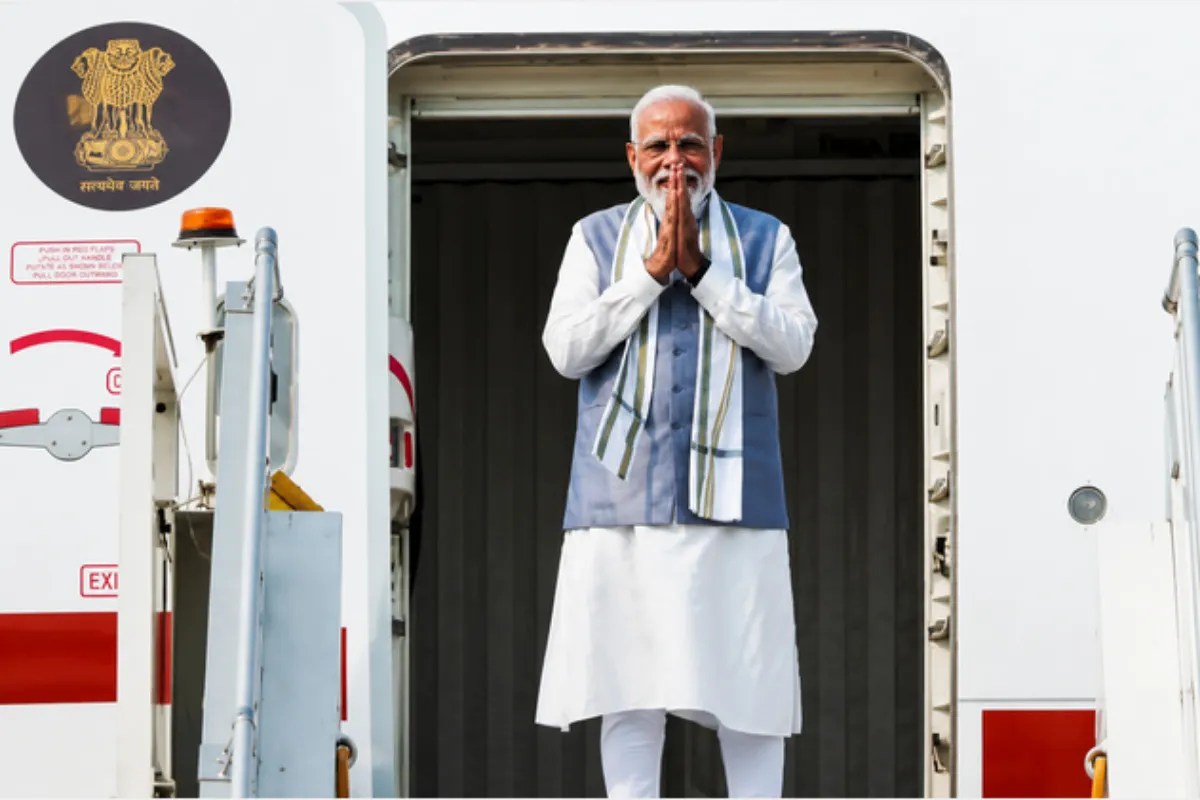
The mobilization of head-of-state diplomacy between New Delhi and Victoria transcends bilateral pleasantries, functioning as a deliberate exercise in maritime security and strategic encirclement mitigation. When an Indian Prime Minister departs for Seychelles to participate in National Day celebrations and address the National Assembly, the underlying architecture is driven by geopolitical necessity rather than ceremonial protocol. The visit operates on a tri-sector framework: institutionalized security integration, exclusive maritime domain awareness, and asymmetric development financing designed to counter competing regional hegemonies.
Understanding the mechanics of this diplomatic deployment requires moving past surface-level reporting on event attendance. The engagement serves as a template for how a rising continental power secures critical choke points along global shipping lanes without triggering overt territorial friction.
The Geostrategic Cost Function of Western Indian Ocean SLOCs
The Western Indian Ocean functions as a primary conduit for global trade and energy transport. Seychelles occupies an exclusive economic zone (EEZ) of approximately 1.3 million square kilometers, positioned directly adjacent to critical Sea Lines of Communication (SLOCs). For India, the security of these waters correlates directly with domestic economic stability.
[Securing Western Indian Ocean SLOCs]
       │
       ├─► Institutionalized Security Integration (Joint Patrols, Capacity Building)
       ├─► Exclusive Maritime Domain Awareness (Coastal Radar Systems, CSRN)
       └─► Asymmetric Development Financing (Infrastructure Grants, Line of Credit)
The strategic vulnerability India faces in this sector stems from a dual-threat mechanism:
- Asymmetric Maritime Threats: Piracy, illegal, unreported, and unregulated (IUU) fishing, and transnational narcotics trafficking exploit the vast, under-patrolled waters of island nations.
- Strategic Encirclement: External powers, specifically China through its "String of Pearls" architecture, seek logistical footprints in the region to project blue-water naval capabilities.
The cost of inaction for New Delhi is the potential disruption of trade flows through the Bab-el-Mandeb and Mozambique Channel. By inserting prime ministerial diplomacy directly into the legislative heart of Seychelles—the National Assembly—India establishes a high-level political mandate to formalize security pacts that stabilize these routes.
The Three Pillars of India-Seychelles Security Architecture
The operationalization of this state visit rests on three structural pillars designed to convert diplomatic goodwill into hard security infrastructure.
1. Coastal Radar Surveillance Networks (CSRN)
The primary technical bottleneck for Seychelles is the inability to monitor its massive EEZ. India addresses this capability gap by financing, installing, and integrating a network of Coastal Radar Stations. This system links directly into the Indian Navy’s Information Management and Analysis Centre (IMAC) and the Information Fusion Centre – Indian Ocean Region (IFC-IOR) in Gurugram. The strategic outcome is a shared, real-time operating picture that effectively extends India’s maritime domain awareness hundreds of miles beyond its physical coastline.
2. Operational Asset Transfer and Capacity Building
The transfer of military hardware—such as fast attack craft, interceptor boats, and Dornier maritime surveillance aircraft—is structured to build the operational capacity of the Seychelles People's Defence Forces (SPDF). This transfer model shifts the burden of first-response maritime security onto the host nation while ensuring that the infrastructure remains entirely compatible with Indian naval assets during joint task force deployments.
3. Joint Hydrographic Surveying
Understanding the underwater topography is a prerequisite for both civilian navigation and submarine operations. Regular joint hydrographic surveys conducted by Indian Navy surveying vessels map the complex bathymetry of the Seychelles waters. This data generation creates a structural reliance on Indian technical expertise while quietly optimizing the operational readiness of Indian anti-submarine warfare units in the sector.
The Logic of Democratic Convergence in the National Assembly
Addressing a foreign parliament is a calculated diplomatic maneuver intended to bypass bureaucratic inertia and speak directly to the political elite of the host nation. In the context of Seychelles, this address serves a specific structural purpose: neutralizing domestic political opposition to foreign military presence.
Proposed infrastructure projects, such as the development of facilities on Assumption Island, frequently run into local sovereignty concerns and political weaponization by opposition parties. An address to the National Assembly allows New Delhi to frame India's security architecture not as an extraterritorial military expansion, but as a collaborative partnership rooted in democratic values, mutual respect for sovereignty, and the SAGAR (Security and Growth for All in the Region) doctrine.
This framing attempts to de-risk long-term bilateral agreements from the volatility of host-nation electoral cycles. By building consensus across the political spectrum within the plenary hall, India seeks to insulate its strategic investments from sudden policy reversals when administrations change.
Asymmetric Financing and the Development Partnership Model
India's economic engagement strategy in the Western Indian Ocean relies on targeted, high-impact grants and Lines of Credit (LoC) rather than debt-heavy infrastructure loans. This approach is designed to contrast sharply with the predatory lending models that have led to asset-seizure vulnerabilities elsewhere in Asia and Africa.
The financial architecture deployed during these high-level visits prioritizes civilian infrastructure that yields immediate local economic returns:
- Judicial and Administrative Infrastructure: Funding the construction of the Supreme Court building or government ministries establishes a visible, permanent footprint of Indian assistance in the administrative heart of the capital.
- Community Development Projects: Small-scale, quick-gestation projects in health, education, and renewable energy build grassroots goodwill, creating a social license for the broader strategic partnership.
The systemic limitation of this model is scale. India cannot match the raw capital output of major global economies in a direct dollar-for-dollar bidding war for large-scale infrastructure. New Delhi's strategy relies on maximizing the efficiency, transparency, and local ownership of its projects to maintain its status as the preferred security partner.
The Strategic Playbook for Western Indian Ocean Dominance
To sustain influence and guarantee security in this critical maritime corridor, India must transition from a model of periodic high-level visits to an institutionalized, continuous presence framework.
The immediate operational priority is the completion and standardization of logistical access agreements that allow Indian naval vessels to refuel, rearm, and refit at Seychelles facilities. This creates a distributed network of logistics nodes that can sustain long-range deployments without the political friction of permanent foreign bases.
Concurrently, New Delhi must integrate Seychelles more deeply into regional maritime frameworks like the Colombo Security Conclave. Elevating the relationship from a bilateral axis to a multilateral security architecture dilutes unilateral geopolitical friction while binding the island nation into a collective security matrix anchored by India. The success of this strategy relies entirely on maintaining execution velocity on promised infrastructure projects, ensuring that capability delivery matches diplomatic rhetoric.