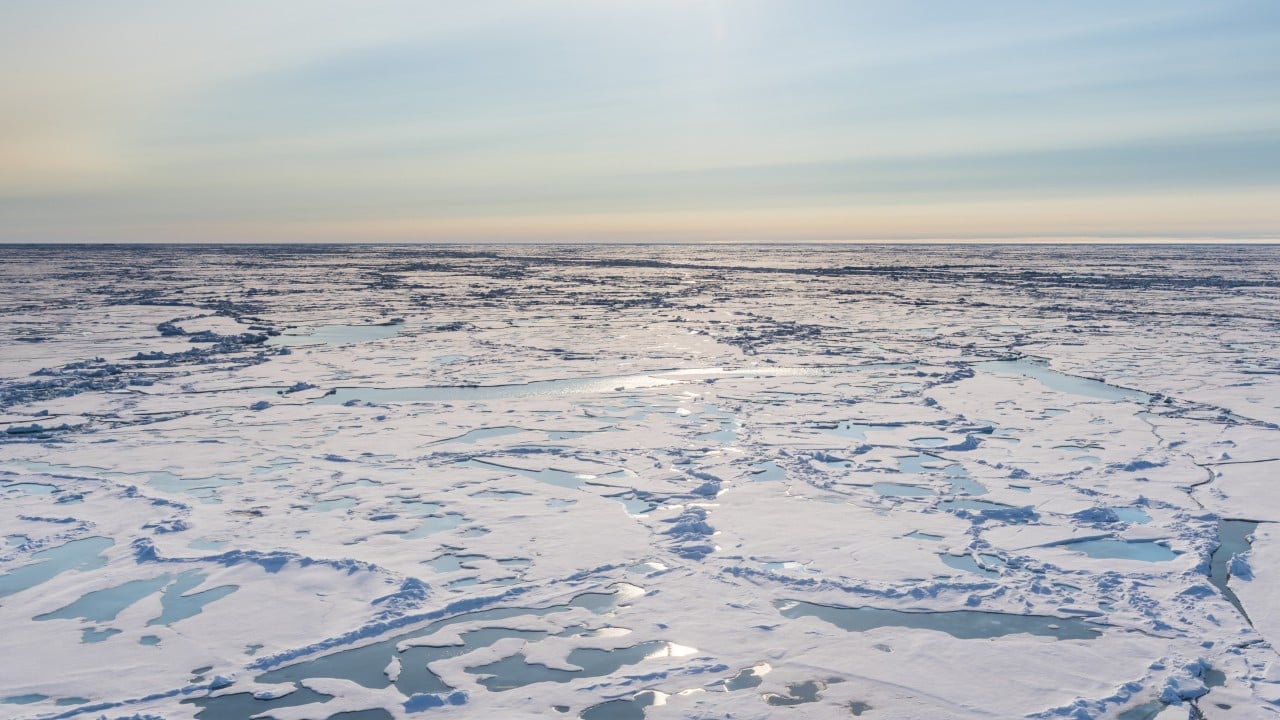
India’s formalization of a logistics pact with Russia regarding the Arctic represents a fundamental shift from opportunistic energy procurement to permanent maritime infrastructure integration. The agreement centers on the Northern Sea Route (NSR), a corridor that reduces the distance between East Asia and Europe by approximately 40% compared to the Suez Canal route. This transition is not merely a diplomatic gesture; it is a calculated hedge against the "Malacca Dilemma" and a structural integration into the emerging Polar Silk Road. To understand the magnitude of this pact, one must analyze the convergence of three critical variables: kinetic maritime security, thermal erosion of Arctic ice, and the diversification of hydrocarbon supply chains.
The Triad of Arctic Integration
The logistics pact functions as a framework for three distinct operational pillars that define India’s Arctic footprint.
1. The Energy Security Buffer
India currently imports over 80% of its crude oil. The reliance on the Persian Gulf and the Bab-el-Mandeb strait introduces high levels of systemic risk due to regional instability. By securing a logistics mandate in the Arctic, India gains preferential access to the Vostok Oil project—one of the largest undeveloped hydrocarbon deposits globally. The NSR provides a direct conduit for these resources to reach Indian ports like Chennai via the Vladivostok-Chennai Maritime Corridor. This creates a dual-node supply chain that bypasses the volatility of Middle Eastern chokepoints.
2. Operational Interoperability
Arctic navigation requires specialized hardware and expertise that the Indian Navy and merchant marine currently lack. The pact facilitates training for Indian seafarers in ice-navigation and provides a blueprint for joint shipbuilding. Russia’s dominance in nuclear-powered icebreakers is the gatekeeper to the NSR. Through this agreement, India secures the "right of way" and the technical data necessary to build ice-class vessels, effectively outsourcing the high cost of R&D for polar-capable hulls to a seasoned partner.
3. Geopolitical Balancing in the Indo-Pacific
China’s aggressive investment in Arctic infrastructure—under its "Near-Arctic State" self-designation—threatens to turn the NSR into a Sino-Russian lake. India’s entry into this theater prevents a bilateral monopoly. By providing Russia with an alternative capital source and a massive downstream market, New Delhi ensures that the Arctic remains a multipolar domain. This is a defensive strategic play disguised as a commercial logistics agreement.
The Economic Mechanics of the Northern Sea Route
The feasibility of the NSR as a viable alternative to the Suez Canal depends on the cost-function of polar transit. While the distance is shorter, the operational expenses (OPEX) are historically higher due to icebreaker fees and specialized insurance premiums.
- Distance Reduction: A voyage from Tokyo to Rotterdam via the Suez Canal is roughly 21,000 kilometers. The NSR route is approximately 13,000 kilometers.
- Time Compression: For a standard container ship, this translates to a reduction of 10 to 15 days, significantly improving the "vessel turnaround ratio" for shipping companies.
- Fuel Efficiency vs. Icebreaker Tolls: The fuel savings from shorter distances are currently offset by the fees Russia charges for icebreaker escorts. India’s logistics pact aims to negotiate "favored nation" status for these tolls, altering the internal rate of return (IRR) for Indian shipping firms.
Structural Constraints and Engineering Bottlenecks
A data-driven analysis must acknowledge the physical and technical limitations that prevent the NSR from immediately replacing traditional routes.
Thermal Variability and Predictability
Despite global warming, the Arctic remains seasonal. The window for "open water" transit (non-icebreaker assisted) is expanding but remains restricted to the summer months. Outside of this window, even ice-class vessels face "clutter" from drifting floes which reduce speed and increase the risk of hull breach. India’s logistics strategy must account for this seasonality, treating the NSR as a high-capacity seasonal relief valve rather than a 365-day replacement for the Suez Canal.
Port Infrastructure Deficits
The Russian Arctic coastline lacks the dense network of "ports of refuge" and bunkering stations found along the Mediterranean or the Indian Ocean. In the event of a mechanical failure or medical emergency, the response time in the Arctic is measured in days rather than hours. The pact likely involves Indian investment in Murmansk and Vladivostok to build out the "Last Mile" infrastructure needed to support a sustained increase in cargo volume.
The Vladivostok-Chennai Linkage: A Strategic Pivot
The logistics agreement is the kinetic engine for the Eastern Maritime Corridor (EMC). This route connects the Russian Far East directly to India’s eastern coast. The strategic importance of the EMC lies in its ability to transform India into a regional transshipment hub.
- Commodity Flow: The EMC will primarily move coking coal, LNG, and fertilizers—commodities essential for India’s industrial expansion and food security.
- Counter-Encirclement: By strengthening its presence in the Russian Far East, India creates a strategic presence to the north of China, complicating Beijing’s naval calculus in the South China Sea.
- Investment Clusters: The pact encourages Indian "Special Economic Zones" within Russian Arctic territories. This is a move toward vertical integration, where India doesn't just buy the resources but owns the extraction and processing infrastructure at the source.
Quantifying the Risks: Geopolitical and Environmental
The strategy is not without significant friction points. The primary risk is the "Secondary Sanctions" trap. As long as Russia is under heavy Western sanctions, Indian firms utilizing the NSR or Arctic logistics hubs face the threat of being cut off from the SWIFT banking system or Western insurance markets (like Lloyd's of London).
Furthermore, the environmental cost of increased Arctic shipping is a looming regulatory bottleneck. The International Maritime Organization (IMO) is increasingly scrutinizing heavy fuel oil (HFO) usage in polar regions. India will need to invest in LNG-powered or dual-fuel vessels to remain compliant with future Arctic environmental protocols, adding a capital expenditure (CAPEX) burden to the project.
Theoretical Framework: The Pivot to Polar Realism
This shift marks India's transition from "Non-Alignment" to "Multi-Alignment." By deepening ties with Russia in the Arctic while simultaneously participating in the Quad (US, Japan, Australia, India), New Delhi is practicing a form of "Strategic Autonomy 2.0." The Arctic pact is the physical manifestation of this theory. It provides India with a seat at the table where the rules of the "New North" are being written.
The success of this ambition will be measured by the volume of non-energy cargo that begins to flow through the NSR. Until the route can reliably transport electronics, textiles, and machinery with the same consistency as the Suez Canal, it remains a strategic energy corridor rather than a global trade artery.
The immediate operational priority for the Indian Ministry of Shipping must be the acquisition or long-term lease of a fleet of ice-class Suezmax tankers. Without domestic control over the specialized tonnage required for Arctic transit, the logistics pact remains a theoretical advantage. Establishing a permanent technical mission in Murmansk to oversee the integration of Indian logistical software with Russian maritime traffic control is the second critical move. Only by embedding personnel and hardware into the Arctic's physical infrastructure can India transform a diplomatic agreement into a permanent strategic footprint.