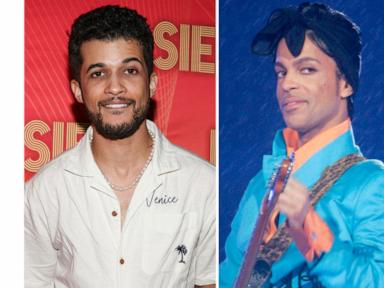
Casting Jordan Fisher as "The Boy" in the stage adaptation of Purple Rain solves the central economic and artistic problem of jukebox biographical theater: how to project a singular, mythologized cultural icon without reducing the production to a tribute act. Rather than pursuing a physical or vocal Doppelgänger of Prince, the producers have selected a proven Broadway triple-threat whose career metrics minimize commercial variance while maximizing vocal and choreographic execution across an eight-show weekly schedule. This decision reflects a calculated risk-mitigation model designed to bridge legacy intellectual property with contemporary theater demographics.
The Structural Paradox of Iconic Stage Biopics
Translating a solo musician’s semi-autobiographical film into live theater exposes a structural vulnerability. In cinema, Prince controlled every frame, vocal track, and camera angle of the 1984 film Purple Rain, utilizing close-ups and studio overdubs to build an aura of untouchable mystique. On stage, that aura must be generated eight times a week in real time without acoustic safety nets.
Producers facing this challenge generally choose between two casting archetypes:
- The Impersonator Model: Hiring an unknown or tribute artist who closely mimics the subject's physical stature, vocal timbre, and mannerisms. This satisfies purists in the opening twenty minutes but often collapses under the demands of book scenes, emotional subtext, and eight-show vocal endurance.
- The Interpreter Model: Hiring an established stage actor with elite vocal and movement capacity who channels the essence and structural function of the character rather than attempting a carbon copy.
By selecting Fisher, the creative team—led by director Lileana Blain-Cruz and book writer Branden Jacobs-Jenkins—has decisively committed to the Interpreter Model. Notice the character designation itself: Fisher is cast as "The Boy," the archetypal moniker used in the original script, rather than "Prince." This semantic distinction insulates the actor from direct mimicry comparisons while signaling that the stage production treats the source material as dramatic literature rather than a museum piece.
The Four Operational Pillars of the Fisher Selection
Evaluating this casting through the lens of Broadway production management reveals four distinct operational advantages that mitigate the high fixed costs of a major commercial musical.
1. Proven Eight-Show Vocal Mechanics
Prince’s catalog demands extreme tessitura shifts, moving rapidly from gritty baritone phrasing into sustained, piercing falsetto screams. In a standard studio environment, a vocalist can rest between takes. On Broadway, executing tracks like "The Beautiful Ones" or "Purple Rain" nightly destroys untrained or purely pop-oriented voices within weeks, leading to costly understudy performances and ticket refunds.
Fisher possesses a documented track record of surviving grueling Broadway vocal tracks. His runs as Evan Hansen in Dear Evan Hansen, Anthony Hope in the revival of Sweeney Todd, and Orpheus in Hadestown demonstrate an ability to sustain high-register belt and falsetto lines under heavy physical exertion. From a production insurance standpoint, Fisher represents low vocal attrition risk.
2. High-Velocity Choreography and Multi-Instrumental Credibility
"The Boy" is not merely a singer; he is the kinetic center of The Revolution, leading a Minneapolis funk-rock band through high-intensity stage routines while playing guitar. Most Broadway leading men excel in either traditional musical theater dance or static vocal delivery, rarely combining athletic street/pop choreography with live instrumental proficiency.
Fisher’s background spans competitive dance, television musicals (Grease: Live, Rent: Live), and multi-instrumental musicianship. This compresses rehearsal timelines. Instead of spending months teaching a dramatic actor how to move like a frontman or hold a guitar convincingly, the creative team can allocate rehearsal hours to integrating the band and refining transitions between book scenes and concert sequences.
3. Cross-Demographic Audience Acquisition
Broadway musicals built on 1980s intellectual property face a predictable demographic ceiling: their core ticket buyers skew older, affluent, and nostalgic. While this audience drives initial advance sales, relying solely on legacy fans creates a cliff once that pool is exhausted.
Fisher brings an established, digitally native fanbase cultivated through Disney projects, To All the Boys: P.S. I Still Love You, streaming platforms, and younger Broadway audiences drawn to Hamilton and Hadestown. This creates a dual-funnel marketing architecture:
- Legacy Funnel: Driven by the Prince estate, the iconic 1984 soundtrack, and the Minneapolis music scene nostalgia.
- Contemporary Funnel: Driven by Fisher’s personal brand, social reach, and credibility among theatergoers under thirty-five.
4. Alignment with Prestige Dramatic Direction
The attachment of two-time Pulitzer Prize finalist Branden Jacobs-Jenkins (book) and Tony nominee Lileana Blain-Cruz (direction) indicates that this adaptation aims to interrogate the darker elements of the 1984 film—specifically generational trauma, domestic abuse, and artistic narcissism.
An impersonator would flatten these dramatic complexities into caricature. Fisher’s dramatic pedigree, particularly his work in psychological and myth-driven roles like Evan Hansen and Orpheus, equips him to handle Jacobs-Jenkins's dialogue without losing momentum when the narrative shifts into concert performance.
The Risk Matrix: Where the Strategy Faces Friction
No casting decision eliminates commercial risk, and the selection of Fisher introduces specific variables that the production must actively manage during pre-Broadway tryouts in Minneapolis and subsequent Broadway previews.
The Vocal Timbre and Guitar Virtuosity Gap
Prince’s artistic identity was inseparable from his status as a generational guitar virtuoso and his singular, slightly nasal, hyper-expressive vocal grain. Fisher’s natural vocal instrument is cleaner, smoother, and rooted in contemporary R&B and Broadway legit traditions.
If the musical arrangements simply replicate the 1984 album stems, audiences will subconsciously measure Fisher’s cleaner timbre against Prince’s rawer, more eccentric delivery. Furthermore, while Fisher is musically proficient, audiences will scrutinize whether his guitar playing is live or supplemented by pit musicians. Any perceived disconnect between physical strumming and acoustic output breaks theatrical immersion immediately.
Expectation Management Among Purists
The Prince fanbase exhibits intense protective ownership over his legacy. A segment of this audience expects visual and sonic fidelity to the 1984 film. Because Fisher does not share Prince’s exact physical silhouette or facial structure, early promotional imagery and performance clips risk triggering resistance from purists who conflate tribute accuracy with artistic quality.
Schedule Reliability and Stamina Load
While Fisher has proven his vocal stamina, he has also experienced publicly documented health and burnout pauses during previous runs, notably during Dear Evan Hansen. Carrying Purple Rain requires simultaneous heavy lifting across acting, dancing, singing, and band leadership. The production’s long-term financial viability depends entirely on building a sustainable vocal maintenance protocol and securing an equally formidable alternate or standby who can step in without depressing box office grosses.
Capitalizing on the Out-of-Town Tryout Architecture
Launching the stage adaptation in Minneapolis—the cradle of the "Minneapolis Sound" and the setting of the original film—serves as a high-stakes beta test before facing New York critics and Broadway capitalization pressures.
To convert Fisher’s casting from a strong press announcement into a multi-year Broadway run, the production must execute three specific tactical adjustments during the Minneapolis development window:
- Re-engineer the Orchestrations Around Fisher’s Instrument: Music supervisors must avoid forcing Fisher into pure vocal mimicry. Instead, arrangements should lean into his R&B agility and upper-register clarity, utilizing the live stage band to supply the raw, analog funk-rock grit that anchors the Minneapolis aesthetic.
- Integrate Live Guitar Mechanics Visually: Rather than hiding instrumental transitions, stage direction must explicitly showcase Fisher’s live musicality on select acoustic and electric cues, transparently distinguishing between moments where he leads the rhythm and moments where the band carries lead solos. This neutralizes authenticity skepticism early.
- Deploy Split-Testing in Promotional Assets: Marketing teams should release two distinct tracks of pre-Broadway visual content: one emphasizing raw rehearsal-room vocal power to convert skeptical Prince purists, and another highlighting choreographic intensity and dramatic chemistry to capture younger Broadway buyers.
If the creative team treats Fisher as a dramatic and musical interpreter rather than a human jukebox, Purple Rain avoids the biographical trap that sinks most catalog musicals and establishes a repeatable template for translating singular music icons to the Broadway stage.