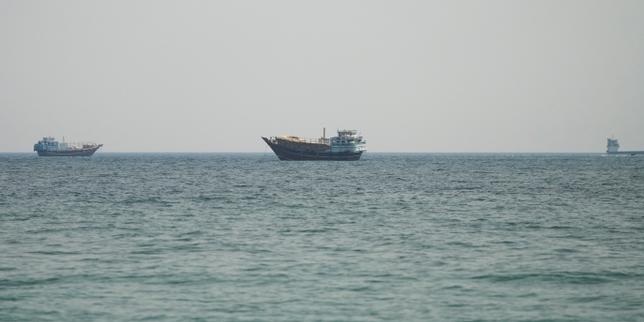
Mainstream media is hyperventilating again. Cable news anchors are pulling out maps of the Middle East, pointing frantic fingers at the Strait of Hormuz, and screaming about an imminent global energy collapse. Tehran fired "warning shots" at two commercial vessels. The immediate consensus? We are on the brink of a catastrophic maritime blockade that will choke off 20% of the world's petroleum liquified natural gas and send crude prices into triple digits.
It is a neat, terrifying narrative. It is also completely wrong. Read more on a related topic: this related article.
What the mainstream analysis misses—as it always does when analyzing asymmetric naval friction—is the difference between a tactical blockade and calculated geopolitical theater. Iran is not trying to close the Strait of Hormuz. Closing the strait is a self-destruct button for Tehran's own economy. Instead, these warning shots are a highly calibrated, economically rational leverage play designed to exploit Western supply chain paranoia without ever firing a live round into a hull.
If you are managing supply chains, trading energy futures, or setting corporate strategy based on the assumption of an imminent hot war in the Persian Gulf, you are playing right into the hands of the theater directors. Further reporting by USA Today explores similar views on the subject.
The Myth of the Hormuz Chokepoint Chokehold
Let's dissect the lazy consensus. The prevailing theory suggests that Iran can and will close the shipping lanes arbitrarily. This narrative treats the Iranian naval apparatus—specifically the Islamic Revolutionary Guard Corps Navy (IRGCN)—like a rogue actor with nothing to lose.
I have spent years analyzing maritime security data and watching energy markets react to the exact same script. Every three to eighteen months, a routine maritime interaction or a targeted harassment incident gets flagged by state media. The West panics. Oil spikes by three dollars a barrel. Algorithmic traders cash out. Then, nothing happens.
Why? Because actually closing the strait is an existential nightmare for Iran, not just the West.
Iran relies heavily on the free flow of traffic through those exact same waters to export its own sanctioned oil, primarily to buyers in East Asia who keep the regime's balance sheets out of the red. You cannot selectively blockade a body of water that is only 21 miles wide at its narrowest point without halting your own lifeblood. A total closure invites immediate, overwhelming conventional military retaliation from a coalition of Western and regional powers. The IRGCN knows its limits. They are experts in asymmetric disruption, not conventional suicide.
Warning Shots Are a Feature, Not a Bug
When the Iranian state television reports "warning shots," the average viewer visualizes a chaotic, trigger-happy patrol boat crew losing control. The reality is precisely engineered.
In naval doctrine, a warning shot is a communication tool. It is the maritime equivalent of an aggressive legal notice. By firing across the bow of a vessel, Tehran achieves three distinct objectives without crossing the red line of kinetic warfare:
- Risk Premium Inflation: They force global insurance syndicates, like Lloyd's of London, to hike War Risk premiums for transiting vessels. This acts as an invisible tax on international shipping, proving that Iran can impose economic costs on the West at will.
- Domestic Posturing: It provides raw material for internal propaganda, signaling strength to a domestic audience and regional proxies without risking a real war.
- Negotiation Leverage: It creates a crisis out of thin air that can be traded away later in diplomatic backrooms for sanctions relief or frozen asset releases.
This is a game of chicken where one driver is perfectly sober but pretending to be blind drunk so the other car swerves first. The Western media acts as Iran's megaphone, amplifying the illusion of madness and driving up the panic currency Tehran trades in.
People Also Ask: Dismantling the Flawed Premises
The public panic manifests in a few predictably flawed questions that dominate search trends every time a shot is fired in the Gulf.
Will oil prices hit $150 if the Strait of Hormuz is disrupted?
No. This question assumes a static global energy market from the 1970s. It ignores the structural realities of modern energy production. The moment Brent crude creeps up due to geopolitical friction, non-OPEC production—specifically US shale, Brazilian deepwater, and Canadian oil sands—spires to capture the margin. Furthermore, major regional players like Saudi Arabia and the UAE have spent decades building bypass infrastructure. The East-West Pipeline in Saudi Arabia can move millions of barrels per day directly to the Red Sea, completely bypassing Hormuz. The panic is temporary; the structural mechanics of global supply are highly resilient.
Can the US Navy protect every commercial ship?
This is the wrong question entirely. The US Fifth Fleet, based in Bahrain, doesn't need to play bumper cars with every commercial tanker to maintain order. The goal of international maritime coalitions is maritime domain awareness and strategic deterrence. Commercial shipping companies aren't helpless victims either; they employ private maritime security teams, adjust routing, and utilize automated AIS (Automatic Identification System) masking to navigate high-risk zones. The system relies on institutional resilience, not a one-to-one military escort.
The Cost of the Counter-Intuitive Approach
There is a downside to seeing through the theater. When you realize that these escalations are calculated performance art, the temptation is to ignore them entirely. That is a mistake.
While a total blockade is highly improbable, localized miscalculations can happen. A warning shot that accidentally strikes a bridge, a panicked merchant captain who makes an erratic maneuver and runs aground, or an automated defense system that misinterprets a drone's flight path can escalate a theater piece into a local crisis.
The strategy shouldn't be panic, nor should it be apathy. It must be cold calibration.
Stop watching the sensationalized headlines on television. Watch the maritime insurance rates. Watch the fixture rates for Very Large Crude Carriers (VLCCs). If the companies actually risking half-a-billion dollars worth of steel and cargo aren't rerouting around South Africa, you shouldn't be selling your portfolio or rewriting your corporate logistics strategy.
Ignore the noise. The tirs de sommation in the Strait of Hormuz aren't the opening salvo of World War III. They are the opening night of a well-rehearsed geopolitical play, and you are paying for the ticket with your panic.


