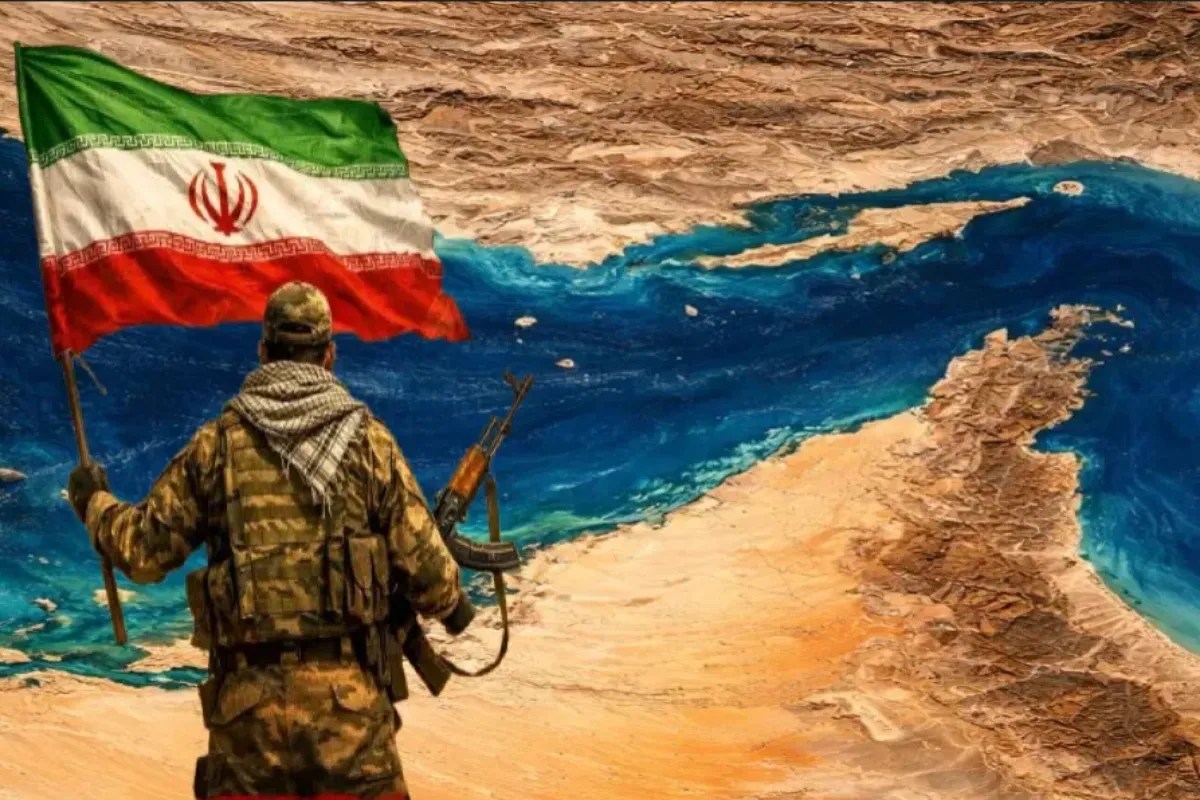
The Strait of Hormuz functions as the singular most critical arterial node in the global energy supply chain, facilitating the transit of approximately 21 million barrels of oil per day. When Tehran issues specific conditions for keeping this maritime corridor open, it is not merely a regional diplomatic gesture; it is an exercise in asymmetric economic warfare designed to stress-test the risk tolerance of the United States executive branch. The current tension between the Iranian regime and the Trump administration hinges on a trifecta of demands: the lifting of primary and secondary sanctions, the cessation of military build-ups in the Persian Gulf, and the recognition of Iran's regional security role. To analyze the viability of these demands, one must quantify the leverage held by each actor and the structural vulnerabilities of the global energy market.
The Logistics of a Chokepoint
The Strait of Hormuz is roughly 21 miles wide at its narrowest point, with shipping lanes limited to two-mile-wide channels for inbound and outbound traffic. This physical constraint creates a natural bottleneck where even the threat of disruption spikes the "war risk premium" in maritime insurance.
- Flow Statistics: Roughly 20% of the world's total liquid petroleum consumption passes through this point.
- Alternative Routes: While the East-West Pipeline in Saudi Arabia and the Abu Dhabi Crude Oil Pipeline provide some redundancy, their combined capacity (roughly 6.5 million barrels per day) cannot absorb the total volume of Hormuz traffic.
- Operational Risk: Iran utilizes a "swarm" naval doctrine, employing small, fast-attack craft and anti-ship cruise missiles. This strategy is designed to overwhelm high-value targets through volume rather than individual vessel superiority.
The Iranian Triad of Demands
Tehran's strategy focuses on transforming its geography into a bargaining chip. The three conditions presented for the continued stability of the Strait are calculated to reverse the "Maximum Pressure" campaign.
1. The Rescission of Economic Sanctions
The primary Iranian objective is the restoration of the Joint Comprehensive Plan of Action (JCPOA) frameworks or a new equivalent that allows for the unfettered export of crude oil. The Iranian economy faces a structural deficit that can only be mitigated by a return to pre-2018 export levels. By linking the Strait's security to sanctions relief, Tehran attempts to force the Trump administration into a binary choice: economic stability for the U.S. consumer or the continuation of an isolationist policy toward Iran.
2. Withdrawal of Extraterritorial Naval Presence
The demand for the removal of the U.S. Fifth Fleet assets from the Persian Gulf aims to establish a regional security vacuum. Iran posits that regional actors should manage regional waters—a move that would effectively grant Iran hegemony over the shipping lanes. For the Trump administration, this is a non-starter. The U.S. Navy serves as the guarantor of the "freedom of navigation" principle, which underpins the globalized trade system.
3. Geopolitical Legitimacy and Influence Spheres
The third condition—recognition of Iran's "rightful" role in regional security—is an attempt to codify Iranian influence in Iraq, Syria, and Yemen. Iran views the Strait of Hormuz as its "internal waters" or at least its immediate "security perimeter." Demanding recognition in this capacity is a move to prevent future U.S. interventionism in Iranian-backed proxy activities.
The Trump Administration Tactical Calculus
The response from Washington is governed by a policy of "Economic Realism." The Trump administration’s approach differs from previous eras due to the United States' status as a net exporter of energy, driven by shale production. However, while the U.S. is less dependent on Persian Gulf oil for its own consumption, the global price of oil is fungible. A disruption in Hormuz sends prices up in New York and London regardless of where the oil originated.
The Deterrence Framework
The administration utilizes a three-tiered deterrence model:
- Secondary Sanctions Pressure: Targeting third-party nations (like China or India) that attempt to bypass Iranian oil embargoes.
- Cyber-Kinetic Balancing: Utilizing non-attributable cyber operations to degrade Iranian naval command and control without triggering a full-scale kinetic war.
- Regional Partnerships: Leveraging the Abraham Accords and security ties with Saudi Arabia and the UAE to create a unified front against Iranian maritime expansion.
The Cost Function of Closure
The actual closure of the Strait is a "suicide option" for Iran. If the Strait is shut down, Iran’s own remaining exports—largely destined for China—would cease. Furthermore, a total closure would likely trigger the "Snapback" mechanism of UN sanctions and potentially a coordinated international military intervention.
The logic of the threat lies in the threshold of escalation. Iran does not need to close the Strait to win; it only needs to make the cost of keeping it open unacceptably high for the West. This is achieved through:
- Limpet Mine Attacks: Low-level sabotage that creates insurance uncertainty without providing a clear casus belli.
- Drone Harassment: Testing the reaction times and electronic warfare capabilities of U.S. destroyers.
- Seizure of Tankers: Using legalistic pretenses (e.g., environmental violations) to detain foreign vessels, creating diplomatic leverage.
Economic Variables and Market Sensitivity
The Brent Crude price reaction to Hormuz tensions is non-linear. Markets typically price in a "conflict discount" during periods of diplomatic stalemate, but a single kinetic event can trigger a vertical price movement.
$Price_{Total} = Price_{Fundamental} + Risk_{Geopolitical}$
In this equation, $Risk_{Geopolitical}$ is currently volatile. The Trump administration’s reliance on domestic production provides a buffer, but the inflation-sensitive American voter remains the primary vulnerability. If oil stays above $100 per barrel for a sustained period, the domestic political pressure on the administration to negotiate increases significantly.
The Strategic Bottleneck
The fundamental flaw in the Iranian demands is the assumption that the U.S. executive is willing to trade long-term regional influence for short-term price stability. The current administration has signaled a preference for energy independence and tactical strikes over comprehensive diplomatic restructuring.
The U.S. strategy involves bypassing the Strait's relevance entirely. By encouraging the expansion of pipelines across the Arabian Peninsula to the Red Sea and the Gulf of Oman, the U.S. aims to reduce the "Hormuz Leverage" to a negligible factor over the next decade.
Iran's "three conditions" are an attempt to stall this shift. By demanding the removal of sanctions now, they hope to capitalize on their remaining relevance before infrastructure projects in the Middle East render the Strait of Hormuz a secondary concern.
The immediate tactical play for the Trump administration is to ignore the three-point ultimatum while simultaneously increasing the deployment of unmanned surface vessels (USVs) for persistent surveillance. This increases the transparency of the waterway, making "shadow" attacks by Iran nearly impossible to execute without immediate attribution. By removing the veil of deniability, the U.S. forces Iran into a position where any disruption would lead to a direct, high-intensity conflict—a scenario the Iranian regime is currently ill-equipped to survive.