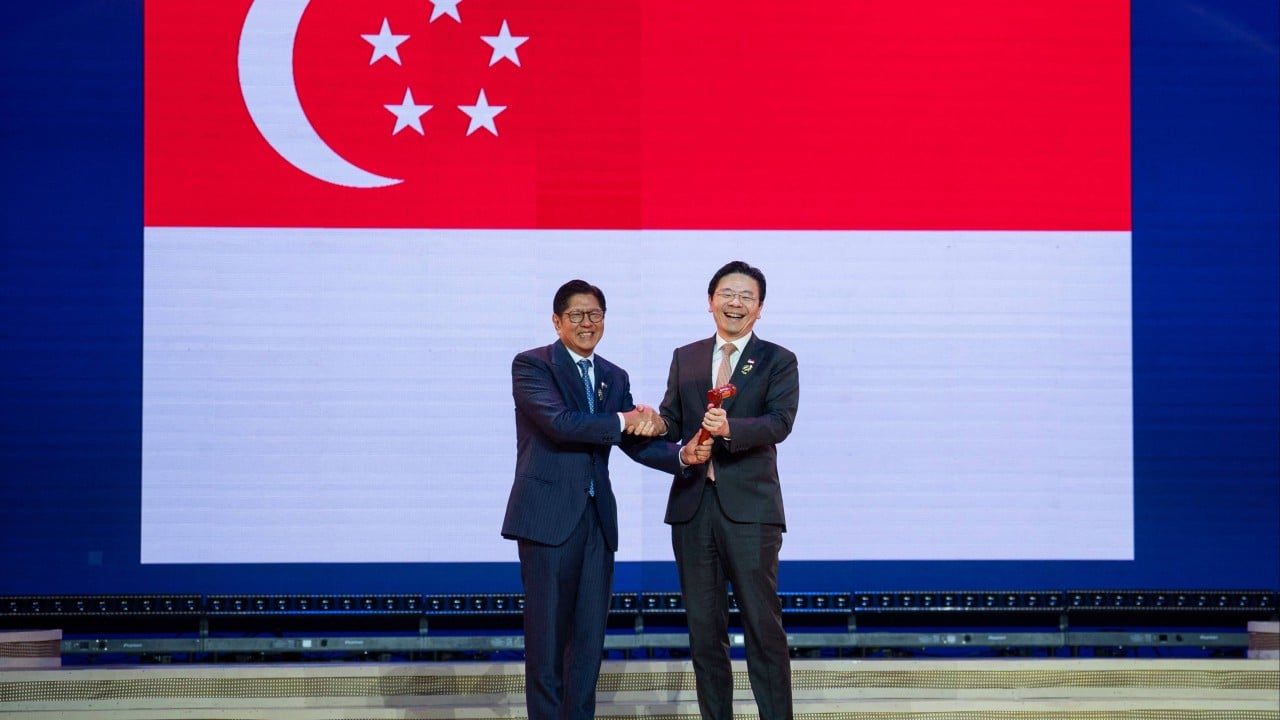
Every foreign policy analyst in Southeast Asia is currently writing the exact same lazy column. Singapore takes the ASEAN chair in 2027, and the pundit class has already decided the plot. They claim the little red dot’s biggest test will be walking the tightrope between Washington and Beijing, or somehow conjuring a miracle in Myanmar.
That narrative is comfortable. It sells subscriptions. It is also completely wrong.
I have spent over a decade watching regional trade deals stall in sterile Jakarta conference rooms and listening to diplomats congratulate themselves over lukewarm coffee while actual supply chains bypass their jurisdictions. When you strip away the diplomatic theater, Singapore’s greatest threat as ASEAN chair has nothing to do with American aircraft carriers or Chinese coast guard vessels. The real crisis is internal economic decay, regulatory fragmentation, and the creeping irrelevance of the bloc’s own trade architecture.
If Singapore spends 2027 playing referee between superpowers, it will waste its chairmanship managing symptoms while the patient dies of organ failure.
The Myth of the Great Power Tightrope
Conventional wisdom says Singapore is uniquely positioned to bridge the US-China divide because it speaks both languages, trades heavily with both giants, and refuses to pick a side. Analysts frame this balancing act as a high-wire stunt requiring superhuman diplomatic agility.
Here is the reality: both Washington and Beijing already price in Singapore’s neutrality. Neither superpower expects Singapore to join an ideological crusade. When Prime Minister Lawrence Wong or Foreign Minister Vivian Balakrishnan repeat the standard ASEAN mantra about avoiding a new Cold War, nobody in the State Department or Zhongnanhai falls out of their chair. The script is written. The boundaries are known.
Treating superpower rivalry as Singapore’s primary challenge mistakes noise for signal. The South China Sea disputes and US semiconductor export controls are permanent features of the geopolitical weather, not problems an annual ASEAN chair can solve. Obsessing over them gives regional leaders a convenient excuse to avoid the much harder, less glamorous work of fixing their own house.
The Silent Killer Is Intra-ASEAN Protectionism
While diplomats posture about multipolarity, the actual economic foundation of Southeast Asia is cracking.
Look at the numbers that rarely make the front page of foreign policy journals. Intra-ASEAN trade has remained stubbornly stuck between 21% and 23% of the bloc’s total trade for nearly two decades. Compare that to the European Union, where internal trade regularly exceeds 60%. For a region that markets itself as a unified economic community of nearly 700 million people, those numbers are an indictment.
Why is a Vietnamese manufacturer still finding it easier to ship components to Shenzhen or Los Angeles than to Surabaya? Because non-tariff barriers (NTBs) have quietly replaced tariffs across Southeast Asia.
- Arbitrary licensing rules: Governments routinely slap sudden import permit requirements on agricultural and industrial goods to protect domestic cronies.
- Divergent technical standards: A medical device or food product approved in Singapore still faces months of redundant testing in neighboring capitals.
- Customs friction: Despite years of talk about the ASEAN Single Window, physical paperwork and discretionary inspections still choke border crossings.
I have watched mid-sized logistics firms burn millions trying to build cross-border fulfillment networks across ASEAN, only to retreat back to single-country operations because a sudden decree in one ministry wiped out their margins overnight. Singapore cannot survive on high-end finance and wealth management alone. Its entire economic model depends on acting as the high-value services hub for a growing, integrated Southeast Asian hinterland. If that hinterland retreats into quiet economic nationalism, Singapore’s engine starves.
Why the "ASEAN Way" Is Now a Liability
To understand why this happens, we have to address the sacred cow of Southeast Asian diplomacy: the ASEAN Way.
Precisely defined, the ASEAN Way refers to a decision-making doctrine built on non-interference in domestic affairs, quiet consultation (musyawarah), and strict consensus (mufakat), where every single member state holds an effective veto over collective action.
In 1967, when the bloc was founded to stop newly independent neighbors from going to war with one another, consensus was a stroke of genius. In 2027, it is a straitjacket.
Whenever Singapore tries to push high-standard digital trade rules, cross-border carbon credit frameworks, or binding data-flow agreements, the initiative gets watered down to match the regulatory capacity—or political will—of the slowest member in the room. By the time a framework survives the consensus grinder, it is usually non-binding, toothless, and five years behind commercial reality.
Look at the ASEAN Digital Economy Framework Agreement (DEFA). On paper, DEFA is supposed to unlock a trillion-dollar regional digital economy by 2030. In practice, negotiations get bogged down whenever data localization laws collide with cross-border cloud infrastructure. Countries that want to keep citizen data locked inside domestic servers for surveillance or protectionist reasons simply drag their feet, knowing Singapore’s sense of diplomatic decorum will prevent it from publicly calling them out.
Dismantling the Wrong Questions
If you look at what business leaders and policy watchers are actually asking about 2027, most are chasing red herrings.
Will Singapore fix the Myanmar crisis?
No, and pretending otherwise is malpractice. Since the 2021 military coup, ASEAN’s Five-Point Consensus has functioned as an exercise in collective face-saving. The junta in Naypyidaw ignores it, the resistance forces view ASEAN as irrelevant, and member states themselves are quietly split between maritime nations favoring firmer isolation and mainland neighbors prioritizing border stability. Singapore will maintain the diplomatic line—barring political representatives of the junta from high-level summits—while leaving the messy backchannel reality to Thailand, India, and China. Anyone grading Singapore’s chairmanship on Myanmar is grading a fish on its ability to climb a tree.
Can Singapore force a binding South China Sea Code of Conduct?
The Code of Conduct (CoC) negotiations with Beijing have dragged on for over twenty years for one simple reason: China has zero incentive to sign a legally binding document that restricts its maritime claims, and several ASEAN states rely too heavily on Chinese infrastructure capital to risk a rupture. Singapore will keep the talks alive so the diplomatic machinery keeps humming, nothing more.
Will Singapore use the chair to boost bilateral trade with the US?
Singapore already has a bilateral Free Trade Agreement with the United States that has been active since 2004. It does not need the ASEAN chair to talk to Washington. In fact, using the chair to push overtly Western regulatory standards often backfires, triggering suspicion among larger neighbors like Indonesia that Singapore is acting as a Trojan horse for outside powers.
The Real Playbook for 2027
If Singapore wants its 2027 chairmanship to matter ten years from now, it needs to abandon the pursuit of 10-nation—or 11-nation, with Timor-Leste’s accession—consensus on economic integration. It must embrace minilateralism inside ASEAN.
Historically, ASEAN has an "ASEAN Minus X" formula written into its economic charter, allowing two or more member states to move ahead with economic integration while others join later when ready. Diplomats talk about it constantly and almost never use it with real teeth.
Singapore should stop begging for unanimous sign-offs and start building high-speed coalitions of the willing.
- Weaponize "ASEAN Minus X" for Digital and Green Trade: Instead of diluting DEFA so every member can sign it in 2027, Singapore should lock in binding, enforceable digital trade, cross-border payment, and subsea cable protection rules with the countries that actually have the infrastructure—Malaysia, Indonesia, Thailand, and Vietnam. Let the holdouts watch investment flow to the early adopters. Fear of missing out works infinitely faster than diplomatic persuasion.
- Scale the Johor-Singapore Special Economic Zone (JS-SEZ) Model: Physical supply chain integration beats summit communiqués every single time. By proving that customs clearance, labor mobility, and renewable energy grids can operate seamlessly across a bilateral border, Singapore creates a working template that other ASEAN corridors—like Thailand-Malaysia or Vietnam-Cambodia—will be forced to copy to stay competitive.
- Expose Non-Tariff Barriers with Hard Data: Singapore has the analytical firepower and institutional credibility to fund an independent, real-time public tracker of intra-ASEAN trade friction. Name the specific customs delays, redundant certifications, and sudden import bans costing regional businesses money. Shame is an underutilized tool in Southeast Asian governance.
The Uncomfortable Downside
This aggressive, two-speed approach carries a severe political cost, and pretending it is risk-free would be dishonest.
If Singapore pushes hard on minilateral coalitions and calls out protectionist drag, it will immediately revive the oldest resentment in Southeast Asia: the perception of Singapore as an arrogant, technocratic city-state lecturing larger, poorer neighbors on how to run their economies.
Jakarta, in particular, guards its status as ASEAN’s natural heavyweight fiercely. Any move by Singapore that looks like it is bypassing Indonesian leadership or splitting ASEAN into a tier-one club and a tier-two periphery will trigger fierce pushback from Indonesian ministries. Building a fast track for trade without fracturing the political solidarity of the bloc requires walking a razor's edge. If Singapore pushes too hard, neighbors will quietly stall bilateral water, airspace, or energy agreements just to remind the city-state of its geographic vulnerability.
Stop Hosting Summits, Start Enforcing Standards
As former Singaporean diplomat Bilahari Kausikan has repeatedly pointed out over the years, ASEAN was never meant to be the European Union—it is a diplomatic mechanism designed to manage diversity, not erase it. He is right about the politics, which is precisely why Singapore must stop letting political consensus dictate commercial velocity.
Global capital does not wait for ASEAN working groups to finish drafting another non-binding declaration. Supply chains are being rewired right now across India, Mexico, and Eastern Europe. If Southeast Asia remains a collection of ten fragmented markets hiding behind tariff-free slogans while strangling commerce in red tape, foreign investors will treat the region as a collection of isolated assembly plants rather than an integrated economic powerhouse.
Singapore’s 2027 chairmanship will not be judged by how gracefully its leaders smile for cameras alongside the US President and the Chinese Premier. It will be judged by whether a business in Penang can sell to a customer in Jakarta without hiring three customs brokers and waiting six weeks for a permit.
Ditch the superpower theater. Break the consensus trap, build the coalitions that actually ship goods, and let the laggards catch up on their own time.