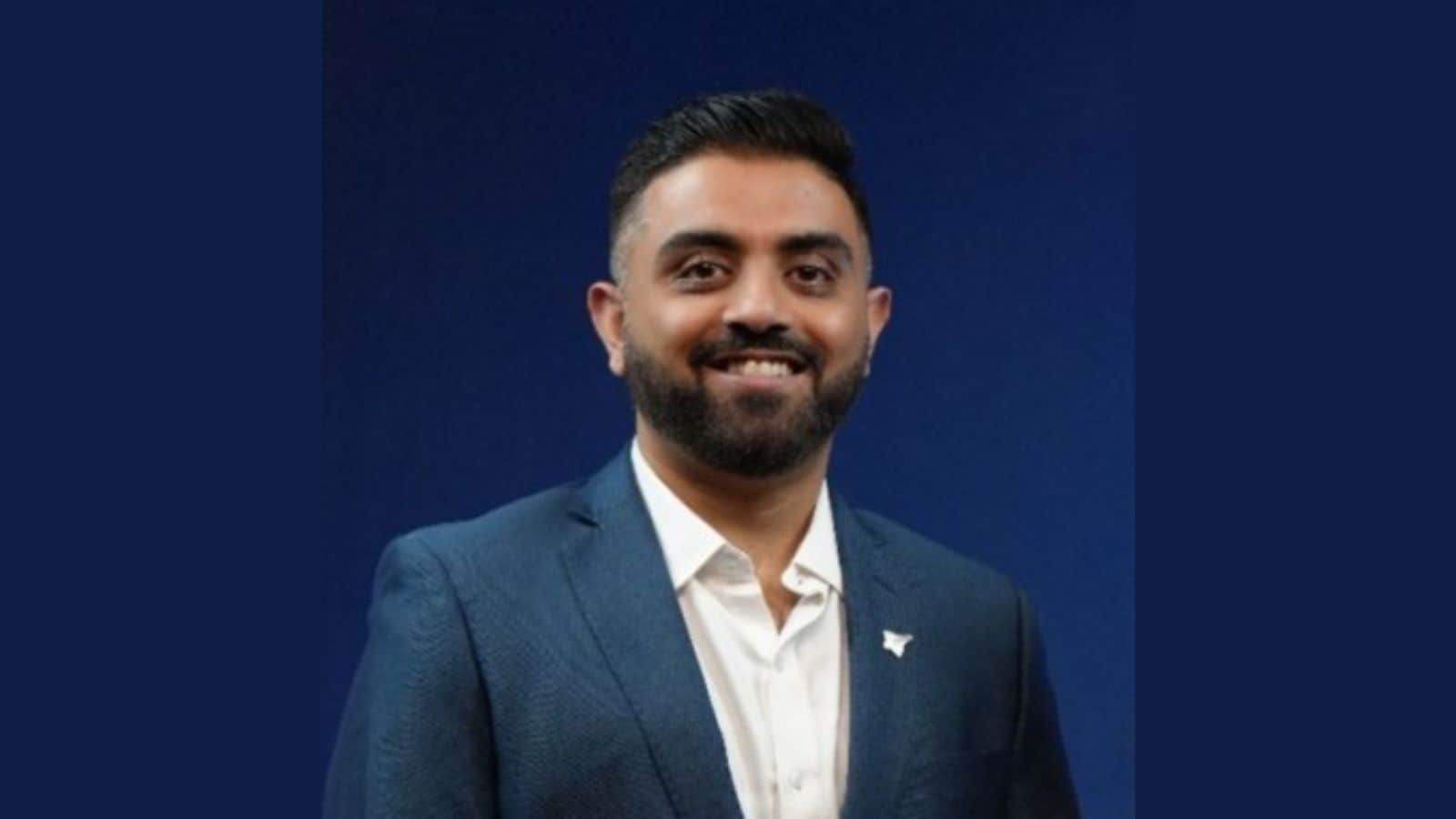
The internet loves a clean narrative. It prefers its heroes carved from marble, mute, and utterly devoid of a digital footprint prior to the exact moment they saved the day. When Smit Machchhar hauled a flydubai flight through a crisis with ice in his veins, the public did what the public always does. They went digging. They surfaced an old podcast clip where Machchhar preached a strict gospel of focus over selfies, of locking in rather than broadcasting.
Instantly, the lazy consensus formed. The commentators clucked. The social media pundits nodded sagely. See? The irony! The man who warned against digital vanity is now the star of a viral news cycle.
It is a profoundly stupid reaction.
This entire media circus exposes a deep, rotting sickness in how we view modern professionalism. We demand that people in high-stakes fields either remain total ghosts online or submit to a puritanical standard of ideological purity where a single recorded thought from years ago is treated as a binding contract. If you talk about focus, you are never allowed to have nuance. If you use media, you are automatically a vapid narcissist.
Let us clear the wreckage of this bad take right now.
The Cult of the Invisible Worker
For decades, safety-critical industries operated on a rigid dogma. The ideal professional was a grey blur. You showed up, you executed checklists, you went home, and you left zero trace of your interior life. Personality was treated as a liability. Expressing an opinion outside of a technical manual was viewed as a distraction from the holy grail of compliance.
This is a coward's view of competence.
Machchhar’s old podcast wasn't a hypocritical slip; it was an argument for intentionality. There is a massive, unbridgeable canyon between building a mindless digital vanity project and discussing the mental architecture required to keep a multi-million-dollar aircraft from dropping out of the sky. Yet the armchair critics want to blur those lines because nuance requires actual thinking, and lazy hot takes require none.
When you look at modern aviation, maritime operations, or emergency medicine, the pressure to maintain an air of robotic detachment creates a brittle culture. People do not break because they have a podcast or a social media presence. They break because the system demands they suppress every facet of their humanity until a crisis hits, at which point everyone expects them to transform into an unshakeable machine.
And when they actually do transform into that machine, the public rewards them by combing through their past to find something to nitpick.
The False Equivalence of Digital Presence and Distracted Performance
Let us address the core fallacy driving this entire discourse. The assumption baked into every headline is that talking about focus or creating media means you lack it.
This is the kind of logic born from people whose hardest daily decision is choosing between oat milk and almond milk.
In the real world of high-consequence execution, discipline is not a fragile vase that shatters the moment you pick up a microphone or record a conversation. A pilot can discuss the psychological toll of distraction, record a podcast, share thoughts on professional discipline, and still execute a flawless emergency landing when the warning lights start blinking red.
In fact, the best operators are almost always the ones who actively analyze their environments. They think out loud. They write. They speak. They engage with ideas precisely because they care about the mechanics of performance. To suggest that holding a microphone invalidates your ability to hold a control yoke is a childish misunderstanding of how competence functions.
Think about the surgeons, engineers, and aviators who actually move the needle in their fields. They are rarely silent monks sitting in dark rooms. They communicate, they teach, they debate, and they document. They understand that sharing insights about focus is an active exercise in reinforcing those very principles.
Yet, the moment an emergency happens, the narrative instantly flips. Suddenly, any past attempt to articulate professional standards is weaponized against you. You talked about focus, therefore you aren't allowed to have a public voice. You shared thoughts on discipline, therefore you are fair game for every internet detective looking for a gotcha.
It is exhausting, and it is entirely toxic.
Why We Punish Nuance
Why does the public react this way? Because nuance is difficult to monetize, and hypocrisy is cheap.
When a flight lands safely after a terrifying ordeal, the media machine needs an angle. They cannot just report that trained professionals did their jobs effectively because competence is boring. Competence does not generate clicks. Drama generates clicks. Irony generates clicks.
So, they manufacture a clash between the man on the podcast and the man in the cockpit. They frame it as a poetic contradiction. Look! The guy who talked about focus had to use his focus! The guy who mentioned selfies is now on every news feed!
It requires a staggering lack of imagination to see this as anything other than a manufactured distraction. Machchhar's message on that old podcast was simple: eliminate noise, prioritize the mission, and master your domain. When the flydubai flight hit turbulence and crisis, he eliminated the noise, prioritized the mission, and mastered his domain.
Where is the contradiction? Where is the hypocrisy?
It only exists in the fevered imaginations of people who think talking about a principle means you are barred from living it.
The Dangerous Message We Are Sending
When we tear apart professionals for having a voice outside of their strict job descriptions, we create a perverse incentive structure.
We tell every young pilot, engineer, doctor, and technician that the safest path is to erase themselves. We tell them to lock down their social media, delete their podcasts, never write an article, and never share a single unfiltered thought about their craft. Because if you do, someday, when you do something heroic, someone will dig up a sentence you uttered three years ago and try to use it to diminish your achievement.
That is how you build an industry of cowards and conformists.
We need more professionals talking out loud, not fewer. We need people who are willing to discuss the psychology of high-stress environments, who are willing to share what it takes to stay calm when the alarms are screaming. We need more voices dissecting the reality of operational safety, not a sanitized corporate whisper.
If a podcast about focus offends you because the person who made it later had to use that exact focus in an emergency, your meter for irony is broken.
The Reality of Modern High-Stakes Performance
Let us look at how actual experts operate.
When you study high-reliability organizations, you find a common thread. The teams that fail are the ones locked in silos of rigid compliance, where nobody speaks up, nobody shares insights, and everyone is terrified of stepping outside their lane. The teams that succeed are characterized by psychological safety, active communication, and a culture of continuous analysis.
A podcast is a medium for analysis. It is a tool for dissecting the exact mental models required to survive when things go sideways.
When Machchhar spoke about prioritizing flying over superficial distractions, he was outlining the exact framework that keeps people alive at thirty thousand feet. That framework doesn't vanish because an algorithm surfaces an old audio file to feed the daily content mill. If anything, the event proved the podcast right.
The noise was loud. The situation was chaotic. The internet wanted a spectacle. And the pilot tuned out the noise, ignored the digital chatter, and flew the plane.
Stop Falling for the Gotcha Economy
We are living through an era of hyper-scrutiny where context is treated as an optional luxury. Every word ever uttered into a microphone is archived, indexed, and waiting to be pulled out of context the second someone achieves something notable.
It is time to stop playing this game.
We need to stop rewarding media outlets and internet sleuths for treating a person's entire historical catalog as a trap. We need to look past the superficial irony manufactured by people who have never faced a genuine crisis in their lives.
Smit Machchhar did his job. He kept people safe. He relied on the exact mental conditioning he had previously articulated. The fact that he once recorded a podcast discussing that mindset does not make him a hypocrite. It makes him a communicator who actually practiced what he preached.
The next time an old clip surfaces to challenge a hero, ask yourself a simple question. Are you reacting to a real failure of character, or are you just falling for the oldest trick in the digital playbook?
Because the real crisis isn't that professionals have podcasts. The crisis is that we have built an ecosystem so deeply cynical that we cannot accept a competent person doing their job without trying to tear down how they talk about it.
Shut down the noise. Look at the mechanics. And stop punishing people for having the courage to speak up about what it takes to excel.


