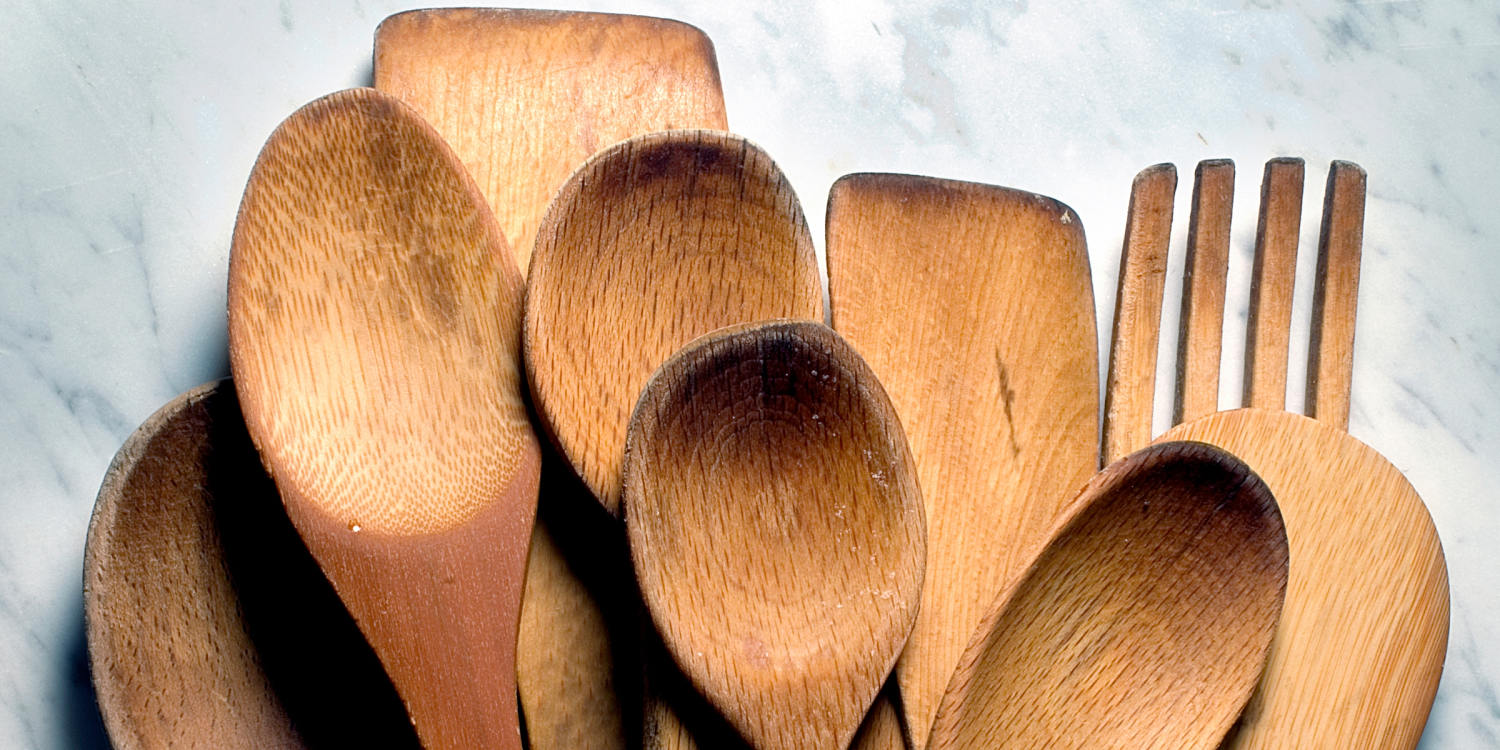
Most home cooks treat a ten-dollar wooden spoon like a Fabergé egg, and it is the exact reason they end up pulling micro-splinters out of their bolognese.
If you search the internet for how to clean wooden utensils and keep them from splintering, you will hit a wall of recycled, overly precious advice. The standard industry script reads like a spa menu. Gently rinse with lukewarm water. Never use soap. Pat dry with a microfiber cloth. Rub lovingly with organic beeswax under a full moon.
That advice is terrible. Worse, it is counterproductive.
I spent twelve years running commercial prep kitchens and consulting on culinary equipment durability, and I have watched thousands of dollars in artisanal maple, walnut, and olivewood turn into fuzzy, unhygienic kindling. When you baby wood, you fail to remove the microscopic proteins and starches wedged into its pores, and you allow loose cellulose fibers to stand upright like tiny wooden needles waiting to snap off into your risotto.
You do not need a gentler routine. You need friction, real detergent, and abrasive maintenance.
The Myth of the Fragile Wooden Spoon
Let us dismantle the biggest lie in kitchenware right out of the gate: the idea that dish soap destroys wood.
This rumor dates back to the era of harsh, lye-based soaps that stripped natural oils and chemically degraded lignin—the complex organic polymer that binds wood fibers together. Modern dish detergents like Dawn or Seventh Generation are mild surfactants. They break surface tension and emulsify grease without eating the structural integrity of hardwood.
When you skip soap and rely on a "gentle warm water rinse," two things happen:
- Lipid oxidation: Cooking oils trapped in the grain go rancid, turning sticky and attracting dust and bacteria.
- Starch cement: Flour, pasta water, and reduced sauces dry inside the porous surface, swelling the wood unevenly as moisture fluctuates.
If you want to clean wooden utensils properly, wash them with hot water, actual dish soap, and a stiff-bristled nylon brush. Scrub with the grain. Get the food out. The only hard rule regarding water is never submerge them. Leaving a wooden spatula in a sink full of water—or running it through a two-hour dishwasher cycle—forces water deep into the vascular bundles of the wood. As the wood swells and then rapidly dries, the fibers tear apart from the inside out. That internal tearing is what creates cracks and splinters.
Wash fast. Scrub hard. Dry immediately.
Why Your Spoons Are Splintering in the First Place
Wood is not a solid block of plastic; it is a bundle of microscopic straws made of cellulose and hemicellulose held together by lignin. Even a brand-new, silky-smooth beechwood spoon has thousands of severed fiber ends exposed at the surface.
The first time those fibers get wet, they absorb moisture and swell. When they dry, they do not lay back down flat. They stand up. Run your hand over a wooden cutting board or spoon after its first wash, and it feels fuzzy. Woodworkers call this raising the grain.
If you ignore that fuzz and keep cooking, boiling liquids and aggressive scraping against stainless steel pans weaken those raised fibers until they fracture. Suddenly, you have splinters in your food.
Most lifestyle blogs tell you to fix this by slathering on more oil. Oiling raised grain does nothing to remove the loose fibers; it just lubricates them until they break off in your soup. You cannot moisturize away a structural burr. You have to shear it off.
The Industry Secret Nobody Mentions Sandpaper
Go into the back of any high-end restaurant kitchen or custom woodworking shop, and you will find a stack of sandpaper next to the prep sink. If you are not sanding your wooden utensils, you are doing it wrong.
This is the step every "natural living" blog skips because it sounds too industrial, yet it is the single most effective way to prevent splinters permanently.
When a wooden spoon starts feeling rough or fuzzy, do not reach for the oil bottle. Reach for 220-grit aluminum oxide sandpaper (or a fine-grit sanding sponge).
Here is the exact mechanical process that actually works:
- Wash and completely dry the utensil. Wood must be bone dry before sanding, or you will just mash wet fibers around instead of cutting them cleanly.
- Raise the grain intentionally by wiping the wood with a damp cloth and letting it air dry for twenty minutes. This forces all the weak, microscopic splinters to stand at attention.
- Sand aggressively with 220-grit paper until the surface feels like glass again. You are physically shearing off the damaged outer layer of cellulose.
- Step up to 320-grit or 400-grit if you want a burnished, restaurant-grade finish that repels water on contact.
Once you sand down raised grain two or three times over the first few months of owning a spoon, the surface fibers stabilize. The fuzz stops coming back. You have effectively tempered the wood for heavy kitchen combat.
(To be completely transparent about the downside of this approach: aggressive sanding will eventually wear down thin edges over a decade, and it strips away any dark patina the wood has developed. If you care more about rustic aesthetics than keeping wood shards out of your esophagus, stick to the spa treatment.)
Stop Using Olive Oil and Coconut Oil on Your Wood
If I had a dollar for every time a well-meaning home cook ruined a seventy-dollar walnut paddle by rubbing it with extra virgin olive oil, I could retire to Tuscany.
Food-grade cooking oils are non-drying oils. Unlike tung oil or raw linseed oil—which polymerize upon exposure to oxygen and cure into a hard, protective barrier—vegetable, olive, canola, and avocado oils never cure. They stay liquid inside the wood pores forever.
Within three to six weeks, those trapped triglycerides oxidize. They turn gummy, smell like old crayons, and create a tacky surface that grabs onto lint, spices, and bacteria. Coconut oil is particularly notorious for this; despite internet hype about its "antimicrobial properties," unrefined coconut oil breaks down in the warm, humid environment of a kitchen and goes rancid inside wood grain faster than almost anything else.
If you want to condition wood after washing and sanding, you have exactly two acceptable options:
- Food-grade mineral oil (USP grade): It is a petroleum byproduct, which makes crunchy-granola bloggers panic, yet it is completely inert, odorless, colorless, and biologically incapable of going rancid. It fills the wood pores so water cannot get in.
- Board butter (mineral oil melted with pure beeswax): The mineral oil penetrates the deep pores while the beeswax creates a hydrophobic topcoat that causes water and tomato sauce to bead up and roll off.
Apply it warm, let it soak for twenty minutes, and buff off every single drop of excess with a clean rag. If the spoon feels greasy when you put it in the drawer, you left too much on.
Should You Even Use Wood for Everything
Part of mastering kitchen tools is knowing when to throw the rulebook out. The bacterial research on wood versus plastic—most notably the landmark studies conducted by Dr. Dean Cliver at the University of Wisconsin-Madison—proved that hardwoods actually trap and kill bacteria like Salmonella and E. coli more effectively than scarred plastic boards. As wood dries, capillary action pulls bacteria down into the cellular structure where they dehydrate and die.
However, that biological advantage only works if the wood is intact, tight-grained, and dry.
Hardwoods vs. Softwoods: Know What You Bought
Most cheap wooden spoons sold in grocery store multipacks are made from bamboo or rubberwood, and neither is what you think it is.
- Bamboo is technically a grass, not a wood. It is held together with massive amounts of industrial glue and contains high levels of silica, which dulls knives and causes the brittle fibers to splinter aggressively when exposed to heat and moisture.
- Birch and Pine are softwoods with wide, open grain. They absorb liquids like sponges and fray almost immediately.
- Hard Maple, American Black Walnut, Cherry, and Olivewood are closed-grain hardwoods. Their dense cellular structure resists water penetration and sands down to a satin finish.
If you are stirring boiling acidic tomatoes, deglazing a screaming-hot cast-iron skillet, or scraping fond off the bottom of a pan, stop using soft wooden spoons. Use a high-heat silicone spatula or a beveled stainless-steel turner. Save your hardwoods for folding batters, stirring risottos, and sautéing aromatics where their gentle touch protects your cookware without sacrificing their own structural integrity.
The Brutal Truth About Kitchen Maintenance
Stop treating your wooden utensils like museum pieces that need to be coddled, and stop throwing them away the moment they get rough.
A wooden spoon is a consumable mechanical tool. When it gets dirty, scrub it with hot soapy water and a stiff brush. When it gets fuzzy, hit it with 220-grit sandpaper until it is smooth. When it looks dry, seal it with mineral oil and beeswax.
Throw away the cheap splintered bamboo multipack in your drawer right now, buy two solid pieces of hard maple or walnut, and keep a sheet of sandpaper under your sink.