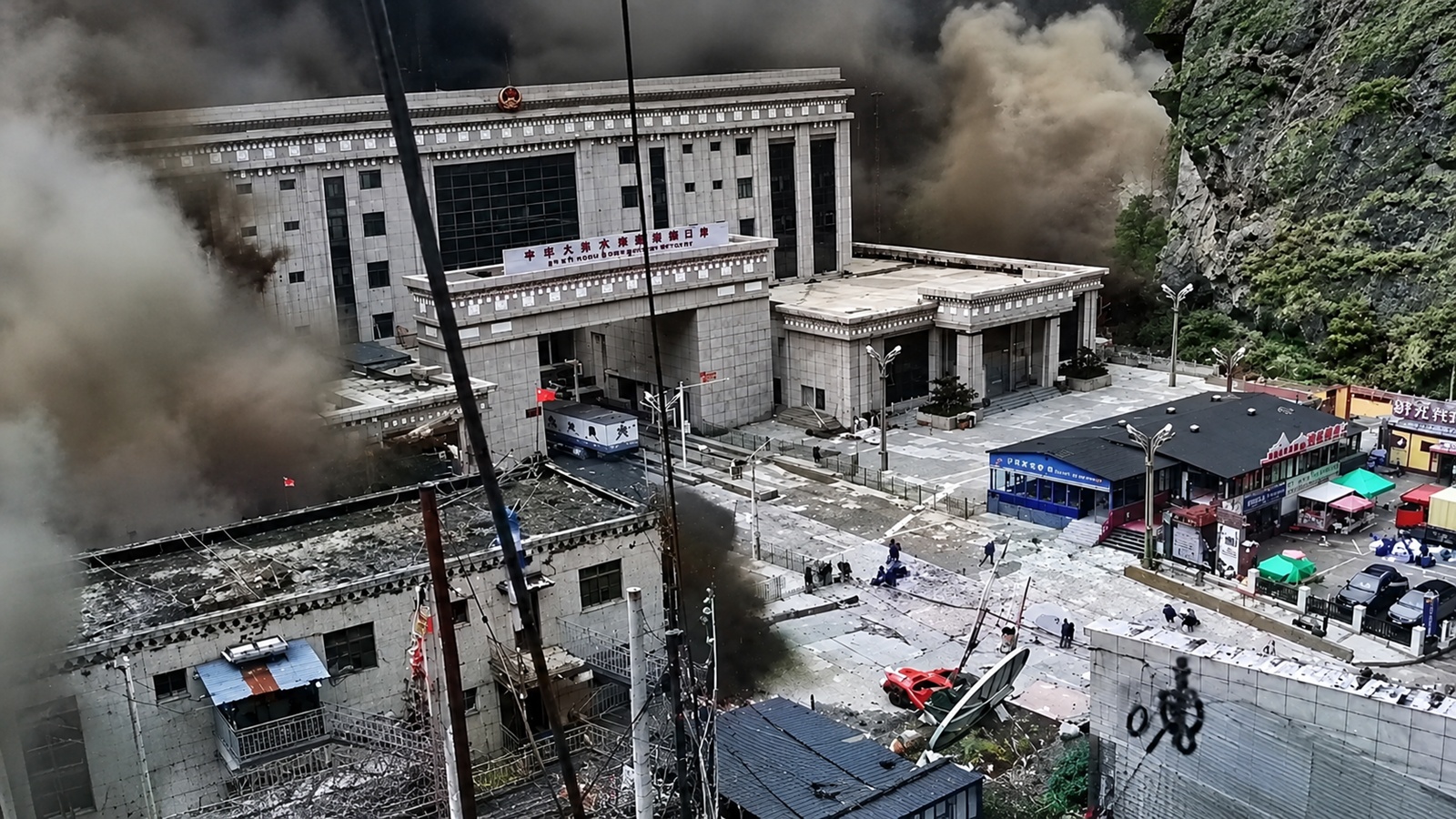
Every time a neonatal ward catches fire or a public hospital oxygen supply fails, the media drops into a predictable, lazy cycle of outrage. We get the stock footage of weeping mothers, the solemn statements from politicians promising thorough investigations, and the hand-wringing editorials demanding more thoughts and prayers for the victims. Fourteen newborns die in Pakistan's capital because of a hospital nursery fire, and the entire public discourse locks onto the immediate horror of the flames.
This reaction is useless. It is a comforting ritual that lets us pretend these disasters are tragic accidents of fate rather than the entirely predictable results of a broken institutional architecture.
I have spent two decades auditing medical infrastructure and supply chains across developing health sectors. I have watched billions of dollars vanish into bureaucratic black holes while basic fire-stop foam and modern circuit breakers sit on import docks because some ministry official hasn't received his bribe. When a nursery burns down, the fire isn't the primary failure. The fire is just the final auditor showing up to balance the books on decades of systemic corruption and institutional negligence.
If you want to stop crying over dead infants, you have to stop looking at the smoke and start looking at the purchase orders.
The Myth of the Accidental Electrical Short
The standard narrative following any hospital disaster always defaults to a single phrase: electrical short circuit. It sounds technical, objective, and most importantly, accidental. It implies that electricity is a rogue element, an invisible hazard that simply strikes without warning like a bolt of lightning.
This is a lie.
Electrical failures in high-density neonatal units do not happen by accident. They happen because of criminal cost-cutting, counterfeit wiring, zero preventative maintenance, and overloaded grids running cheap copper alternatives bought through non-transparent bidding processes. When a ventilator or an incubator pulls more current than a degraded wall socket can handle, the insulation melts. Sparks fly. Oxygen lines—often run too close to unshielded power sources in retrofitted wards—do the rest.
Blaming an electrical short is like blaming gravity when a bridge built with rotten timber collapses.
Let us be precise. A hospital nursery is a high-dependency zone. It demands redundant power grids, isolated ground fault interrupters, fire-retardant wall partitions, and daily equipment testing. When a government or private hospital board cuts the budget for infrastructure maintenance to pad administrative salaries or build new executive wings, they are making a direct, calculated trade-off. They are trading infant lives for operational margin.
Every time we accept electrical failure as an act of God, we give the administrators who signed off on substandard electrical work a free pass.
The Procurement Racket Nobody Wants to Name
Follow the money trail behind hospital safety equipment and you will find a system designed to fail.
In public health sectors across South Asia and other resource-constrained regions, procurement is treated as a patronage machine. Contracts for fire suppression systems, medical gas pipelines, and electrical upgrades are rarely awarded to the lowest qualified bidder based on technical merit. They go to the contractor with the right political connections, who then sub-contracts the work to the lowest possible bidder, pocketing the difference at every tier.
By the time the wiring reaches the nursery wall, thirty percent of the budget has evaporated into kickbacks. What is left buys substandard cables, uncertified circuit breakers, and cheap plastic conduits that turn into toxic blowtorches the moment a surge hits.
I have walked through brand-new hospital wings where the fire alarms were wired to dummy circuits because the contractor ran out of cable and didn't want to fail the inspection. Inspectors sign off anyway because the inspection system itself is a secondary market for extortion.
If you ask why safety standards are not enforced, the standard answer points to a lack of funding. This is false. The funds exist. They are simply diverted before they ever touch a spool of wire or a fire extinguisher.
Imagine a Scenario Where Inspectors Go to Prison
Imagine a scenario where a hospital fire results in the immediate, automatic manslaughter indictment of the entire hospital board, the chief procurement officer, and the local electrical inspector, carrying mandatory minimum sentences of twenty years without parole.
Watch how fast those electrical grids get upgraded. Watch how quickly the counterfeit wiring disappears from supply chains.
Right now, accountability is diffused until it disappears entirely. A committee is formed. The committee writes a four-hundred-page report that blames systemic constraints, bureaucratic inertia, and a lack of resources. Six months later, the ministers rotate out, the public forgets, and the same contractors win the next round of hospital renovation bids.
Accountability cannot exist in a system where the people investigating the crime are protected by the same political apparatus that profited from the substandard construction.
Why More Funding Will Not Fix This
The common knee-jerk demand after every disaster is to throw more international aid or government budget at the healthcare sector. More money for hospitals! More funding for pediatric care!
This is the exact wrong prescription.
Pouring capital into a corrupt, unmonitored procurement pipeline is like pouring water into a sieve. You do not have a resource shortage; you have an integrity surplus problem. Until you fix the mechanism of accountability, every additional dollar you inject simply scales the volume of the graft.
What actually works? Total decentralization and radical transparency.
Hospital infrastructure maintenance must be uncoupled from political ministries and placed under independent, third-party technical oversight bodies with international accreditation. Every single procurement contract, from the gauge of a copper wire to the brand of an incubator, must be published on a public, immutable ledger before a single bolt is turned. If a hospital fails an electrical safety audit, the facility must be shut down immediately, and patients relocated, regardless of political embarrassment.
Right now, hospitals protect their reputation by hiding their safety failures until those failures explode into national headlines.
We need to stop treating healthcare facilities as sacred cows that are too politically sensitive to audit rigorously. A hospital that ignores fire safety is a slaughterhouse with a pharmacy attached.
Stop holding candlelight vigils for victims of institutional murder. Start dismantling the procurement boards that bought the fuel for the fire.