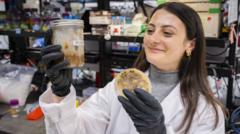
The food industry has a new darling, and it smells like moldy rice.
Every lifestyle publication and zero-waste influencer is currently swooning over Aspergillus oryzae—better known as koji. The narrative is comforting: take your kitchen scraps, inoculate them with this ancient Japanese fungus, and presto, you have turned garbage into a gourmet, umami-rich seasoning. It is framed as the ultimate solution to our massive food waste crisis. Expanding on this theme, you can find more in: Living Without Running Water Changed Everything I Know About Survival.
It is a beautiful fantasy. It is also a delusion.
The mainstream consensus on koji upcycling misses the entire economic and biochemical reality of food production. I have spent years analyzing supply chains and kitchen economics. Watching restaurants and home cooks invest hundreds of dollars in fermentation chambers to "save" three dollars' worth of carrot peels is a masterclass in missing the forest for the trees. Analysts at Glamour have provided expertise on this matter.
Koji is an incredible culinary tool. But using it as a systemic bandage for food waste is like using a luxury sports car to haul gravel. It is inefficient, expensive, and fundamentally misunderstood.
The Chemistry They Conveniently Forget
To understand why the "koji saves waste" argument falls apart, we have to look at the actual science of fermentation, not the romanticized version.
Koji functions by producing enzymes—chiefly amylases and proteases. These enzymes break down complex carbohydrates into simple sugars and complex proteins into savory amino acids (glutamic acid). This process requires a specific substrate. Koji thrives on starches and clean proteins.
Now, look at what actually constitutes food waste.
According to data from ReFED, the vast majority of consumer and retail food waste consists of high-moisture, low-starch, low-protein materials. We are talking about soggy lettuce, oxidized fruit skins, coffee grounds, and fibrous vegetable trimmings.
- The Moisture Problem: Excess water is the enemy of controlled fermentation. High-moisture waste invites pathogenic bacteria like Clostridium botulinum long before the koji can establish dominance.
- The Nutrient Deficit: You cannot get deep, savory umami out of an apple core because the apple core lacks the necessary nitrogenous compounds (proteins) to yield glutamic acid.
When high-end chefs claim they are fermenting "waste" with koji, they are usually omitting a crucial detail. They are taking a small amount of pristine waste—like leftover cooked beef fat or specific koji-friendly grains—and mixing it with massive amounts of fresh, high-quality grains just to keep the mold alive.
That is not reducing waste. That is creating a brand-new production line that requires fresh agricultural inputs.
The Cold Economics of the Fermentation Chamber
Let us address the "People Also Ask" question that dominates search engines: Is koji fermentation a cost-effective way to reduce kitchen waste?
The brutal, honest answer is absolutely not.
Imagine a commercial kitchen or a small-scale food business trying to implement a koji-based upcycling program. The hidden costs stack up immediately.
| Resource | The Myth | The Reality |
|---|---|---|
| Capital Expense | "You just need a warm corner." | Custom incubation chambers with precise PID temperature and humidity controllers costing $500 to $3,000. |
| Labor Cost | "It works while you sleep." | Hours spent washing, turning, monitoring, and sanitizing to prevent toxic mold outbreaks. |
| Energy Consumption | "Eco-friendly." | Running heating elements and humidifiers 24/7 for days at a time. |
| Yield | "Infinite free seasoning." | High dehydration rates mean 10kg of waste often yields less than 1kg of usable powder or paste. |
When you factor in the hourly wage of a skilled cook monitoring a fermentation project, that "free" seasoning made from discarded potato skins suddenly costs $45 an ounce to produce. You could have bought premium, traditionally brewed tamari for a fraction of the price and saved the carbon footprint of running an incubation chamber for 48 hours.
This is a classic case of virtue signaling masquerading as efficiency. It satisfies the ego, not the balance sheet.
The Dark Side: Safety and Spores
We need to talk about the risk that nobody in the lifestyle space wants to acknowledge. Fermentation is a battle of microbial dominance.
When you ferment clean, pearled barley for traditional miso, the playing field is controlled. When you attempt to ferment mixed kitchen scraps, you are introducing a wild, unpredictable microbiome.
If your incubation chamber drops in humidity or spikes in temperature for even a few hours, Aspergillus oryzae stalls. In that window, wild molds like Aspergillus flavus—which produces highly carcinogenic aflatoxins—can colonize the substrate. To the untrained eye, one fuzzy white or greenish mold looks a lot like another.
I have seen amateur fermenters and trendy pop-ups serving products that were clearly contaminated with wild molds, all under the banner of "zero-waste innovation." It is a public health disaster waiting to happen. The liability alone should make any rational business owner run in the opposite direction.
Shift the Scope: Where Real Upcycling Happens
If we want to actually impact food waste, we must stop looking for artisanal solutions to industrial problems.
The most effective upcycling methods are completely unsexy. They do not make for good Instagram reels. They involve logistics, dehydration, and mechanical processing.
Look at companies like Renewal Mill or Regrained. They do not mess around with finicky mold fermentations on a kitchen counter. They take massive, homogenous waste streams—like spent grain from breweries or okara from tofu production—and immediately stabilize them through mechanical drying and milling.
They turn tons of waste into functional, shelf-stable ingredients in hours, using a fraction of the energy per unit that a koji chamber requires.
The Unconventional Playbook for True Waste Reduction
If you run a food business or a household and actually want to move the needle on waste, abandon the koji trap and execute these three steps instead:
- Dehydrate and Pulverize: Skip the microbes. Take clean vegetable trim (like onion skins and mushroom stems), dry them completely in a low oven or standard dehydrator, and blend them into a powder. You get a shelf-stable flavor booster without the risk of aflatoxins or the labor of mold cultivation.
- Fix the Purchasing, Not the Scraps: Waste is a failure of inventory management. If you have enough strawberry tops to warrant a fermentation project, you bought too many strawberries, or your prep cooks are reckless with their knives. Treat the root cause, not the symptom.
- Industrial Composting over Artisanal Fermentation: If a scrap cannot be easily eaten or dried, send it to a commercial anaerobic digester. Let industrial infrastructure convert that methane-producing organic matter into renewable energy or agricultural fertilizer. It is far more efficient than trying to force-feed cabbage hearts to a temperamental fungus.
Stop treating food waste as a culinary playground for expensive hobbies. The moment we romanticize waste through complex, inefficient processes, we lose sight of the actual goal: consuming less, wasting less, and running tighter operations.
Turn off the fermentation chamber. Buy a better knife, fix your ordering sheet, and stop letting a fungus do the job of basic operational discipline.