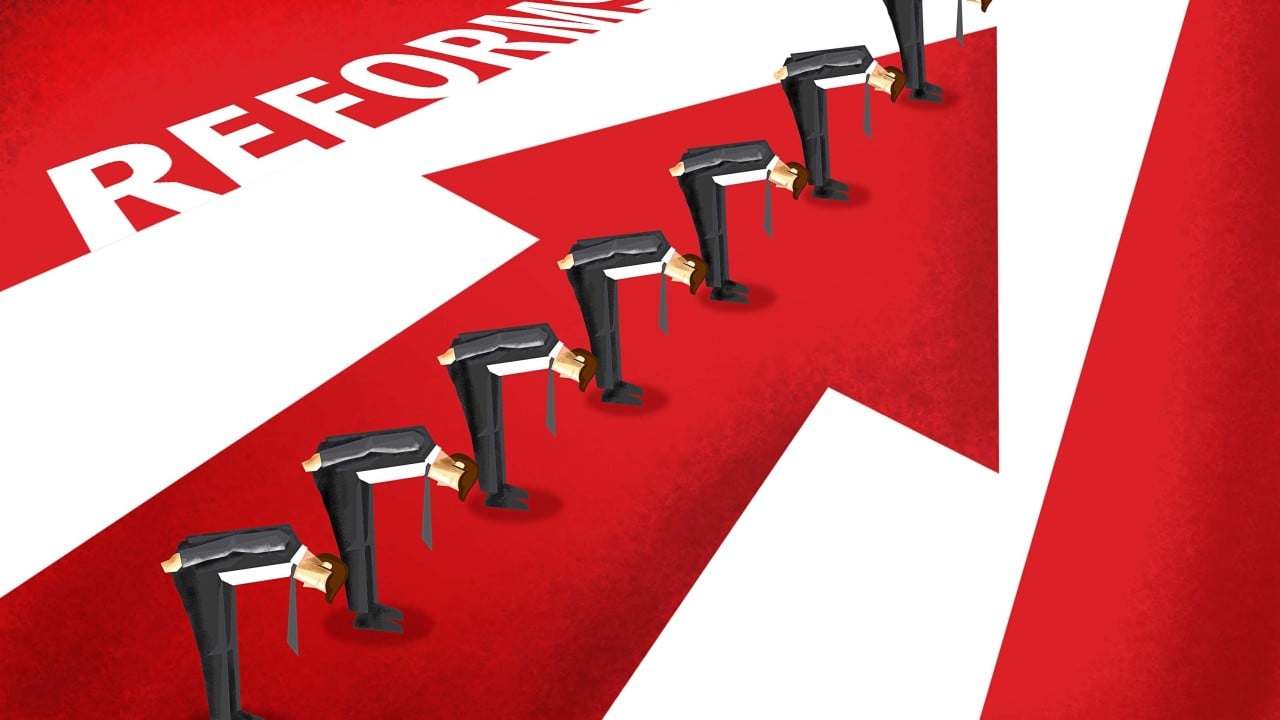
Remorse is cheap. Press conferences are free. Bowed heads in front of a bank of microphones cost the Hong Kong government exactly zero dollars and save zero lives.
Every single time a preventable disaster strikes this city—whether it was the 1996 Garley Building inferno, the 2010 Ma Tau Wai Road building collapse, the 2011 Fa Yuen Street market fire, or the deadly Tai Po tragedy—the public commentary falls into the exact same predictable trap. Pundits, editorial boards, and armchair critics immediately demand a theatrical display of contrition. They ask whether officials feel enough guilt. They analyze the tone of official apologies. They beg the bureaucracy to "show real remorse."
Stop asking for tears. Start demanding structural liability.
When you ask a massive administrative apparatus for emotional contrition, you are giving them an easy exit. An apology is a closed loop. Once a senior official expresses "deep sorrow," sets up a temporary relief fund, and promises to "review existing guidelines," the political pressure valve releases. The news cycle moves on. The underlying regulatory rot remains completely intact, waiting for the next spark in an aging New Territories tenement or subdivided flat.
If you want to understand why Hong Kong keeps burying residents after residential and industrial fires, you have to stop treating tragedy as a failure of empathy and start treating it as a predictable outcome of broken incentives.
The Anatomy of Bureaucratic Theater
I have spent over fifteen years watching municipal administrations across East Asia respond to urban infrastructure failures. The playbook never changes. When public anger spikes after a fatal fire, officials deploy what risk analysts call performative accountability.
Performative accountability looks like high-level visits to hospitals, white wreaths laid at cordoned-off entrances, and solemn pledges that "lessons will be learned." It feels emotionally satisfying for about forty-eight hours because it mirrors human grief.
It is also completely useless.
Governments do not feel remorse. Governments are collections of departments operating under statutory mandates, budget constraints, and career incentives. When the public demands "real remorse" for the Tai Po fire, bureaucrats respond by optimizing their public relations messaging rather than overhauling enforcement mechanisms. They hire better speechwriters instead of hiring more building inspectors.
Think about what happens inside a civil service department the morning after an editorial demands more empathy. Nobody rewrites the Fire Services Ordinance. Nobody revokes the licenses of negligent contractors. Instead, communications teams draft a slightly softer statement for the afternoon briefing. By framing the crisis around emotional sincerity, critics accidentally let officials grade themselves on a curve of politeness rather than competence.
Why "Reviewing Guidelines" Is a Death Sentence
The lazy consensus assumes that fatal fires in districts like Tai Po happen because officials lack heart or because regulations haven't been updated recently. Both premises are wrong.
Hong Kong actually possesses some of the strictest building and fire safety codes on paper in the world. Following the 1996 Garley Building fire in Jordan, which killed 41 people, the city overhauled its statutory framework, introducing the Fire Safety (Commercial Premises) Ordinance and later the Fire Safety (Buildings) Ordinance (Cap. 572). The rules on fire doors, sprinkler systems, and escape routes are crystal clear.
The failure is not the absence of rules. The failure is the enforcement gap between statutory law and physical reality on the ground.
Across Tai Po and older districts in the New Territories, thousands of composite buildings, village houses, and aging industrial blocks operate in a regulatory gray zone. Subdivided units (SDUs) carve single apartments into cramped warrens using cheap, non-fire-rated partitions. Fire escape staircases double as storage rooms for cardboard, old appliances, and flammable construction debris. Fire doors are routinely wedged open with bricks because the automatic closers are broken and nobody wants to pay to fix them.
Ask yourself a simple question: Why do landlords and property management companies ignore fire safety directions issued by the Buildings Department and the Fire Services Department?
Because the math favors negligence.
When an owner receives a Fire Safety Direction under Cap. 572, complying with it—installing water tanks, upgrading fire-resisting doors, rewiring faulty electrical panels—can cost hundreds of thousands of Hong Kong dollars. Failing to comply results in a sluggish bureaucratic chase that can drag on for years, culminating in fines that are frequently a fraction of the renovation cost.
Until non-compliance costs more than compliance, property owners will gamble with tenants' lives every single day. No amount of official remorse changes that equation.
The Question Nobody Wants to Ask About Enforcement
If you look at standard public commentary after a tragedy like Tai Po, the "People Also Ask" questions always revolve around the same safe topics: How much compensation will victims receive? Will the Chief Executive visit the site? When will the investigation report be published?
Those questions miss the entire point. The real question is brutal, uncomfortable, and politically inconvenient: Why does Hong Kong tolerate a system where known fire hazards are allowed to remain occupied for years after inspection?
Let's dismantle the standard excuses used by both bureaucrats and commentators.
Excuse 1: "Older buildings have structural limitations."
This is the favorite defense of negligent owners and timid regulators. They argue that 50-year-old walk-ups in Tai Po cannot physically accommodate modern sprinkler water tanks or widened staircases.
Engineers like those at the Hong Kong Institution of Engineers (HKIE) have repeatedly demonstrated that alternative fire safety engineering solutions—such as localized mist systems, interconnected wireless smoke alarms, and upgraded fire-rated sealants—can dramatically cut fatality rates without tearing down the building. Structural limitation is rarely a physical impossibility; it is almost always a financial excuse.
Excuse 2: "Cracking down too hard will make low-income tenants homeless."
This is the ultimate moral shield used to justify regulatory paralysis. If the Buildings Department immediately seals every illegal subdivided flat or fire-trap tenement in Tai Po, where do the residents go? Public housing waitlists stretch over five years. Therefore, the unspoken policy becomes benign neglect: look the other way so people have a roof over their heads, and pray nothing catches fire.
That is not compassion. That is outsourcing housing policy to luck.
When a government tolerates lethal living conditions because it failed to build enough transitional housing, it isn't protecting the poor—it is trapping them in tinderboxes. Real accountability means forcing landlords to fund safe, code-compliant relocation during mandatory safety retrofits, backed by statutory liens on the property if they refuse.
Excuse 3: "We need to wait for the full investigation before acting."
Investigations into major fires routinely take six months to two years. By the time the coroner's court or inter-departmental task force releases its findings, public outrage has evaporated, headlines have shifted to interest rates or cross-border retail numbers, and recommendations are quietly shelved under "long-term feasibility studies."
You do not need a two-year investigation to know that blocked fire exits, uncertified electrical modifications, and missing smoke detectors kill people. The cause of ignition might be specific to the Tai Po incident; the conditions that turned a localized fire into a fatal tragedy are universal and already documented in thousands of outstanding enforcement orders across the city.
What Real Accountability Actually Looks Like
If we strip away the demand for emotional remorse, what replaces it? Cold, mechanical, unforgiving operational reform.
Based on global best practices in urban fire safety—from Tokyo's post-war dense-housing retrofits to London's post-Grenfell building safety overhaul—there are four concrete mechanisms that actually stop people from burning to death in their homes.
1. Radical Transparency Through Public Hazard Registries
Right now, a prospective tenant renting a flat in Tai Po has almost no easy way to verify whether the building has outstanding Fire Safety Directions or unresolved structural orders before signing a lease.
Hong Kong needs a real-time, publicly searchable digital map—not buried in PDF tables, but integrated directly into property listing portals—that flags every building with overdue fire safety compliance orders in bright red. If a building fails an inspection, the landlord should be legally barred from registering new tenancy agreements until the hazard is cleared. Hit the asset's cash flow, and watch how fast fire doors get fixed.
2. Criminal Liability for Directors and Landlords
Fines paid by shell companies are just a cost of doing business. When a property management company or corporate landlord ignores a statutory fire safety order and someone dies, the corporate veil must disappear.
Following the model of the UK's Building Safety Act 2022, personal criminal liability—carrying mandatory custodial sentences, not suspended fines—must attach to the beneficial owners and directors who profited from non-compliant properties. When prison time is on the table, compliance ceases to be a budget negotiation.
3. Automatic Government Intervention With Property Liens
Currently, when fragmented ownership in old buildings prevents owners' corporations from agreeing on fire safety upgrades, the bureaucracy stalls. They send warning letters. They hold mediation sessions. Years pass.
The Fire Services Department and Buildings Department already possess statutory powers to carry out default works and recover costs, yet they use them sparingly out of fear of administrative friction and legal pushback. Flip the default: if an owners' corporation fails to appoint a contractor within 90 days of a final fire safety order, the government steps in automatically, executes the retrofit, and slaps a priority statutory charge on every title deed in the building—meaning no unit can be sold or refinanced until the public purse is repaid with interest.
4. Unannounced Nighttime Inspections With Immediate Sealing Powers
Daytime inspections are a joke. Landlords and commercial operators know exactly when inspectors work, and they clear corridors right before scheduled visits.
Enforcement teams need rotating nighttime and weekend strike squads with the legal authority to issue on-the-spot, non-appealable closure orders for commercial or subdivided premises blocking primary egress routes. If an exit is chained shut at 11:00 PM, the premises gets sealed at 11:05 PM.
The Uncomfortable Downside of Zero-Tolerance Enforcement
Every policy choice carries a cost, and pretending otherwise is dishonest. If Hong Kong abandons performative remorse in favor of ruthless enforcement, two painful consequences will follow immediately.
First, rents in aging districts will rise. When landlords are forced to spend hundreds of thousands of dollars on fire-rated partitions, sprinkler upgrades, and certified electrical rewiring, they will pass a portion of those costs onto tenants. The cheapest, most dangerous housing stock in Tai Po and across the New Territories will shrink overnight.
Second, bureaucratic friction will spike. Thousands of small-scale property owners—many of them elderly retirees holding a single aging flat—will protest the financial burden of mandatory retrofits. Politicians who love lecturing officials about "empathy" after a fire will suddenly scream about "heavy-handedness" when their constituents are forced to pay for fire doors.
That is the exact trade-off society refuses to confront. You cannot simultaneously demand rock-bottom unregulated rents, zero friction for small landlords, and zero fire fatalities. Something has to give. Choosing safety means accepting the economic disruption of eliminating sub-standard housing.
Stop Grading Officials on Their Grief
Imagine a scenario where tomorrow morning, every senior official in Hong Kong gives the most moving, tear-filled, genuinely remorseful press conference in the city's history over the Tai Po tragedy. Imagine every editorial writer applauds their sincerity.
Now imagine next winter, when the humidity drops, space heaters get plugged into overloaded extension cords inside another uninspected subdivided flat in Tai Po, and the stairwell is still packed with scrap cardboard because the enforcement order from 2021 still hasn't been executed.
Fire does not care how sorry the government is. Smoke does not pause out of respect for a solemn press release.
Stop asking Hong Kong's leaders to feel bad about the Tai Po fire. Demand to see the list of overdue fire safety orders in the district, the names of the landlords who ignored them, and the exact date the bulldozers and contractors arrive to force compliance. Anything else is just mourning the next victims in advance.