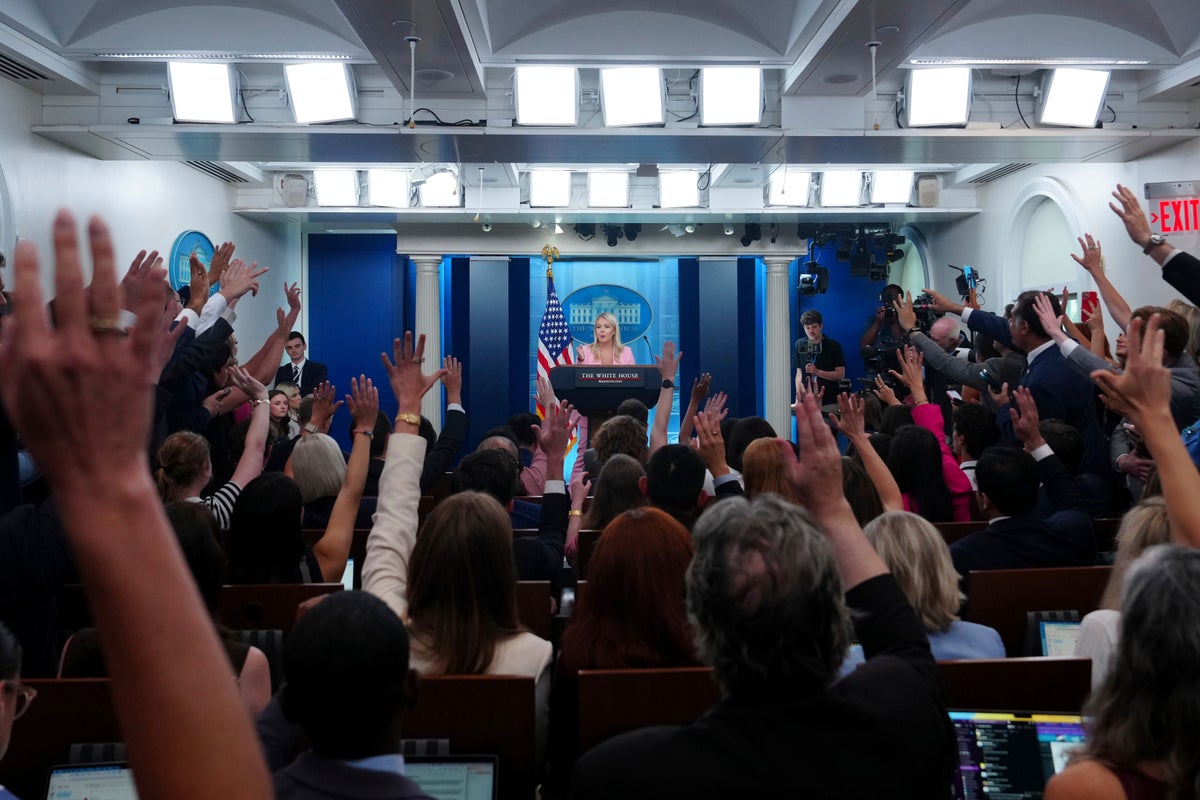
The hand-wringing from journalism watchdogs over the Department of Homeland Security’s decision to limit foreign media visas is as predictable as it is dramatic. Reporters Without Borders called it a "cruel" blow that "destroys" international reporting. The Committee to Protect Journalists decried it as the behavior of a "backsliding democracy."
This hysteria is entirely detached from the reality of modern media. The new DHS rule capping foreign media (I) visas at 240 days—and slashing Chinese state-media representatives to a mere 90 days—is not the death of global press freedom. It is a long-overdue administrative correction that exposes how outdated, inefficient, and coddled the traditional foreign correspondent model has become.
For decades, foreign journalists enjoyed the "duration of status" loophole, allowing them to remain in the United States indefinitely as long as they remained employed. This created a permanent class of expatriate commentators who lived in Washington or New York for five, ten, or fifteen years. By ending this open-ended stay, the government is forcing the media industry to confront a truth it has avoided for a generation: the permanent foreign bureau is a bloated relic of the 20th century.
The Myth of the Essential Expat
The primary argument against the 240-day cap is that deep, investigative journalism requires years of local immersion. This is a romanticized myth perpetuated by legacy newsrooms trying to justify their massive overhead costs.
In my years managing international desks and analyzing foreign media budgets, I have seen millions of dollars wasted on maintaining permanent expats. These foreign correspondents often end up trapped in echo chambers, writing stories that read like regurgitated beltway press releases. They are not uncovering hidden truths; they are translating local newspapers for audiences back home.
Modern journalism does not need five-year resident visas to cover the United States. Consider the efficiency of the modern media ecosystem:
- The Agility of the Stringer Network: The most critical, ground-level reporting is already done by local stringers—American journalists who actually understand the nuances of their home states.
- The Power of Remote OSINT: Modern investigative reporting relies heavily on open-source intelligence, data analysis, and digital networks. You do not need a three-year lease in Washington, D.C., to analyze SEC filings, track supply chains, or interview policy experts via encrypted channels.
- The Velocity of Fly-In Reporting: A sharp, focused reporter can fly in, cover a specific congressional battle, presidential campaign, or industrial strike, and produce brilliant work in two weeks.
If an international outlet cannot produce meaningful coverage of the United States within an eight-month window, the problem is not the Department of Homeland Security. The problem is the outlet's operational incompetence.
China’s Journalists Are Not Journalists
The loudest outcry has been reserved for the 90-day limit imposed on journalists from the People's Republic of China. Critics claim this is a discriminatory move that escalates geopolitical tensions.
Let us call this what it is: a massive category error.
To treat employees of Xinhua, China Central Television (CCTV), or the People’s Daily as traditional, independent journalists is either incredibly naive or intentionally dishonest. These organizations are state-run propaganda organs. Their employees do not answer to editors trying to hold power to account; they answer directly to the Propaganda Department of the Chinese Communist Party.
They do not come to the United States to conduct adversarial journalism. They come to gather intelligence, cultivate political influence, and broadcast Beijing-approved narratives to diaspora communities and global audiences.
Furthermore, diplomacy operates on reciprocity. American journalists in Beijing have faced systematic harassment, surveillance, and outright expulsion for years. In 2020, Beijing expelled reporters from the Wall Street Journal, the New York Times, and the Washington Post. U.S. journalists in China are routinely restricted to short-term visas, subjected to intense tracking, and denied access to vast swaths of the country.
To grant Chinese state media employees indefinite "duration of status" in the United States while American journalists are treated like hostiles in Beijing is not press freedom. It is unilateral diplomatic disarmament. The 90-day cap is a necessary geopolitical lever. If Beijing wants better terms for its state media workers, it knows exactly what it has to do: stop censoring and harassing the foreign press in China.
Why Constraints Make Better Journalism
There is a fundamental psychological principle that legacy media consistently ignores: constraints breed creativity and drive.
When a journalist is granted an open-ended stay in a foreign country, they fall into the trap of institutional complacency. They take their time. They build comfortable routines. They delay the hard, risky investigations because they have "all the time in the world."
A 240-day hard limit changes the entire operational calculus. It forces a high-velocity sprint.
- Immediate Focus: Reporters arriving in the U.S. must hit the ground running with pre-established networks and defined targets.
- Aggressive Pitching: Outlets cannot afford to let their U.S. correspondents sit on dry spells. Every week of that 240-day window must yield high-impact reporting.
- Ruthless Prioritization: Editorial boards must cut the fluff. Instead of sending a reporter to cover a local pumpkin festival in Maine "for color," they will deploy them to cover structural shifts in the global economy.
If you have eight months to make your mark in the most powerful country on earth, you do not waste time. You hunt for the biggest stories, file the sharpest copy, and leave a mark. The visa cap acts as an institutional filter, weeding out the passive desk-warmers and leaving only the hungry, aggressive reporters.
The Administrative Burden of Indefinite Stays
The Department of Homeland Security cited the challenge of monitoring and overseeing the massive influx of foreign visitors and media holders under the previous system. Naturally, the civil liberties lobby scoffed at this. But as someone who has navigated the backrooms of corporate immigration and international compliance, I can tell you that the security concern is entirely legitimate.
Under the old "duration of status" rules, a foreign national could enter the U.S. on an I visa, change employers, move across the country, and essentially disappear from the radar of federal oversight as long as they claimed to be "working in media." In an era of rampant state-sponsored espionage, intellectual property theft, and foreign influence operations, maintaining a black box of unmonitored foreign nationals is a massive administrative failure.
Requiring foreign media holders to apply for an extension or depart the country after 240 days forces a necessary touchpoint. It forces the employer to prove the journalist is actually employed, actively reporting, and abiding by the terms of their stay. It forces the state to verify that the individual is who they say they are.
Yes, this adds a layer of bureaucratic friction. Yes, it means more paperwork for media companies. But national security is not subservient to the administrative convenience of international newsrooms.
The Path Forward for Global Outlets
The outlets crying loudest about this rule are those unwilling to adapt their business models. The solution is not to lobby Washington for a return to the easy-going past. The solution is to restructure how global news is gathered.
If an international outlet truly needs continuous, multi-year coverage of U.S. politics and business, they should invest in local talent. The United States is teeming with brilliant, underemployed journalists who understand the local landscape far better than a newly arrived expat from Paris or Munich ever could.
By hiring American journalists, foreign outlets can build permanent bureaus that are entirely immune to visa crackdowns. This strategy is cheaper, more culturally accurate, and structurally permanent. The only reason not to do this is a lingering, outdated institutional snobbery that insists only an editor's home-country national can properly frame a story for their audience.
The era of the untouchable, long-term foreign correspondent is over. The Department of Homeland Security did not kill it; they just finally noticed that the corpse was starting to smell. Stop mourning the loss of a bloated, inefficient system. Adapt your newsroom, hire local, or learn to report on a deadline.