Box scores lie. Local sports pages love them anyway.
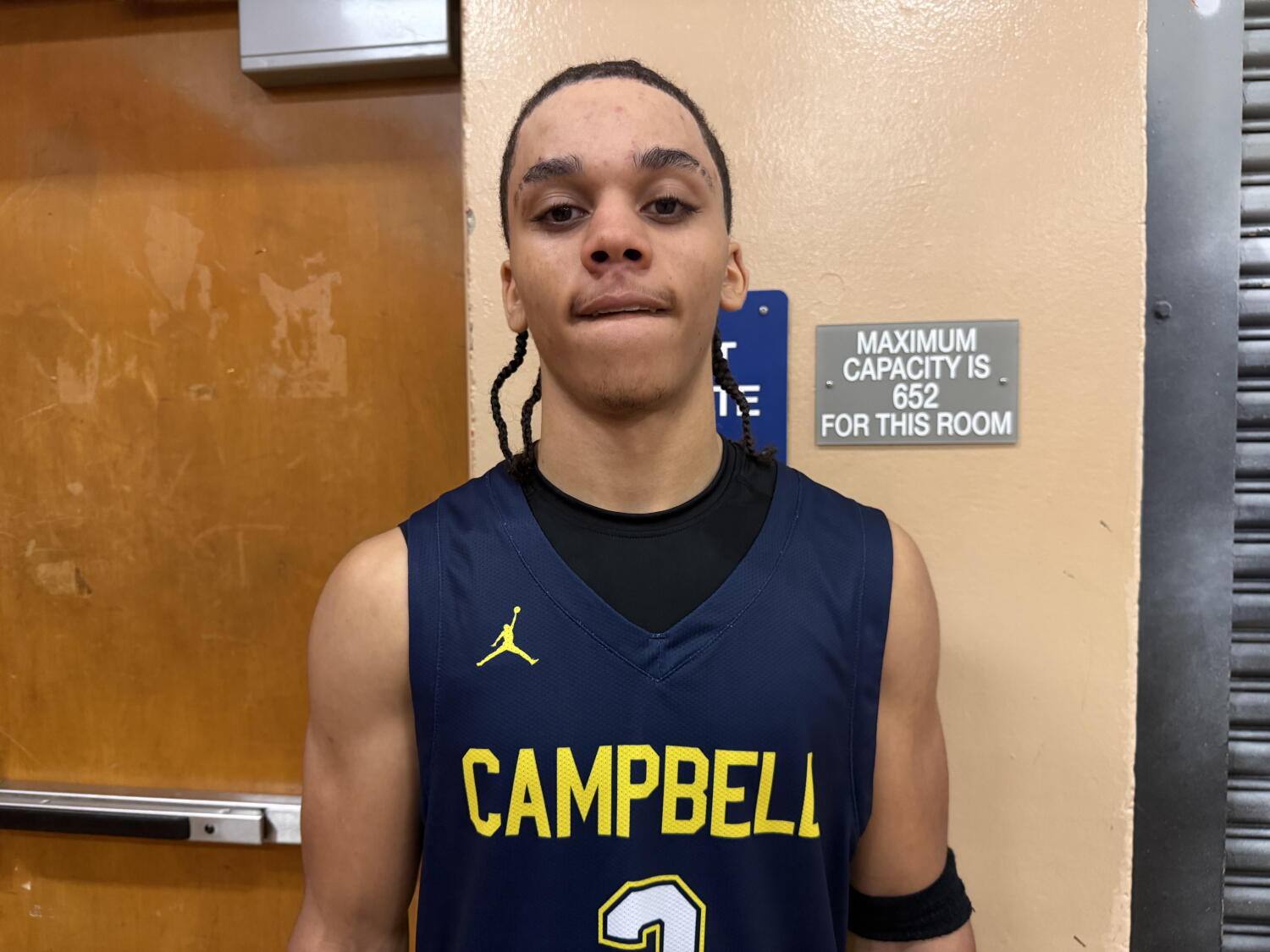
Every winter across Southern California, prep roundups read like automated press releases. A player from a powerhouse program like Campbell Hall goes nuclear from beyond the arc, finishes the night without a miss, and the local beat writer crowns him an unstoppable offensive force. Readers nod along. Parents clip the article. Recruiters get forwarded the link.
Everyone misses the actual basketball happening on the floor.
Celebrating a single-game "perfect" shooting performance from three-point range is the laziest habit in prep sports journalism. When a high school guard goes 6-for-6 or 7-for-7 from deep, it is treated as proof of elite shot-making and pristine offensive execution. In reality, an unblemished three-point percentage in a high school game usually points to something far less flattering about the competition, the shot selection, or the long-term translatability of the player's game.
If you want to understand who actually projects to the next level—and which high school teams actually survive March—you have to stop worshiping the zero in the missed-shots column.
The Illusion of the Unblemished Box Score
Let us look at the math of variance. Basketball is a game of misses. At the highest levels of the sport, the greatest shooters in human history miss roughly 55 to 60 percent of their three-point attempts. Stephen Curry, the gold standard of perimeter shooting, hovers around 42.5 percent for his career.
When a high school player shoots 100 percent from three-point range over a meaningful volume of shots, you are not witnessing the birth of a superior basketball specimen. You are witnessing positive shooting variance colliding with a massive talent discrepancy.
In Los Angeles area prep basketball—particularly when top-tier private schools in the Gold Coast League or Mission League face non-league opponents or rebuilding rosters—blowouts happen weekly. Defenders close out a half-second too late. Defensive rotations break down after two passes. Help defenders lose track of shooters standing stationary in the weak-side corner.
A perimeter player shooting uncontested catch-and-shoot jumpers against a collapsing 2-3 zone is essentially running a glorified shooting drill. Calling that dominance is like praising a minor league pitcher for throwing strikes during batting practice.
What Scouts Actually See When Nobody Misses
I have spent years sitting in baseline bleachers at showcase events, watching college assistants cross names off their boards during 30-point blowouts. While the casual observer sees a kid who cannot miss, a Division I evaluator sees warning signs.
First, a perfect shooting night often masks a lack of shot creation. Can the player get his own look when a 6-foot-6 wing with a 6-foot-10 wingspan locks onto his hip? Did those threes come off violent movement—relocating off pin-downs, sprinting into dribble handoffs, pulling up off the bounce against drop coverage—or did they come from standing still while a dominant primary ball-handler drew three defenders into the paint?
Second, shooting 100 percent requires conservative shot selection. That sounds like a compliment until you realize what elite scorers actually do. Great scorers test the edges of their range and capability. They take contested late-clock jumpers. They force defenses to bend by attempting shots that make coaches wince. A player who finishes a game without a single miss rarely took the kind of high-difficulty shots required to bail out a stagnant offense against an elite opponent.
The Structural Flaw in Prep Basketball Roundups
Local prep coverage operates on a simple formula: find the highest point total, highlight the cleanest shooting split, and move on to the next game on the ticker. There is no film breakdown. There is no mention of defensive matchups, pace, or opponent quality.
This creates a distorted ecosystem where players, parents, and amateur coaches optimize for the wrong metrics.
Consider how high school basketball differs from college and professional play:
- The Three-Point Line: The high school arc sits at 19 feet, 9 inches. The NCAA men's line sits at 22 feet, 1.75 inches. That two-and-a-half-foot gap changes everything. A shot that feels like a comfortable rhythm jumper in a high school gym becomes a deep, energy-draining heave in college.
- Defensive Length and Recovery: In high school, a shooter with a slow release can still get clean looks if he has two steps of space. At the next level, defenders close that gap before the ball leaves the shooter's fingertips.
- Shot Clock Pressure: In states without a shot clock—or in regions still adapting to 35-second rules—offenses can pass the ball around the perimeter for 45 seconds until a teenage defender falls asleep. That luxury evaporates the moment a player steps onto a college campus.
When a roundup highlights a Campbell Hall player going perfect from deep without providing context on shot difficulty, defender proximity, or defensive effort on the other end of the floor, it sells a fiction. It tells young players that the goal of basketball is box-score efficiency rather than offensive gravity.
Gravity Beats Efficiency Every Single Time
If you want to know who actually controls a basketball game, stop looking at field goal percentage and start looking at gravity—the measurable pull a player exerts on an opposing defense simply by existing on the floor.
Imagine a scenario where two guards play in the same tournament.
Guard A goes 5-for-5 from three-point range. Every shot is a wide-open catch-and-shoot attempt from the corner because the defense decided to double-team his teammate in the post. Guard A finishes with 15 points, zero turnovers, and a glowing write-up in the morning paper. Yet the opposing defense never changed its scheme to stop him. They willingly lived with the result.
Guard B goes 4-for-11 from three-point range. On paper, he shot 36.4 percent—a pedestrian number that never makes a prep roundup. Look at the film, however, and you see that Guard B took four deep pull-up threes off high ball screens, drew two defenders 26 feet from the basket every time he touched the ball, and forced the opposing coach to abandon his base defense by halftime. Because two defenders chased Guard B over every screen, his teammates had four-on-three advantages on the backside all night.
Guard B is a future college starter. Guard A is a beneficiary of circumstance.
Yet in the world of high school sports coverage, Guard A gets the headline while Guard B gets ignored. Scouts know the difference. Analytics departments in the NBA and high-major college basketball have spent over a decade building tracking models—like Second Spectrum's shot quality metrics—specifically to separate a player's true shooting skill from the quality of the looks he receives.
Why High-Efficiency Nights Often Predict Postseason Collapses
There is a dangerous psychological trap built into blowout wins fueled by unsustainable shooting.
High school teams that rely on shooting 55 or 60 percent from deep to bury inferior opponents develop terrible habits. When every perimeter jumper goes in, nobody crashes the offensive glass. Why sprint to the rim for a put-back when the ball never hits the iron? Nobody cuts hard through the lane when stationary spacing produces easy points. Nobody grinds through seven-pass possessions when the second pass yields an open look.
Then February arrives.
The playoff bracket tightens. The gym gets louder, the rims feel harder, and the opponent across the floor has six-foot-five athletes at every perimeter position who switch every screen without blinking. Suddenly, the open looks disappear. The 60 percent shooting night drops to 24 percent.
Teams conditioned by easy regular-season shooting nights panic when the shots stop falling. They do not know how to manufacture ugly points at the free-throw line. They do not know how to win a 52-49 rock fight where neither team hits a three-pointer in the fourth quarter.
The Defensive Blind Spot
There is another side to the box score that prep roundups routinely ignore: how many points did that "perfect" shooter give up on the other end?
High school basketball is notorious for hiding offensive specialists on defense. A guard can light up the scoreboard from beyond the arc while getting blown past on every straight-line drive, missing box-out assignments, and failing to communicate on off-ball switches. Because high school stat sheets rarely track defensive rating, blow-by rate, or contested shots, an offensive explosion completely erases defensive liability from the public record.
College coaches do not care if you can make five threes in a high school game if you cannot guard your yard. If you are a liability at the point of attack, you will sit next to the assistant coaches until you learn how to slide your feet.
What Players and Coaches Should Actually Measure
If box-score shooting splits are a mirage, what should ambitious high school players, parents, and coaches actually track? If you want to build a game that survives contact with elite competition, throw away the single-game percentage sheets and focus on metrics that measure process over luck.
- Three-Point Attempt Rate (3PAr) Under Contestation: Track how many threes a player takes with a defender within four feet, not just how many go in. High-level shooters get their shots off quickly under pressure. If a player only shoots when completely wide open, his release is too slow or his confidence is too fragile.
- Unassisted Shot Creation: Separate catch-and-shoot threes from pull-up threes off the dribble. Being a stationary spot-up threat makes you a role player. Being able to punish a defender who goes under a screen makes you a primary offensive weapon.
- Rim Pressure Ratio: Look at the balance between three-point attempts and free-throw attempts. Great shooters use their perimeter threat to attack wild closeouts, get into the paint, and draw fouls. A player who only launches jumpers without ever touching the paint is easy to scheme against in a playoff series.
- Shot Quality vs. Effective Field Goal Percentage: Film every game and grade every shot on a simple 1-to-3 scale before looking at whether it went in. A Grade 1 shot is an in-rhythm, open look generated by ball movement. A Grade 3 shot is a heavily contested, off-balance heave early in the clock. Winning programs obsess over generating Grade 1 shots regardless of whether they fall on a given Tuesday night.
The Honest Caveat About Shooting Talent
To be clear, none of this means shooting does not matter, or that a player who goes perfect from the floor lacks skill. You cannot luck your way into making six or seven consecutive threes in a live game without thousands of hours of mechanical repetition, proper footwork, clean energy transfer from the lower body, and genuine touch. Bad shooters do not accidentally go 7-for-7, even against weak competition.
Furthermore, confidence is a real currency in basketball. A breakout shooting night can unlock a young player's aggressiveness, earn him trust from his coaching staff, and force future opponents to respect his range. Writing off every hot shooting night as pure luck ignores the mental edge that elite shooters carry onto the floor.
The mistake is not acknowledging the performance. The mistake is treating the box score as the final verdict rather than the opening question.
Read Past the Headline
The next time you scroll through a prep basketball roundup and see a blurb celebrating a player's flawless night from three-point range, resist the urge to take it at face value. Ask the questions the box score refuses to answer.
Who was guarding him? How fast was the closeout? Did he create those looks off the bounce, or did he stand in the corner while his teammates did the heavy lifting? And when the shots inevitably stop falling against an elite defense in March, what else can he do to win the game?
Anyone can look like an All-American when the rim feels like an ocean. Real basketball starts the moment the first shot misses.