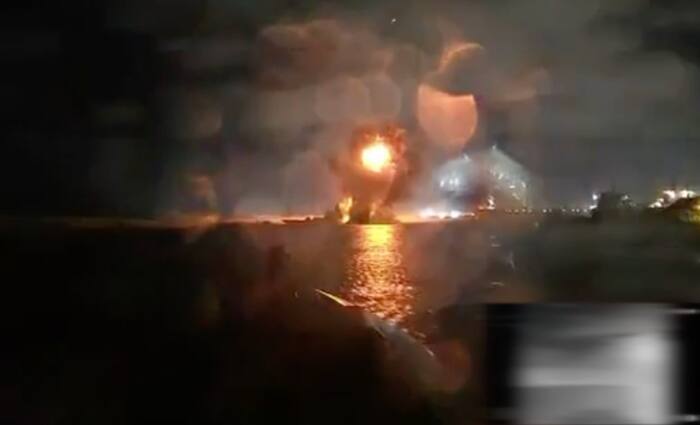
Nine people took bullets at a central California concert, leaving one fighting for survival in critical condition, and the local news cycle immediately defaulted to its favorite comforting lie.
Read the standard coverage of any regional live-music shooting—from Fresno down to Bakersfield—and you will see the exact same script play out. A breathless reporter stands outside yellow crime scene tape, quotes a police spokesperson promising a "thorough investigation," and subtly implies that the venue operator failed to run enough metal detectors. The public nods along. They demand stricter pat-downs, clearer bag policies, and more minimum-wage security guards standing at the front doors. For a more detailed analysis into similar topics, we recommend: this related article.
That consensus is not just lazy. It is dangerously detached from how violence actually occurs in the live events sector.
When nine people get shot at an event, the failure did not happen at the front door. It happened weeks earlier in the promoter’s booking strategy, months earlier in municipal zoning meetings, and hours earlier in the complete absence of intelligence-led perimeter management. Blaming a lack of walk-through magnetometers for a mass shooting at a regional concert is like blaming a screen door for failing to stop a freight train. For broader information on this development, in-depth coverage can also be found on TIME.
The Security Theater Racket
I have spent the better part of fifteen years consulting on risk management, crowd dynamics, and venue operations across North America. I have watched independent promoters blow hundreds of thousands of dollars on overt, visible security measures that do precisely nothing to stop a targeted shooting, while completely ignoring the operational vulnerabilities that actually get people killed.
The live entertainment industry is addicted to security theater.
When an incident happens in a mid-sized market—especially in agricultural hubs across central California where regional touring acts draw massive, hyper-local crowds—the immediate reflex is to harden the venue's shell. Venues buy $15,000 walkthrough weapons detection systems. They force attendees to carry clear plastic stadium bags. They hire twenty extra bodies in bright yellow windbreakers to stand around looking intimidating.
Here is the reality nobody in the event insurance business wants to admit out loud: hardening the perimeter only moves the kill zone.
If a shooter wants to target a rival at a concert, a metal detector at the main entrance does not make them disarm and enjoy the show peacefully. It forces them to wait in the parking lot, the alleyway, or the poorly lit spillover street two hundred yards away—where crowd density is still high, lighting is atrocious, and security jurisdiction legally evaporates.
When local media reports that nine people were shot "at a concert," they rarely distinguish between a breach of the indoor stage floor and an ambush in an unmonitored, third-party overflow lot. To the public, it is all the same. To a security director, that distinction is the entire ballgame. If your security plan ends at the property line, you do not have a security plan. You have a liability shield.
Why Regional Promoters Set Up Their Own Disasters
To understand why central California keeps seeing high-casualty incidents at mid-tier shows, you have to stop looking at the shooters for a second and look at the economics of the live music industry.
Major touring agencies like Live Nation and AEG operate with standardized, corporate risk-assessment protocols. When an artist with documented gang affiliations or active regional beefs books a date at a major amphitheater, corporate intelligence teams flag it. They require off-duty sworn law enforcement officers—not just unarmed private guards—to work the perimeter. They dictate specific crowd-flow geometries. Sometimes, they quietly cancel the show before tickets even go on sale because the insurance rider costs more than the projected bar gross.
Independent venues and pop-up promoters in secondary markets do not have that luxury. They are operating on razor-thin margins.
- The "Four-Wall" Rental Trap: Many central California shootings do not happen at established venues running their own shows. They happen when a venue owner rents out the building—a "four-wall" deal—to an outside, pop-up promoter for a flat fee. The venue owner washes their hands of the talent booking, and the pop-up promoter cuts every possible operational corner to maximize door split profits.
- Talent-Driven Volatility: Promoters book artists specifically because those artists carry street credibility and draw passionate, high-spending crowds. Yet those same promoters refuse to pay for the specialized threat intelligence required to manage the exact demographic they just monetized.
- The Guard Card Illusion: In California, obtaining a Bureau of Security and Investigative Services (BSIS) Guard Card requires eight hours of basic training—mostly covering power to arrest and weapon of mass destruction awareness—and a background check. That is it. Placing a twenty-two-year-old making $19 an hour in a polo shirt at an exit door and expecting them to deter an armed, motivated shooter is delusional.
Let us be brutally honest about the trade-off here. If an independent venue enforces major-league security protocols—requiring four sworn police officers on overtime at $120 an hour each, plus dedicated parking lot patrols and pre-event social media threat monitoring—ticket prices have to jump by $15 to $25 a head. In price-sensitive regional markets, raising ticket prices kills attendance. Promoters know this. So they gamble. They under-secure the room, pocket the margin, and pray nothing pops off before midnight.
Nine times out of ten, nothing happens. On the tenth time, nine people end up in the trauma ward.
Dismantling the Wrong Questions
Whenever a headline like this breaks, search engines flood with the exact same predictable queries. People want to know if concerts are still safe, whether California's gun laws failed, or if venues should be sued into bankruptcy. Every single one of those questions misses the structural reality of event violence.
Are concerts in California getting more dangerous?
Statistically, no. Across millions of live event attendees annually in California, your odds of being shot inside a permitted, professionally operated concert venue remain infinitesimally small. What has changed is the lethality and speed of modern altercations. The proliferation of illegally modified handguns—specifically devices that convert semi-automatic pistols into fully automatic weapons—means a dispute that used to result in a fistfight or a single stray bullet now produces thirty rounds in under three seconds. Nine victims is no longer an anomaly; it is the standard ballistic math of an automatic switch fired into a dense crowd.
Did stricter gun laws fail to prevent this?
Asking whether state firearm legislation prevented a concert shooting misunderstands the mechanism of the crime. The individuals bringing concealed weapons to a central California concert are not checking the California Department of Justice roster before loading their magazines. Relying on statutory deterrence at the point of attack is pure fantasy. Once a firearm is in a vehicle parked outside a venue, legislative remedies are entirely irrelevant. Only physical, behavioral, and intelligence-based interventions matter in that window.
Should the venue be held legally liable for the shooting?
Under premises liability law, a business owner has a duty to protect invitees from foreseeable harm. Here is where the legal landscape gets messy. If a venue had zero prior violent incidents and hired a licensed security firm, plaintiff attorneys have a steep hill to climb—unless they can prove the venue ignored specific, actionable red flags regarding the artist or the promoter. Conversely, if a venue booked an act whose last three tour stops ended in gunfire, and the venue still relied on three unarmed guards at the front door, they deserve to lose their liquor license and their building.
The Architecture of a Real Threat Assessment
If we want to stop reading headlines about nine people getting shot at regional concerts, venues and municipal regulators need to abandon reactive security theater and adopt actual threat management principles. Experts in crowd safety, such as Dr. G. Keith Still—whose work on crowd dynamics and risk analysis is the gold standard globally—have proven for decades that crowd disasters are rarely sudden. They are systemic failures of design, information, and management.
Imagine a scenario where a mid-sized venue in central California books a high-risk regional act for a Saturday night. Under the current broken model, the venue hires ten private guards, sets up two metal detectors at the front door, and opens the doors at 8:00 PM. By 11:30 PM, alcohol consumption peaks, rival groups spot each other near the restrooms, security pushes them outside into the unlit parking lot to "de-escalate," and gunfire erupts.
Now, look at how an intelligence-led operation handles that exact same booking:
- 72 Hours Out (Digital Perimeter): A dedicated analyst scans local social media channels, livestreams, and regional beef trackers. They do not look for explicit threats to shoot up the venue; shooters rarely announce their plans on public flyers. They look for friction—rival cliques bragging about attending the same show, or territory disputes flaring up in the host city.
- 24 Hours Out (Law Enforcement Integration): If the intelligence score hits a certain threshold, the venue does not add more minimum-wage private guards. They mandate paid, off-duty local police officers stationed specifically in marked patrol vehicles with active emergency lights in the parking lots and surrounding blocks. Visible, sworn police presence does not stop a suicidal ideologue, but it is extraordinarily effective at deterring gang-related and retaliatory shootings. Shooters looking to settle a score hate flashing red-and-blue lights and body cameras.
- Doors Open (Behavioral Detection): Instead of staring at screens or blindly waving wands, trained behavioral detection officers work the queue. Weapons concealment carries distinct physical tells—asymmetric arm swing, constant adjustment of the waistband, rigid posture, and hyper-vigilance toward security personnel. Catching a shooter in the queue before they ever reach the magnetometer changes the entire tactical equation.
- 11:00 PM (The Ejection Protocol): This is the single biggest mistake amateur security teams make. When two groups start fighting inside a club, standard protocol is to throw both groups out the front door at the exact same time. You just took an unarmed fistfight inside a controlled environment and moved it to the exact place where both parties parked their cars—and stored their guns. Professional operations detain one party inside for twenty minutes while dispersing the other, completely breaking the timeline of retaliation.
The Uncomfortable Downside Nobody Wants to Pay For
There is a massive catch to doing this right, and pretending otherwise would be dishonest.
Implementing true intelligence-led security and mandated sworn-officer perimeters will kill a massive chunk of the independent live music ecosystem.
If cities start passing ordinances that require venues to fund off-duty police details, external lighting grids, and pre-event threat assessments based on the perceived risk of the artist, small promoters will go bankrupt. Worse, those ordinances inevitably drift toward subjective policing. City councils and police departments historically use "public safety" mandates as a blunt instrument to shut down hip-hop, regional Mexican, and underground electronic shows while giving country and classic rock concerts a free pass—even when alcohol-fueled violence at the latter is statistically rampant.
You cannot regulate risk out of existence without strangling culture. A certain baseline of unpredictability is the price of admission whenever you pack five hundred strangers into a dark room with loud music and cheap liquor.
We have to accept that tension. But accepting baseline risk is entirely different from tolerating gross operational negligence. Right now, too many venues are operating in a gray zone where they monetize high-energy, volatile environments while outsourcing the security burden to underpaid, undertrained guards who are completely outgunned the moment a real threat materializes.
Stop Buying Wands and Start Managing Friction
The next time a shooting breaks out at a concert in central California, watch the local news coverage closely. Watch how quickly the conversation pivots to metal detectors, bag policies, and vague promises to "review security procedures."
Do not buy it.
Metal detectors do not read social media threats. Clear plastic bags do not stop someone from walking back to their trunk in an unlit alley. And adding five more minimum-wage guards to the front door will never compensate for a promoter who ignored every warning sign on the calendar just to make an extra four grand on the bar split.
Until venues are forced to secure the parking lot as aggressively as the VIP section, and until promoters stop ejecting rival groups into the same dark street at closing time, the body counts will keep climbing.