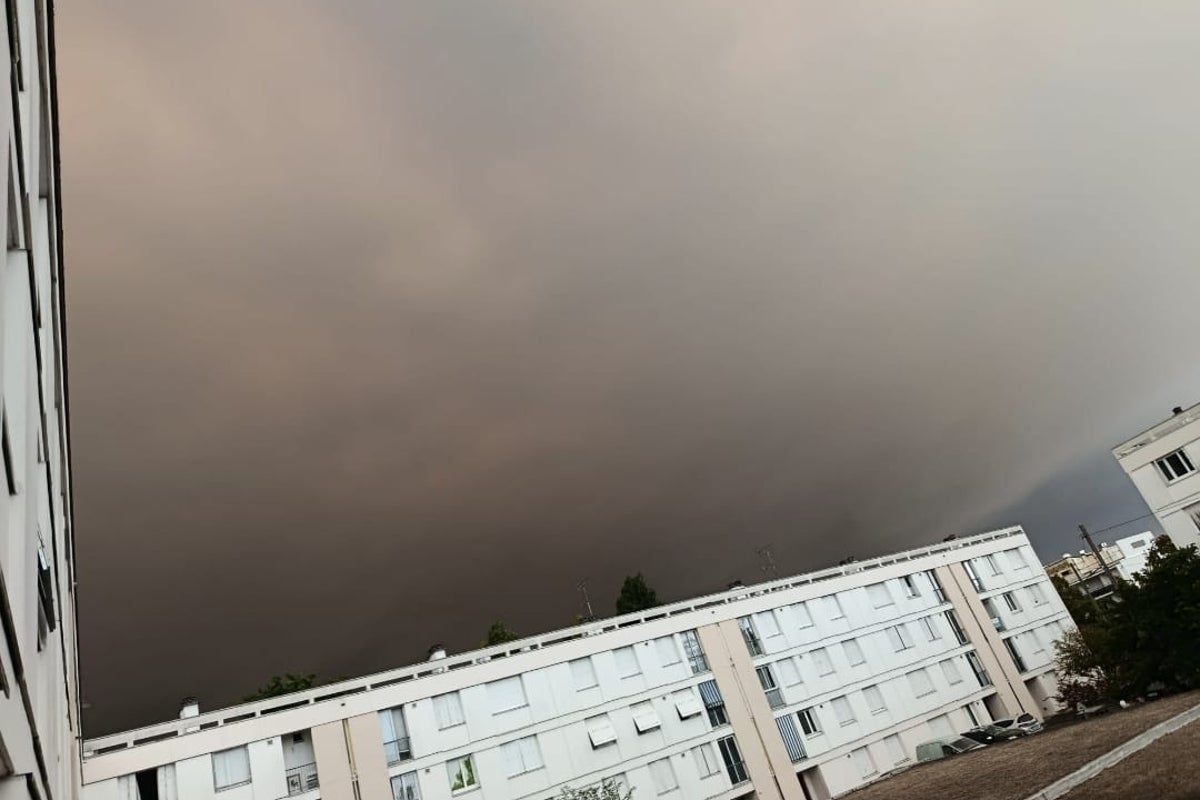
The headlines write themselves. Smoke on the horizon. Ash on the windshield. A terrified local clutching a damp handkerchief to their face whining to foreign reporters about smelling like a brisket while a pine forest burns fifty miles away. The lazy media narrative paints Bordeaux as a doomed postcard, a medieval wine capital moments away from turning into a charcoal briquette.
It is a fairy tale for anxious urbanites who have never spent a single afternoon managing a hectare of gravelly terroir.
I have spent the better part of two decades watching outside speculators panic every time a seasonal fire breaks out in the Landes pine forests south of the Garonne. They read a sensational dispatch about smoke drifting over the Place de la Bourse, grab their calculators, and try to dump prime vineyard acquisitions at a discount. Amateurs. They mistake a localized meteorological event for structural collapse.
Let us dismantle the panic.
The Geography of Smoke and Stone
Every summer without fail, the wind shifts. High pressure builds over the Bay of Biscay, pulls air south from the Landes, and drops the scent of burning pine right into the limestone corridors of Saint-Augustin and Nansouty. People cough into their espresso. Journalists pull quotes from frantic residents.
Here is what the coverage misses entirely: smoke is not terroir destruction.
Smoke taint is a legitimate viticultural boogeyman, but it requires prolonged, dense smoke exposure during specific windows of veraison when grape skins are permeable. A passing plume from a distant forest fire traveling hundreds of feet in the air does not penetrate the phenolic compounds of a Cab Franc or a Merlot resting comfortably in the clay-and-limestone matrices of the Right Bank.
Yet every time the air turns hazy, property values take an imaginary hit in the minds of people who judge European geography by Twitter feeds.
"Imagine a scenario where a city built on drainage systems and maritime humidity suddenly remembers it is surrounded by a massive, resinous commercial tree farm planted by Napoleon III."
That tree farm, the Landes forest, is an artificial construct. It is not an ancient primeval wilderness vulnerable to mystical climate collapse; it is a giant timber plantation packed with maritime pines that burn hot and fast. The French forestry office manages those fuel loads with prescribed burns and firebreaks. When a blaze escapes, it makes for terrifying television. It does not mean the vines of Pomerol are about to melt.
The Real Estate Delusion
Let us talk about the money, because that is what everyone is actually crying about.
I have watched nervous investors panic-sell apartments near the Gare Saint-Jean because a regional fire triggered a two-day air quality warning. They act as though Bordeaux is Pompeii. Meanwhile, local families who understand the hydrological realities of the Aquitaine basin are quietly scooping up limestone townhouses at a ridiculous markdown.
The market correction driven by climate anxiety is entirely detached from physical reality. Bordeaux sits on a massive, water-retaining clay base covered by ancient alluvial gravel deposits. The city was designed to handle dampness, flooding, and shifting winds. The microclimate of the Gironde estuary acts as a natural thermal buffer against the extremes baking the interior of Spain or central Italy.
When an anxious expatriate complains that the city smells like a barbecue, they are betraying a fundamental ignorance of how Mediterranean and maritime weather patterns interact. They want Bordeaux to be a sterile museum piece under a glass dome. But Bordeaux is a working industrial port and agricultural powerhouse. It smells like wet stone, diesel, cheap tobacco, roasting duck fat, and yes, occasionally, distant pine smoke.
If you want pristine, sterilized air with zero historical character, move to a planned suburb in Arizona. Leave the river valleys to people who understand how ecosystems actually function.
The Media Echo Chamber
Why does the narrative persist? Because fear sells clicks, and doomsday porn about European wine regions dying in a wall of flames plays exceptionally well to desk-bound readers in London and New York.
The formula is foolproof. Find a resident standing on a balcony. Hand them a dramatic prompt. Capture the exact moment the wind carries a whiff of charcoal from a controlled clearing forty miles away. Frame it as the end of days.
Ignore the centuries of viticultural resilience. Ignore the deep root systems plunging thirty feet down through gravel into moisture-rich clay, entirely unaffected by surface soot. Ignore the fact that regional winemakers have adapted to shifting atmospheric pressures since the Middle Ages.
To accept the mainstream framing is to accept that a city’s worth is tied to the absolute purity of its atmospheric particulate count on any given Tuesday in August. That is a child's understanding of geography.
How to Read the Smoke
If you are looking at Bordeaux right now—whether as a traveler, a lifestyle migrant, or an asset buyer—stop reading the weather reports written by people who cannot tell a Merlot vine from a tomato plant.
Look at the drainage. Look at the root depth. Look at the historical resilience of limestone foundations that have survived wars, floods, phylloxera, and economic depressions.
The smoke clears in forty-eight hours when the oceanic breeze kicks back in from the west. The panic stays longer, manufactured by people who need a crisis to justify their lack of nerve.
Let them choke on their own anxiety. The vines are drinking deep underground, completely indifferent to what is burning in the distance.