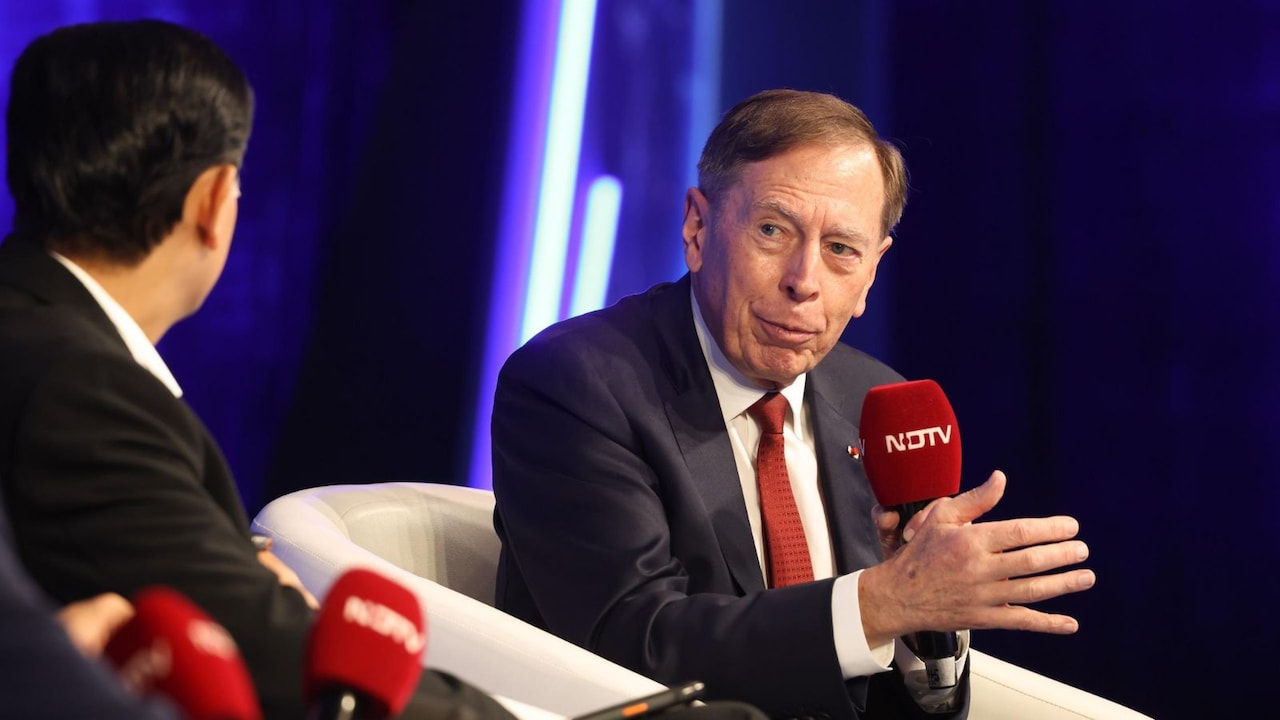
Every time tension spikes along the Line of Control, the cable news panels dust off a retired intelligence official to answer the exact same binary question. Will the United States back India if Pakistan launches another major attack?
The retired official inevitably strokes their chin, offers a measured dose of diplomatic hedging, and concludes that Washington supports New Delhi’s right to self-defense while urging restraint on both sides. Everyone nods. Nobody learns anything.
This entire framing is built on a Cold War fantasy that died twenty years ago. Asking whether Washington will "back" India treats American foreign policy like a nineteenth-century mutual defense treaty, where a cavalry rides over the hill the moment an ally blows a bugle. Modern statecraft does not work that way. Especially not in South Asia. And especially not when two nuclear-armed states are staring each other down across a disputed border.
If you want to understand what Washington will actually do during the next Indo-Pakistani crisis, stop listening to nostalgic pundits talking about "ironclad partnerships." Look at the cold, hard mechanics of crisis management, intelligence sharing, and nuclear deterrence. The truth is far more complicated, and far less comforting, than a simple yes or no.
The Illusion of the Blank Check
The lazy consensus in New Delhi and Washington falls into two equally naive camps. The first camp believes that because the United States views India as a critical counterweight to China, Washington will automatically rubber-stamp any Indian military retaliation against Pakistan. The second camp believes that Washington’s lingering reliance on Islamabad for regional stability means the White House will handcuff New Delhi just like it did after the 2008 Mumbai attacks.
Both views miss the fundamental reality of how the National Security Council operates during a South Asian flashpoint.
Washington does not issue blank checks to non-treaty partners. India is a Major Defense Partner, not a NATO ally. There is no Article 5 obligation binding the Pentagon to enter a kinetic war on the subcontinent. More importantly, New Delhi does not want American troops fighting its battles. Strategic autonomy remains the bedrock of Indian foreign policy. India wants American weapons, American intelligence, and American diplomatic cover at the United Nations. It does not want an American general running its war room.
Yet, the moment a major terrorist attack hits an Indian city or military base, the diplomatic phone lines between Washington and New Delhi light up with a very specific set of transactional demands.
During the 2019 Pulwama crisis, following the bombing that killed forty Indian paramilitary personnel, the dynamic shifted permanently. As documented in former Secretary of State Mike Pompeo’s memoir, Never Give an Inch, and analyzed extensively by South Asia scholars like Ashley Tellis at the Carnegie Endowment for International Peace, Washington did not tell India to stand down. Instead, National Security Advisor John Bolton explicitly told his Indian counterpart, Ajit Doval, that the United States supported India’s right to self-defense.
That was not a blank check. It was a calculated green light with invisible guardrails. Washington backed India’s right to strike back, provided the strike stayed below the threshold of conventional war. The moment Indian airstrikes hit Balakot and Pakistan retaliated by downing an Indian MiG-21, Washington’s posture instantly pivoted from "supporting self-defense" to "aggressive nuclear de-escalation."
What "Backing" Actually Looks Like Behind Closed Doors
When pundits debate American support, they picture aircraft carriers steaming into the Arabian Sea. That is cinematic nonsense. In reality, American intervention in an Indo-Pakistani crisis happens in the shadows, across three distinct operational lanes.
1. The Intelligence Spigot
Before a single Indian jet crosses the border, New Delhi needs high-resolution satellite imagery, signals intelligence, and real-time tracking of Pakistani air defense assets. Under foundational agreements like BECA (Basic Exchange and Cooperation Agreement) and COMCASA (Communications Compatibility and Security Agreement), the United States and India share geospatial and encrypted communications data.
If Pakistan launches an attack, the very first way Washington "backs" India is by opening the intelligence spigot. Washington provides target verification and monitors Pakistani troop movements to ensure Islamabad cannot launch a surprise counter-offensive. However, this support is modular. Washington can share defensive intelligence to protect Indian forces while withholding offensive targeting data if it believes New Delhi is preparing an escalation that could trigger a wider war.
2. The Diplomatic Shield
Following a cross-border strike, Pakistan immediately runs to the United Nations Security Council and international financial institutions to paint itself as the victim of Indian aggression. Washington’s primary role is to act as a diplomatic shield.
In 2019, the United States, alongside France and the United Kingdom, blocked Pakistani and Chinese efforts to condemn India at the UN, while simultaneously pushing to designate Jaish-e-Mohammed chief Masood Azhar as a global terrorist. This diplomatic cover is arguably more valuable to New Delhi than any weapon system. It legitimizes India’s retaliatory doctrine internationally and isolates Islamabad financially, particularly when Pakistan is begging the International Monetary Fund for bailout tranches.
3. The Nuclear Firebreak
Here is the uncomfortable truth that Indian hawks hate admitting and Pakistani generals count on: Washington’s ultimate loyalty in South Asia is not to New Delhi or Islamabad. It is to preventing a nuclear exchange.
Analysts at the Stimson Center and the Brookings Institution have spent decades mapping the escalation ladder in South Asia. Pakistan’s doctrine of "full-spectrum deterrence" relies on tactical nuclear weapons—low-yield battlefield nukes—specifically designed to offset India’s overwhelming conventional military superiority. Islamabad’s entire strategic posture is built on convincing Washington that if India pushes too hard, the subcontinent goes radioactive.
Therefore, Washington will back India right up to the precise millimeter where Pakistani generals start moving nuclear warheads out of storage facilities. At that exact second, American backing evaporates and transforms into intense diplomatic coercion aimed at forcing both sides to accept an off-ramp.
The China Factor Changes Everything (And Nothing)
A common argument among defense commentators is that America’s intense rivalry with China guarantees unconditional support for India against Pakistan. The logic goes like this: Washington needs India to tie down Chinese troops along the Line of Actual Control in the Himalayas, so the White House cannot afford to alienate New Delhi by siding with Islamabad.
This is half-right, which makes it entirely dangerous.
Yes, the Indo-Pacific strategy relies heavily on a strong, capable India. Every dollar and every brigade India has to divert to its western border with Pakistan is a resource taken away from deterring Beijing on its northern border. Because of this, Washington has a vested interest in deterring Pakistani aggression so India can stay focused on China.
However, the China factor also creates a massive incentive for Washington to stop an Indo-Pakistani war as fast as humanly possible. Imagine a scenario where India and Pakistan become locked in a protracted, two-week conventional conflict. India burns through its precision-guided munitions, suffers attrition in its fighter squadrons, and gets bogged down in a western quagmire. Who wins that war? Beijing.
A weakened, distracted India is a strategic disaster for Washington. Furthermore, a full-scale war between India and Pakistan opens the door for China to intervene diplomatically—or even militarily—on Pakistan’s behalf, turning a regional border dispute into a direct superpower confrontation. Consequently, the China rivalry does not guarantee American support for an all-out Indian offensive. It guarantees that Washington will work furiously to keep any retaliation short, sharp, and strictly contained.
Dismantling the Myths People Still Believe
When people search for answers on this topic, they usually bring a set of deeply flawed assumptions inherited from decades-old news cycles. Let us break down the actual mechanics of how these crises play out.
Does the US still consider Pakistan a major ally?
Officially, Pakistan remains a Major Non-NATO Ally, a designation it received in 2004 during the height of the War on Terror. Practically, that title is a hollow shell. Following the chaotic American withdrawal from Afghanistan in 2021, Washington no longer depends on Pakistani supply lines to sustain troops in a landlocked warzone. Bilateral trust is near zero. Washington still engages with Rawalpindi—where the Pakistani military headquarters sits—because ignoring a nuclear-armed nation of 240 million people plagued by economic collapse and domestic insurgency is reckless. Engagement is not alliance. Washington talks to Pakistan’s army chief to manage risks, not to coordinate strategy.
Would the US impose sanctions on India if it retaliates militarily?
No. The era of the 1998 post-nuclear test sanctions is dead and buried. Both Democratic and Republican administrations have spent twenty-five years dismantling export controls and building defense trade with New Delhi. Sanctioning India for responding to a terrorist attack would destroy decades of bipartisan American foreign policy and hand Beijing a generational victory. The worst New Delhi would face from Washington is private diplomatic friction and a temporary pause in high-level visits while the dust settles.
Can India rely on Russian weapons if the US withholds support?
This is a favorite talking point among commentators who cling to the idea of Cold War non-alignment. While roughly sixty percent of India’s legacy military hardware is still of Russian origin, Moscow is in no position to rescue New Delhi during a crisis. Russia’s defense industrial base is entirely consumed by its war in Ukraine, leading to massive delays in spare parts and air defense deliveries to India. Worse, Moscow has become a junior partner to Beijing. If a crisis erupts between India and Pakistan—China’s closest strategic partner—Moscow will remain paralyzed, terrified of offending Beijing. New Delhi knows this, which is why India has spent the last decade pivoting aggressively toward American, French, and Israeli defense systems.
The Downside of the Transactional Reality
If you are a policymaker in New Delhi, recognizing that Washington’s support is conditional, transactional, and capped by nuclear thresholds comes with a harsh realization: India is fundamentally on its own when it comes to escalation dominance.
Relying on American diplomatic cover works brilliantly for limited, punitive strikes like Balakot. It fails completely if Pakistan decides to absorb the punch and escalate horizontally—for instance, by launching a massive artillery barrage in Kashmir or targeting Indian naval assets. In that scenario, Washington will immediately demand a ceasefire, leaving New Delhi with an agonizing choice: defy the United States and risk diplomatic isolation during a shooting war, or accept a ceasefire before achieving its military objectives.
This is the exact trap that limits India’s strategic options. Because Washington acts as the ultimate referee in South Asian crises, both India and Pakistan end up fighting with one eye on the battlefield and the other eye on the White House Situation Room. Pakistan deliberately calibrates its sub-conventional attacks to stay just below the threshold that would trigger massive Indian retaliation, knowing Washington will step in to stop a wider war. India calibrates its responses to satisfy domestic outrage while staying just below the threshold that triggers American panic.
What Actually Matters Before the Next Crisis Hits
The next time a major attack occurs, ignore the retired intelligence officials on television telling you that "America stands shoulder-to-shoulder with India." Watch the logistics and the diplomatic signaling instead.
Look at the pace of American defense deliveries—specifically jet engines, armed drones, and precision munitions—in the months leading up to a crisis. Look at whether Washington publicly names and shames Pakistan-based militant groups within hours of an attack, or if the State Department issues a sterile statement condemning "violence on both sides." Look at the movements of high-level Pentagon officials rather than the platitudes of diplomatic spokespeople.
Washington will back India’s right to defend itself, share intelligence to keep Indian forces ahead of Pakistani movements, and shield New Delhi from international condemnation. Washington will not fight India’s war, endorse an open-ended conventional invasion, or let a regional clash spiral toward a nuclear exchange.
Stop asking whether the United States will save India in a crisis. New Delhi built a two-million-person military and a nuclear triad specifically so it would never have to ask that question. The only question that actually matters is whether India has built enough conventional and covert capability to punish aggression decisively before Washington picks up the phone to call time.