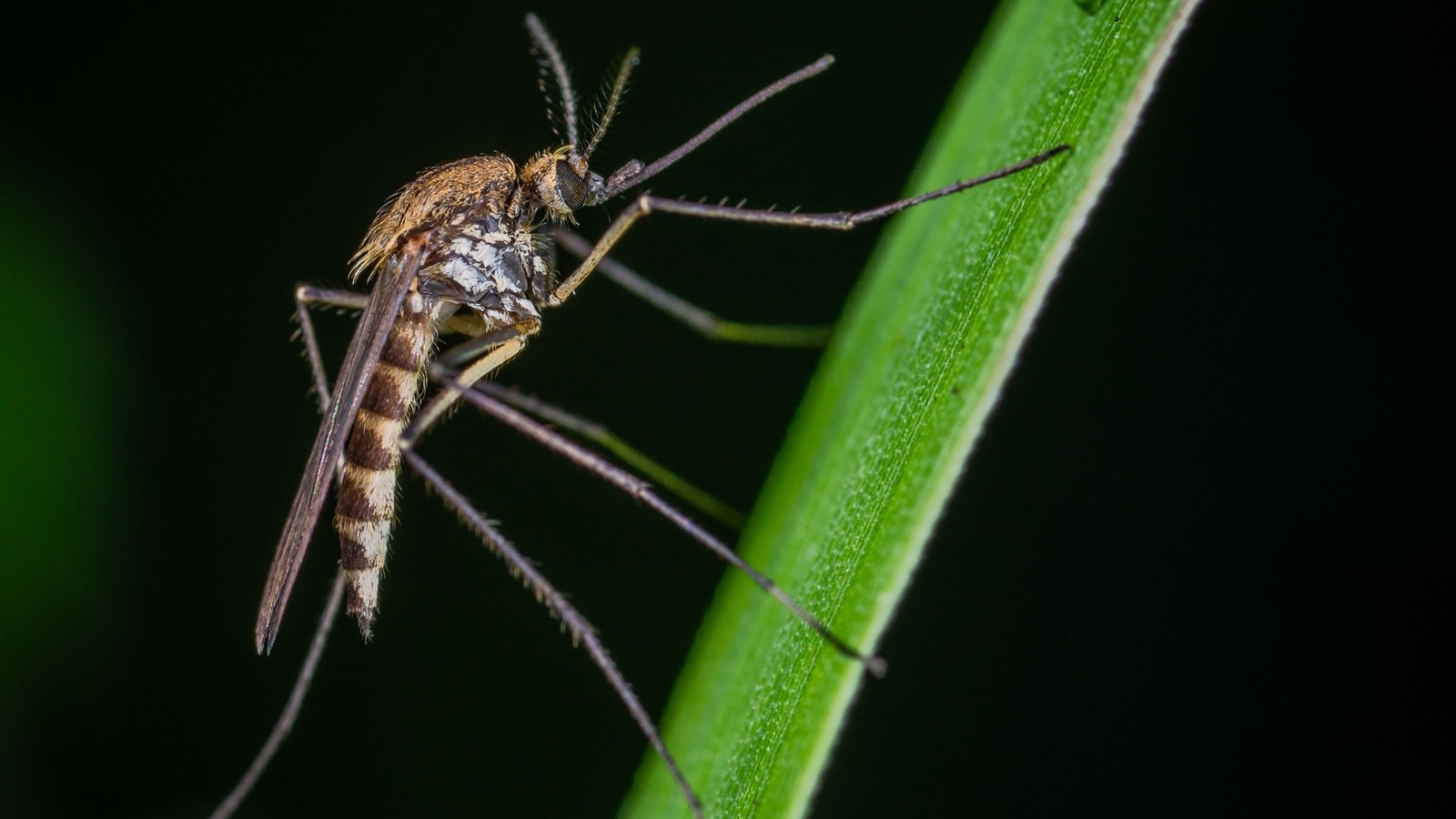
The mainstream media loves a savior narrative, especially when it involves a Silicon Valley giant applying engineering logic to nature. For years, headlines have breathlessly tracked Verily—Alphabet’s life sciences sister company—and its high-tech crusade to release millions of factory-reared, bacteria-infected mosquitoes across California and Florida. The pitch sounds brilliant: flood the ecosystem with modified males, crash the population of disease-carrying Aedes aegypti, and eradicate public health threats with digital precision.
It is a beautiful corporate PowerPoint presentation. It is also a fundamental misunderstanding of complex biological systems. Learn more on a related issue: this related article.
The tech industry treats ecosystems like buggy software code that can be patched with a single, elegant update. But biology does not play by the rules of software development. By focusing entirely on the high-tech novelty of automated insect factories and proprietary algorithms, the public conversation completely misses the operational, economic, and evolutionary walls this strategy is about to run into.
We are not witnessing the dawn of a disease-free utopia. We are watching an incredibly expensive, highly localized band-aid being marketed as a permanent cure. Additional reporting by Wired highlights related perspectives on the subject.
The Flawed Premise of the "Debugged" Insect
To understand why this approach is hitting a wall, you have to look at the underlying mechanism. Verily’s Debug project uses Wolbachia, a naturally occurring bacterium. When male Aedes aegypti mosquitoes carrying Wolbachia mate with wild females that do not carry it, the resulting eggs do not hatch.
On paper, the math works. If you overwhelm a neighborhood with sterile males, the local population drops.
But I have spent years analyzing capital allocation in biotech deployment, and here is what the press releases leave out: this is a logistical nightmare masquerading as a scalable solution. Unlike chemical interventions or permanent genetic drives, the Wolbachia suppression method requires continuous, massive, manual re-application.
Imagine a scenario where a city stops deploying these insects for just two or three months. The wild population bounces right back. This is not eradication. It is an algorithmic subscription model for public health, where municipalities must pay a tech-adjacent entity in perpetuity just to keep the baseline steady.
The Scale Paradox
Let's look at the actual operational mechanics. To achieve significant population suppression, labs must release modified males at a ratio of roughly 10-to-1 or even 20-to-1 against the wild population.
- The Wild Baseline: A single urban block can harbor tens of thousands of mosquitoes.
- The Logistical Burden: You need specialized vans, automated release mechanisms, and constant sorting to ensure no females (which actually bite and transmit disease) are accidentally released.
- The Geographic Reality: Aedes aegypti is an urban container breeder. They breed in bottle caps, discarded tires, and blocked gutters. They do not travel far—often less than 150 meters in their entire lifetime.
This short flight range means you cannot just set up a central distribution hub and let nature do the work. You have to micro-manage the release across every single street corner, backyard, and alleyway. It works in affluent, highly controlled trial suburbs in Fresno or Miami. It fails completely when faced with the messy, unstructured reality of global megacities where dengue is actually an existential crisis.
The Real Threat: Selection Pressure and Evolutionary Pushback
The tech sector operates on the assumption that nature is static. It isn't. When you apply massive, artificial pressure to a biological population, the population adapts.
Biologists working with the World Mosquito Program and academic institutions like the University of Kentucky have long pointed out the risks of behavioral resistance. If you flood an area with factory-raised males that have been sorted, chilled, packed into tubes, and shot out of a automated dispenser, those males are inherently less fit than their wild counterparts.
Wild females are picky. If they begin to discriminate against the factory-reared, Wolbachia-carrying males—preferring the scrawny, aggressive wild males that survived a real environment—the entire suppression model collapses overnight.
Furthermore, there is the threat of accidental female release. Even with advanced optical sorting AI, the error margin is never zero. If you accidentally release Wolbachia-infected females alongside the males, you risk establishing a Wolbachia-fixed wild population. Once the wild females also carry the bacteria, the sterility trick no longer works, and you have lost your primary lever of control.
Dismantling the FAQs: What Everyone Gets Wrong
Public discourse around this technology is warped by basic misconceptions. Let’s correct the record on the questions people are actually asking.
Do these modified mosquitoes bite humans?
No, the released insects are males, which feed exclusively on plant nectar. But this truth masks a deeper operational failure. Because you need to release millions of them, the sheer volume of insects clouding around doorsteps and parks creates a massive public nuisance, even if they aren't biting. Local resistance builds fast when citizens feel like they are living inside a corporate science experiment.
Is this the same as genetic modification?
No. Wolbachia is a bacteria, not a gene-editing tool like CRISPR. While this makes it easier to clear regulatory hurdles, it also means the trait is not permanently inherited by the wild population in a way that causes extinction. You are stuck on a treadmill. You cannot "set it and forget it."
Is this the most cost-effective way to fight dengue?
Absolutely not. The capital expenditure required to build automated rearing facilities, run proprietary sorting algorithms, and maintain a fleet of delivery vehicles is astronomical. For a fraction of the cost of a tech-firm contract, municipalities could invest in basic, unglamorous civil infrastructure: reliable piped water (which eliminates the need for residents to store water in open barrels) and modernized waste management. But sewage pipes don't generate tech headlines.
The Misallocation of Innovation Capital
The real tragedy of the Silicon Valley approach to public health is the displacement of simpler, more robust solutions.
There is an alternative deployment of Wolbachia called the "replacement" method, pioneered by non-profit research initiatives. Instead of trying to wipe out the mosquito population through continuous mass releases of sterile males, they release both males and females in small numbers. The bacteria spreads naturally through the wild population until nearly all mosquitoes carry it. Crucially, Wolbachia-infected mosquitoes are physically incapable of transmitting the dengue virus.
The replacement method requires a fraction of the long-term funding because the trait becomes self-sustaining in the wild. Once it takes hold, the intervention is done.
Why isn't Big Tech pivoting entirely to this model? Because self-sustaining biological solutions do not require ongoing software licensing, proprietary hardware updates, or continuous data monitoring services. The replacement method is a public good; the suppression method is a proprietary service model.
+------------------------------------+------------------------------------+
| Suppression Model (Big Tech)       | Replacement Model (Public Health)  |
+------------------------------------+------------------------------------+
| Requires continuous male releases  | One-time or limited releases       |
| High long-term operational costs   | Low long-term operational costs    |
| Creates corporate dependency       | Empowers local communities         |
| Fails if supply chain breaks       | Resilient to logistical disruption |
+------------------------------------+------------------------------------+
Nature Isn't an Operating System
To be clear, the traditional chemical approach—spraying massive amounts of neurotoxic insecticides—is an environmental disaster that has already triggered widespread genetic resistance among mosquito populations. We cannot keep spraying our way out of this problem.
But the belief that we can code our way out of it with automated insect drops is equally naive.
We are dealing with an organism that has survived for millions of years, adapting to every climate, predator, and human intervention thrown its way. When you design a public health strategy that relies on everything going perfectly in a supply chain—from laboratory temperature control to automated van routes—you introduce brittle failure points into a system that demands absolute resilience.
Stop looking at the sky for automated delivery drones to solve vector-borne disease. The answer to insect-borne illness isn't hidden in a proprietary algorithm or a venture-backed insect factory. It is found in the unsexy, grounded realities of municipal engineering, urban water security, and self-sustaining biological interventions that don't require a corporate renewal notice to keep running.