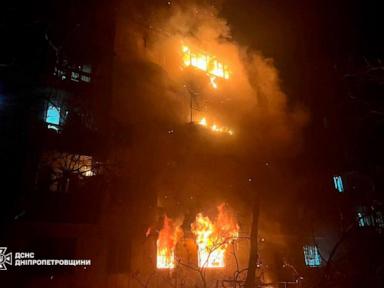
Silence.
That is the first thing you notice in Kyiv right before the air defense batteries wake up, a heavy, pressurized hush that settles over the Dnipro River like wet wool and makes the hair on your forearms stand straight up. For anyone who has ever stood on the right bank at three in the morning watching the dark water slide south toward the Black Sea, the bridges across this river do not look like military targets. They look like stitches holding a torn coat together.
When Russian ballistic and cruise missiles tore through the night sky in a retaliatory strike aimed directly at Kyiv’s river crossings, the headlines reduced the event to cold arithmetic. Intercept rates. Missile types. Retaliation for strikes behind Russian lines. Those reports miss the actual story entirely, because a bridge in Kyiv is never just concrete, asphalt, and tensioned steel. It is the difference between a surgeon reaching a trauma ward in twelve minutes and a surgeon trapped in gridlock for three hours while a patient bleeds out on an operating table.
The Geography of a Divided City
To understand why an attack on Kyiv’s bridges carries a weight far heavier than the tonnage of high explosives dropped on them, you have to understand how the city breathes. Kyiv is split clean down the middle by one of Europe’s widest, most unforgiving rivers. On the high, wooded bluffs of the west bank sit the historic heart of the capital, the government quarter, the major trauma hospitals, and the primary rail hubs connecting Ukraine to Poland and the rest of Europe. On the flat, sprawling plains of the left bank live more than a million people in dense residential districts like Troieshchyna, Pozniaky, and Darnytsia.
Every morning, hundreds of thousands of people cross from east to west to keep the country running. Every evening, they cross back.
Consider a hypothetical character—let us call her Olena, an emergency pediatric nurse living in a seventeenth-floor apartment on the left bank whose shift at Okhmatdyt children’s hospital on the right bank starts at seven in the morning. When the air raid sirens wail at four, Olena does not check military Telegram channels to analyze geopolitical escalation ladders. She checks whether the Metro’s red line is still running over the Dnipro, or whether she will have to walk six kilometers across a pedestrian span in freezing rain because the road decks are closed to civilian traffic.
For Olena, a missile aimed at the Paton Bridge or the Pivdennyi Bridge is not an abstract strategic signal. It is an immediate, physical severing of her life from her duty.
Why Concrete Matters More Than Headlines
Military analysts often describe strikes on infrastructure as "retaliatory barrages," a phrase so sterile it washes away the brutal logic underneath. Retaliation is emotional, impulsive, a punch thrown back after taking a hit. Strikes on river crossings are the exact opposite. They are cold, methodical, and deeply structural.
Think of a modern city not as a collection of buildings, but as a human circulatory system. Power plants are the heart; substations are the major arteries. Bridges, however, are the bottleneck valves where everything must pass through a narrow, vulnerable choke point. You do not need to destroy every road in a city to paralyze it. You only need to sever the five or six narrow ribbons of steel that cross the water.
Kyiv relies on a remarkably small number of crossings for a metropolis of over three million people:
- The Pivdennyi (Southern) Bridge, a massive cable-stayed structure carrying both road traffic and the green Metro line, which has already spent huge stretches of the war restricted solely to military and emergency transit.
- The Paton Bridge, an engineering landmark completed in 1953 as the world’s first all-welded bridge, already showing signs of structural fatigue long before Russian missiles began testing its tolerances.
- The Darnytskyi Bridge, a critical dual-purpose rail and road artery that carries freight, grain, and military supplies from western borders straight toward the eastern front.
- The Metro Bridge and Northern Bridge, essential lifelines for commuters and municipal supply trucks hauling everything from insulin to diesel fuel.
When air defense crews over Kyiv intercept incoming Iskander-M ballistic missiles or Kalibr cruise missiles aimed at these spans, the victory is measured in what does not happen. The water mains tucked beneath the roadbeds do not rupture. The high-voltage cables strung along the undersides do not snap and plunge half a million apartments into darkness. The freight trains carrying artillery shells and winter generators do not grind to a halt three hundred kilometers short of the front line.
Even when air defenses succeed—and Ukrainian batteries have achieved interception rates that would have seemed impossible to Western planners just a few years ago—falling debris alone can warp expansion joints, crater asphalt, and force engineers to shut down lanes for structural inspections. A bridge does not have to collapse into the Dnipro to be taken out of the war. It only has to become unsafe for a forty-ton cargo truck.
The Architecture of Resilience
There is a historical echo here that anyone who has walked along the Dnipro embankment feels in their bones. During the Second World War, retreating Soviet forces blew up Kyiv’s bridges in 1941, and retreating German forces destroyed the replacements in 1943. For years afterward, the city survived on pontoon spans and temporary wooden trestles, watching ice floes smash against fragile pilings every spring.
That memory lives in the DNA of Kyiv’s municipal engineers today. I still remember standing near the river after an earlier wave of strikes, watching a crew of repair workers in yellow reflective vests already measuring scorched concrete while the smell of cordite and burned insulation still hung thick in the damp morning air. Nobody was giving speeches about resilience. One man was drinking lukewarm coffee from a dented thermos while another chalked numbers onto a cracked guardrail. They worked with the quiet, unhurried precision of people who had rehearsed this exact catastrophe a hundred times in their heads.
That is the part of war that rarely makes television news. Modern air warfare is a duel between billion-dollar missile systems and middle-aged men with welding torches, cranes, and spreadsheets. Every time Russia launches a salvo meant to break the logistical spine of the Ukrainian capital, an invisible army of structural engineers, rail dispatchers, and air defense operators steps into the gap to stitch it back together before rush hour begins.
What Happens When a Crossing Closes
But the real problem lies elsewhere, in the slow, grinding exhaustion that accumulates even when the bridges remain standing.
Imagine—as a realistic composite of what Kyiv residents endure during heavy strikes—a logistics dispatcher named Taras trying to route medical oxygen tanks from a depot near Zhuliany on the west bank to three hospitals on the east bank after an overnight alert. Normally, the drive takes twenty-five minutes. On a morning when security forces close the primary bridges to inspect potential debris damage, every ambulance, delivery van, and military convoy gets funneled onto a single surviving crossing.
Traffic backs up for eight kilometers. Engines idle, burning scarce fuel. A twenty-five-minute run stretches into three hours. Meanwhile, Metro trains stop running across open-air river spans during active alerts, stranding tens of thousands of workers in underground stations deep beneath the granite bedrock of the city.
Multiply Taras’s morning by three million people, week after week, month after month. You begin to see the true strategic goal behind targeting urban crossings. It is not merely about stopping tanks or trains. It is about taxing every single heartbeat of civilian life until the simple act of going to work, buying groceries, or visiting an aging parent across the river feels like navigating an obstacle course.
I will be honest: watching this unfold from close range leaves you with a strange, unsettling confusion that no military briefing can quite resolve. On one hand, you witness human adaptability that borders on the miraculous—coffee shops opening twenty minutes after the all-clear siren, commuter ferries appearing almost overnight when road bridges are choked, neighbors organizing carpools through local chat groups before the smoke has even cleared from the horizon. On the other hand, you cannot escape the cold mathematical reality that concrete has limits. Steel fatigues. Every shockwave, every emergency detour, every overloaded axle leaves an invisible hairline fracture that will have to be paid for years after the guns finally go silent.
The War Beneath the Surface
Consider what happens next when a military campaign shifts from frontline trench battles to deep strikes on urban infrastructure. The battlefield expands vertically and geographically until there is no longer a clear line between soldier and civilian.
For the air defense crews stationed in sandbagged positions around the outskirts of Kyiv, protecting the bridges requires split-second triage. A ballistic missile launched from hundreds of kilometers away travels at several times the speed of sound, leaving defenders less than five minutes from radar detection to impact. In those few hundred seconds, automated tracking systems and exhausted human operators must calculate trajectories, distinguish decoys from live warheads, and expend scarce, multi-million-dollar interceptor missiles to shield spans built seventy years ago.
Every interceptor fired over the Dnipro is one less interceptor available to protect a power station in Kharkiv or a port facility in Odesa. That is the ruthless calculus of attrition. Russia does not need every missile to hit a bridge pier to extract a strategic price; simply forcing Ukraine to burn through precious air defense stockpiles to defend its capital’s lifelines achieves a secondary objective.
Yet the bridges themselves refuse to play the role of passive victims. Engineers have reinforced vulnerable approaches, dispersed critical utility lines, stockpiled modular bridging equipment, and built redundancies into rail and road networks that did not exist at the start of the full-scale invasion. Where once a single damaged junction could paralyze rail traffic for days, dispatchers now reroute trains along secondary loops within hours.
Dawn Over the Water
By seven in the morning, the first gray light breaks over the golden domes of the Kyiv-Pechersk Lavra on the western hills, catching the mist rising off the Dnipro. Down below, the river looks entirely indifferent to the violent geometry that just played out above it.
Cars begin to move again across the wet asphalt of the Paton Bridge, headlights carving pale tunnels through the river fog. A blue Metro train emerges from the tunnel mouth on the right bank, pauses for a fraction of a second as if testing the air, and rolls steadily out over the steel arches toward the east. Inside the carriages, tired people stare at their phones, adjusting their coats, already calculating how late they will be to work.
Beneath their feet, invisible in the cold morning light, fresh chalk marks sit beside scorched patches of concrete where repair crews have already come and gone, leaving the river crossed once more.