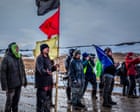
Ten years ago, the plains of North Dakota became the center of the world. People arrived by the thousands, pitching tents in the freezing wind to protect the Missouri River. They called themselves water protectors. They chanted Mní Wičoni—Water is Life.
When the camps were ultimately cleared out by law enforcement in early 2017, many assumed the story was over. The Dakota Access Pipeline was built. Oil started flowing. Yet, a decade later, the people who lived through that historic standoff are returning to the reservation not just to remember, but to reckon with what changed.
Ask anyone who was there if it was worth it, and you will hear a common refrain. They would do it again in a heartbeat.
The Reality Behind the Movement
Most media coverage at the time framed Standing Rock as a sudden flashpoint. It wasn't. It was the culmination of generations of broken treaties, systemic neglect, and environmental racism directed at the Standing Rock Sioux Tribe. The pipeline's original route was supposed to cross north of Bismarck, the state capital. Residents raised concerns about drinking water safety. So, planners rerouted it upstream of an Indigenous reservation instead.
That decision sparked an unprecedented uprising. Indigenous nations from across the Americas united in a way not seen in over a century.
When you talk to organizers today, they don't romanticize the hardship. Freezing temperatures, militarized police, rubber bullets, and surveillance took a heavy toll. Internal divisions strained communities. Psychological trauma lingered long after the campfires went out.
Yet, what happened on those riverbanks fundamentally reshaped modern environmental activism.
What the Corporate Playbooks Missed
Recent investigative findings reveal just how aggressively corporate interests fought back. Document leaks exposed how the pipeline company hired private security firms like TigerSwan, which utilized military-style counterterrorism tactics and targeted local communities with sophisticated online disinformation campaigns. They tried to paint peaceful water protectors as violent rioters.
Despite millions of dollars spent on surveillance and propaganda, the corporate strategy failed to erase the cultural awakening. Standing Rock proved that grassroots Indigenous-led resistance could capture global attention and inspire future battles, from the Line 3 pipeline fight in Minnesota to resistance movements around the globe.
People learned how to organize. They learned how to build self-sustaining communities under pressure. They learned how to look at corporate accountability with a deeply critical eye.
The Long Fight in the Courts and Courtsyards
While the physical encampments are long gone, the battle shifted to legal battlegrounds. The Standing Rock Sioux Tribe spent the subsequent decade fighting in federal courts over environmental reviews, emergency spill response plans, and regulatory failures.
Frustrations remain high. Tribal leaders have pointed out that crucial emergency response details were heavily redacted by federal agencies for years. Worse still, newly uncovered documents revealed that minor spills had already occurred near Lake Oahe, highlighting the ongoing risks that residents feared all along.
The legal struggles demonstrate that corporate accountability doesn't end when construction finishes. It requires endless vigilance.
Finding Purpose in the Aftermath
For many participants, Standing Rock was a life-altering crucible. Some struggled with burnout and activism fatigue. Others channeled that energy into local food sovereignty projects, renewable energy initiatives on tribal lands, and language preservation programs.
The spirit born on the plains didn't vanish. It decentralized.
When hundreds of veterans, elders, and original water protectors gathered back at Standing Rock for recent milestone anniversaries, the atmosphere wasn't defined by defeat. It was defined by survival. They shared meals, held round dances, and honored those who sacrificed their physical and mental well-being for a principle.
The pipeline is still operational. But the way society talks about Indigenous sovereignty, climate change, and corporate power will never be the same. The water protectors drew a line in the dirt, and that boundary still holds.