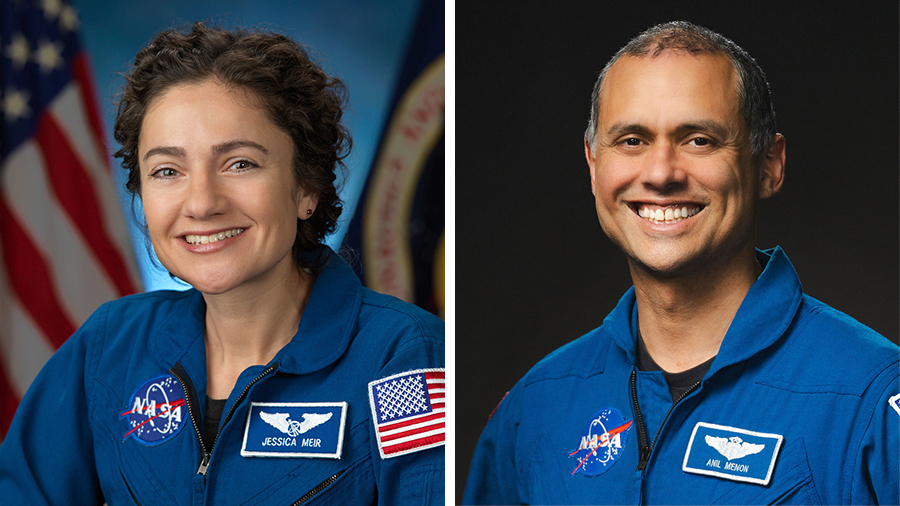
We love a good hero story. Give the public an astronaut floating in a billion-dollar suit against the black velvet of the void, slap a nationalist headline on it about an Indian-origin trailblazer completing a six-hour and twenty-seven-minute maintenance marathon, and everyone loses their minds.
The lazy consensus says this is peak human achievement. It is a triumph of grit. It proves our unstoppable march into the cosmos.
Absolute garbage.
If an engineer on the ground had to spend nearly seven hours turning bolts in a pressurized oven with restricted finger mobility and a high risk of carbon dioxide poisoning just to swap out a power channel, management would riot. We call spacewalks or Extravehicular Activities a testament to engineering prowess. They are actually a monument to system design failure.
Let's look past the glossy press releases. The International Space Station is an aging piece of hardware. Every time a crew member steps outside to upgrade a solar array or fix a cooling loop, we are celebrating a band-aid applied to a gaping structural wound.
The Myth of the Heroic EVA
Ask any aerospace designer who has actually survived a Critical Design Review what they think of EVAs. They will roll their eyes.
A spacewalk is not a flexible diagnostic procedure. It is a desperate, high-stakes choreography performed by human proxies because our automation failed us. When Sunita Williams or any other commander suits up to handle maintenance, they are operating under brutal physical constraints. The EMU spacesuit is essentially a rigid, 300-pound spacecraft shaped like a person. Internal pressure fights every movement. Astronauts lose fingernails. They suffer shoulder injuries.
We accept these casualties because we view space through a lens of nineteenth-century exploration tropes. We want captains on decks. But orbit is not the open ocean. It is a vacuum where biological soft tissue has zero business existing without a massive mechanical buffer.
When a media outlet breathlessly reports a six-hour orbital shift like it's a marathon victory, they miss the engineering reality. Every minute spent outside is a minute exposed to micrometeoroids, thermal swings from minus 150 to plus 120 degrees Celsius, and single points of failure that could turn a routine upgrade into a catastrophe.
The Automation Paradox
The standard narrative claims that human intuition is irreplaceable in orbit. Computers cannot improvise when a stubborn bolt refuses to strip or a bracket jams.
That argument worked in 1985. Today, it is an excuse for lazy software architecture and stagnant robotics.
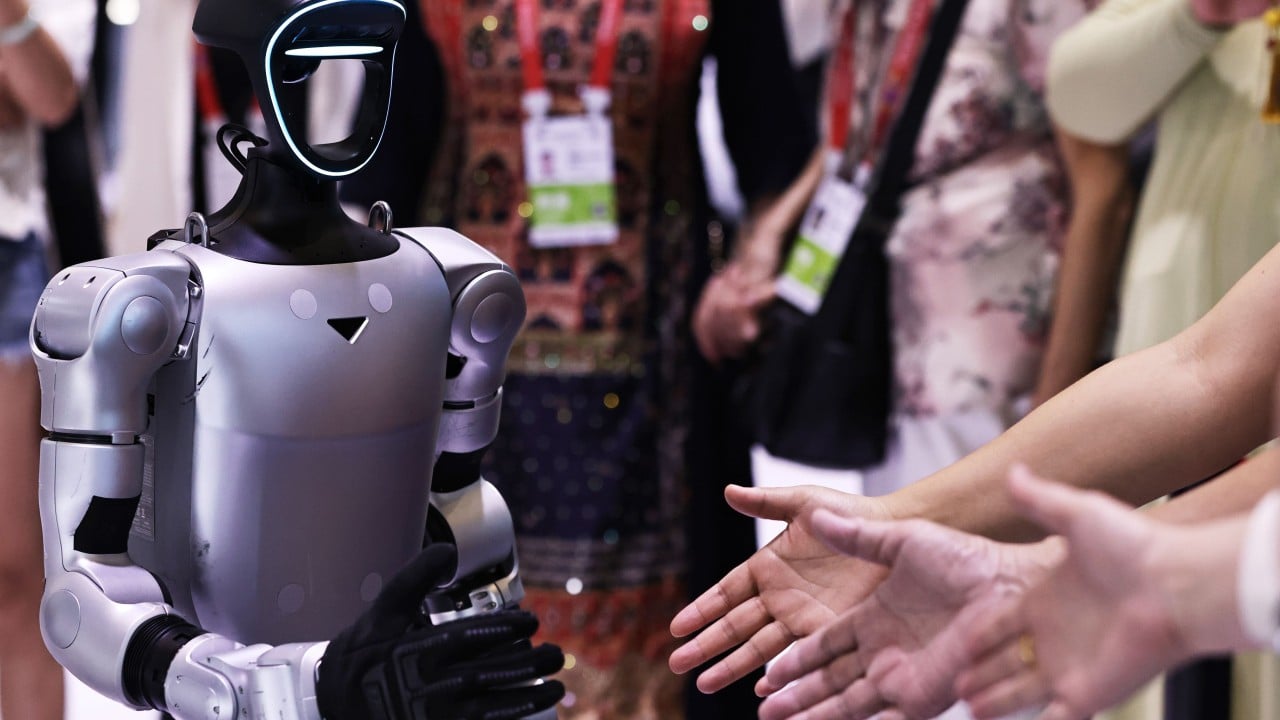
Look at what we can do down here on Earth. Automated assembly lines manipulate sub-millimeter tolerances without getting fatigued or running out of oxygen. Yet in low-Earth orbit, we rely on meat-sacks with tether lines to plug in power distribution electronics.
Imagine a scenario where we stop treating the human body as a universal toolkit. Instead of designing stations for human maintenance, we should design them for autonomous modular replacement. If a solar array controller dies, a drone should slide out of a flush-mounted garage, unscrew the dead unit using torque-feedback sensors, slot in a replacement, and plug it into a standardized backplane.
No suit pressurization. No carbon dioxide scrubbers. No risk to biological life.
Instead, we pour billions into keeping humans alive in an environment that actively wants to kill them, just so they can perform tasks a smart industrial arm could handle with better repeatability.
The Cost of Anthropocentric Nostalgia
Why do we keep doing it this way?
Nostalgia.
Space agencies need television moments. Governments need inspirational touchpoints for school children. An automated robotic arm swapping a circuit board in silence doesn't trend on social media. A human being dangling 250 miles above the planet holding a torque wrench gets the funding renewed.
This is the great trade-off of the modern space economy. We sacrifice technical efficiency for theatrical value.
Every hour an astronaut spends on maintenance EVA is an hour stolen from actual science, physiological monitoring, or material synthesis experiments that only microgravity can provide. We are using our most expensive, highly trained assets as high-priced handymen.
Think about the opportunity cost. Training for a spacewalk takes hundreds of hours in a massive neutral buoyancy pool down in Houston. It consumes simulator time, flight controller bandwidth, and life support resources. All to do what a specialized drone could do faster and without a mandatory six-hour recovery protocol.
Dismantling the Blueprint
If we want a sustainable orbital economy, we have to kill the romance of the spacewalk.
- Standardize interfaces: Every external component must be plug-and-play compatible with automated robotic effectors. No custom bolts. No manual tether attachments.
- Ban human intervention for routine upgrades: If a task can be automated, writing an EVA procedure for it should be treated as an engineering failure.
- Redefine mission success: Success is not a successful spacewalk completed despite the odds. Success is a station that never requires a human to step outside in the first place.
We are standing on the precipice of commercial orbital stations, lunar outposts, and deep-space transit hubs. If we build those future ecosystems using the same manual, EVA-heavy mentality we inherited from the shuttle era, we are going to choke on our own operational overhead.
Stop cheering for the person in the suit. Start interrogating the system that forced them to go outside.
The next time a headline praises a record-breaking maintenance shift in the void, remember what it actually represents.
A failure of imagination.