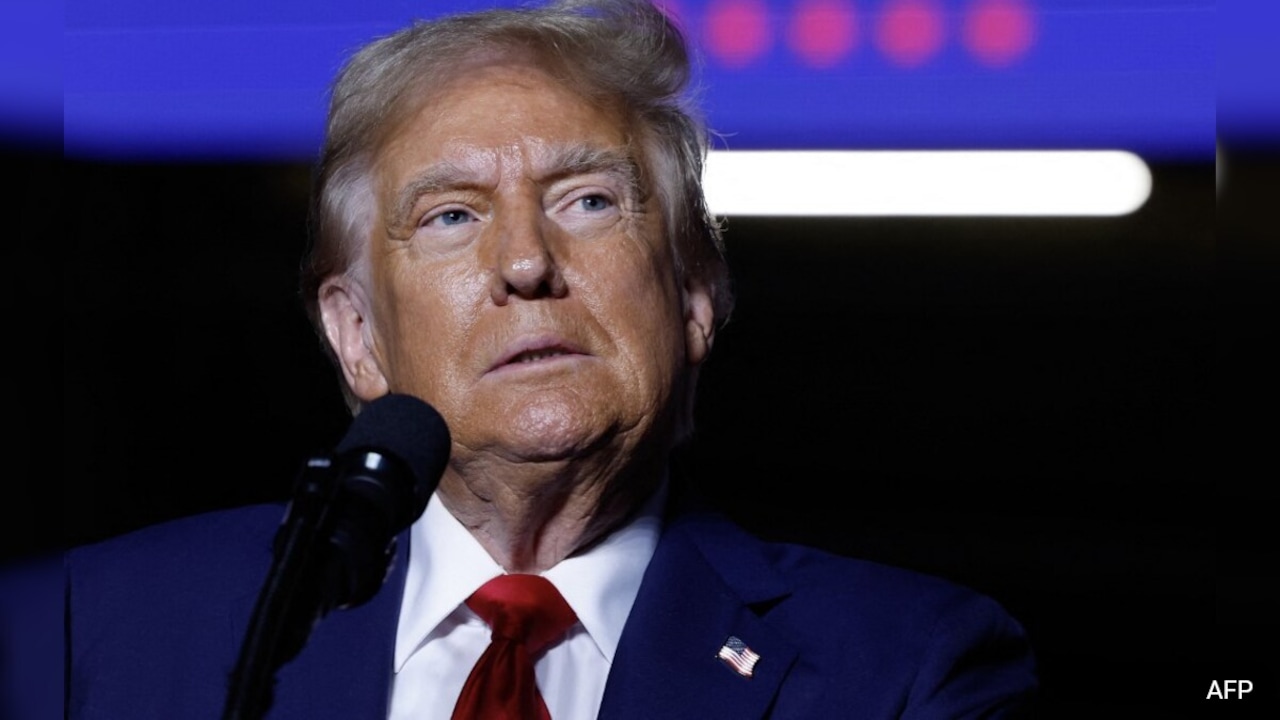
A sitting American president has successfully turned the regulatory machinery of the federal government into a personal liquidity engine. According to a 927-page financial disclosure released by the Office of Government Ethics, Donald Trump pulled in over $1.4 billion from cryptocurrency ventures during his first year back in the White House. This windfall did not come from the traditional real estate empire that took his family a century to build. It came from a complex web of digital token sales, memecoin royalties, and offshore corporate partnerships that expanded rapidly after he took the oath of office.
The numbers are staggering. The disclosure documents show that Trump brought in $635 million in royalties from a licensing agreement tied to the $TRUMP memecoin through an entity called CIC Digital LLC. Another $526 million came from token sales distributed by World Liberty Financial, a digital finance platform launched by his sons and close associates. He also pulled down $196 million from a capital contribution involving Stablecoin Holdco LLC, a business in which he retains a 38.25 percent stake. While the White House maintains that these holdings reside in a trust managed by Donald Trump Jr., the filing explicitly notes that the trust is revocable, giving the president the unilateral authority to dissolve it or remove trustees at any moment.
This is a structural transformation of presidential enrichment. For decades, modern presidents avoided even the appearance of financial conflict by utilizing blind trusts overseen by independent managers. Trump has abandoned that tradition entirely. Instead of separating his public duties from his private bank accounts, his administration spent the past year enacting sweeping policy changes that directly inflated the value of his family's digital assets. The federal government dismantled the strict regulatory enforcement framework established under the previous administration, replaced skeptical regulators with industry insiders, and signed major legislation to legalize new varieties of digital currency.
The market response was entirely predictable. While the president locked in over a billion dollars in revenue, the retail investors who bought into his digital ecosystem suffered catastrophic losses. The $TRUMP memecoin, which surged past $74 in the days following his January 2025 inauguration, has crashed to just $1.68. Similarly, the governance tokens issued by World Liberty Financial have lost 80 percent of their value since they began trading. The pattern is clear. Public policy decisions created speculative fervor, foreign buyers poured money into the ecosystem, the first family extracted massive liquidity, and ordinary buyers were left holding worthless digital paper.
The Architecture of the Billion Dollar Token Shift
To understand how a president extracts hundreds of millions of dollars from speculative markets, one must look closely at the underlying corporate plumbing. The traditional Trump Organization relied on illiquid physical assets. Hotels, golf courses, and commercial office towers require massive capital expenditures, years of construction, and intense local regulatory approvals. Digital assets require none of these things. They can be created with a few lines of code and distributed globally within seconds.
World Liberty Financial represents the core of this new corporate model. The company was established shortly before the election by Eric Trump, Donald Trump Jr., and the sons of real estate billionaire and U.S. envoy Steve Witkoff. The president is listed in corporate documents as the co-founder emeritus. According to the OGE filing, Trump extracted more than half a billion dollars across ten distinct transactions involving World Liberty token sales. The mechanism used here was a governance token known as WLFI.
Before the public launch, government regulators explicitly warned that governance tokens are inherently difficult to value. They do not offer an equity stake in the underlying business, they pay no dividends, and they grant no ownership rights over corporate assets. They merely provide the buyer with voting power over the technical protocols of a decentralized finance platform. Yet, millions of buyers flooded the market simply because the asset bore the president’s name.
The family’s digital operations expanded further in April 2025 when World Liberty introduced its own stablecoin, a digital currency pegged directly to the value of the American dollar. Shortly thereafter, Trump booked a massive $196 million payment tied to Stablecoin Holdco LLC. By operating both a trading platform and an issuing entity for dollar-pegged assets, the Trump family built a closed-loop banking system that operated completely outside the oversight of traditional Wall Street regulators.
The Memecoin Royalty Pipeline
The largest single source of the president’s digital revenue did not come from financial platforms, but from online cultural speculation. Through CIC Digital LLC, an entity controlled by the Trump family, the president collected $635 million in royalties from a licensing agreement with a firm called Celebration Coins. This company minted and sold souvenir-style digital tokens stamped with Trump’s face.
Memecoins are highly volatile financial instruments. They possess no underlying utility, cash flow, or business model. Their price is driven entirely by online sentiment, political tribalism, and speculative momentum. The OGE documents show that CIC Digital did not just collect cash royalties; it also retained at least $60 million worth of various cryptocurrencies directly in its digital wallets. This allowed the president's business to maintain a massive proprietary trading desk that benefited from broader market movements.
The growth of this royalty pipeline stands in sharp contrast to Trump's domestic real estate holdings. While his flagship resort at Mar-a-Lago saw a 50 percent jump in revenue to $77.5 million as foreign dignitaries and corporate executives flocked to Palm Beach, that sum is a fraction of the capital generated by his digital licensing deals. A century of real estate accumulation has been entirely eclipsed by a single year of digital asset issuance.
Foreign Capital and the Regulatory Shield
The massive influx of capital into the president's private ventures was not merely driven by small-scale domestic buyers. The disclosure documents reveal that massive quantities of institutional capital flowed into these tokens from overseas, often from individuals with direct interests in American regulatory policy.
Consider the actions of Justin Sun, a prominent Chinese cryptocurrency billionaire. In early 2025, Sun was facing a severe federal lawsuit brought by American regulators who accused him of fraud and manipulating market prices. In February 2025, that federal lawsuit was suddenly paused. It was later settled for a relatively minor $10 million fine. The OGE filing reveals that during this exact period, Sun spent $75 million purchasing World Liberty governance tokens and an additional $200 million buying the president's souvenir memecoins.
Sun has repeatedly denied that his massive financial contributions to the Trump family businesses had any connection to the favorable resolution of his federal enforcement case. World Liberty Financial has similarly dismissed any suggestions of a conflict of interest. However, the timing remains deeply problematic for traditional ethics experts. A foreign national under investigation by the United States government injected a quarter of a billion dollars into the private businesses of the sitting president, and his legal troubles evaporated shortly thereafter.
This pattern extends beyond individual billionaires to entire foreign states. While the Trump Organization was expanding its digital footprint, it was also securing massive real estate licensing fees from foreign developers close to overseas governments. The disclosure shows the president pocketed $11.7 million from projects in Dubai, $10 million from Abu Dhabi, and $9.2 million from a developer close to the ruling family of Saudi Arabia. Concurrently, these specific governments were involved in intense, high-stakes negotiations with the White House over international tariffs, military aid, and trade access.
The Dismantling of the Federal Enforcement Apparatus
The dramatic escalation of Trump’s crypto wealth was directly enabled by a fundamental shift in how Washington regulates digital assets. Upon taking office, the president immediately moved to reverse the aggressive regulatory clampdown that had defined the previous four years. He ordered the creation of a specialized crypto working group within the White House, chaired by technology investor David Sacks.
The policy changes came rapidly. The Justice Department and the Securities and Exchange Commission systematically wound down pending investigations into major digital asset firms. Banking regulators rolled back restrictions that had previously prevented traditional American banks from holding digital currencies on behalf of clients.
The crowning achievement of this policy pivot arrived with the passage of the GENIUS Act. This major piece of federal legislation established a highly permissive regulatory framework for payment stablecoins, effectively legitimizing the exact financial instruments that Trump’s private company, Stablecoin Holdco LLC, was actively preparing to issue. By signing this bill into law, the president legally secured the operational environment for his own private corporate ventures.
The executive branch also used its clemency powers to reward figures within the digital asset space. Trump granted full presidential pardons to several prominent industry figures who had been convicted of serious federal crimes, including Silk Road creator Ross Ulbricht and Binance founder Changpeng Zhao. These pardons sent a clear and unmistakable signal to the global financial markets that the era of aggressive federal oversight was over.
The Mechanics of the Capital Extraction
The broader financial consequences of this intersection between public policy and private profit have fallen squarely on the public. Speculators who bought into the president's ventures based on his public endorsements have seen their capital decimated. The rapid collapse of the $TRUMP token from $74 to under two dollars represents a massive transfer of wealth from retail buyers to the corporate entities collecting the licensing fees.
This dynamic is typical of the broader digital asset markets, but it takes on an entirely new dimension when the chief beneficiary is the head of the executive branch. The president has publicly dismissed criticisms of his financial arrangements, stating that his gains are simply a reflection of a booming market.
Trump Private Crypto Revenue Sources (2025)
==================================================
CIC Digital Royalty Fees:       $635,000,000
World Liberty Token Sales:      $526,000,000
Stablecoin Holdco Capital:      $196,000,000
WLF Corporate Interest Sales:   $260,000,000
==================================================
Total Disclosed Revenue:        $1,617,000,000
The structural problem is that the president’s private financial success is decoupled from the economic reality of the assets he promotes. Because his revenue is derived primarily from upfront token sales, licensing fees, and fixed royalty percentages, his businesses profit immensely at the exact moment of issuance. If the tokens collapse in value immediately afterward, the losses are borne entirely by the public, while the unbacked cash remains securely inside the revocable family trust.
A New Precedent for Executive Wealth
The traditional boundaries governing the presidency have been fundamentally rewritten. For generations, the principal check on presidential corruption was the political risk of public exposure. The assumption was that voters would punish an administration that used the power of the state to enrich the chief executive. That assumption no longer holds true.
Trump has demonstrated that a political base will not only tolerate private enrichment, but will actively fund it by purchasing speculative assets directly from the politician they support. This bypasses the old methods of political influence. Foreign actors, domestic lobbyists, and special interest groups no longer need to funnel money through complex political action committees or expensive Washington lobbying firms. They can simply buy tens of millions of dollars worth of unlisted digital tokens directly from the president’s corporate entities.
This provides immediate, liquid capital to the first family while leaving zero trace of traditional political corruption. There are no campaign disclosure filings, no registered lobbyist reports, and no public interest justifications required. The transactions take place on distributed ledgers, obscured by shell companies and international financial structures, completely outside the framework of American constitutional oversight. The OGE financial disclosure has pulled back the curtain on this multi-billion dollar operation, but the regulatory machinery required to stop it has already been dismantled by the very man who profits from its absence.