The African National Congress is currently engaged in a desperate engineering project to save itself from a structural collapse that has been thirty years in the making. As the 2026 local government elections approach, the party that once commanded the moral and political heights of South Africa is now fighting for relevance in the very streets it used to own. This is not a standard election cycle. It is the first time the ANC enters a municipal race while tethered to its rivals in a national coalition, and the internal friction is reaching a breaking point.
For the first time in history, the party has abandoned its traditional, grassroots-driven process for selecting mayoral candidates. In a move that signals either extreme caution or a lack of trust in its own local branches, the ANC leadership has centralized the vetting process. Mayors for the nation’s 30 largest cities must now undergo "competency-based" testing and rigorous training at the OR Tambo School of Leadership. While the party frames this as a commitment to professionalizing local government, it is actually a strategic admission. The old way—where local "strongmen" secured their spots through patronage and branch-level maneuvering—has produced a decade of dry taps, dark streets, and crumbling infrastructure.
The Mirage of Reform
The central problem for the ANC is that the voters no longer listen to promises; they look at their faucets. In Gauteng, the economic heart of the country, the situation has moved beyond a crisis into a chronic state of failure. Premier Panyaza Lesufi’s administration is currently attempting to patch together a water system that has seen major hubs like Midrand and Soweto go days without supply. The "Commando System" and "Brixton Towers" remain stubborn points of failure that threaten the party's grip on Johannesburg and Ekurhuleni.
When the ANC asks for another five years, it is asking a population where only 38% believe their local government is doing its job. The disconnect is staggering. Recent polling from Ipsos suggests that nearly half of South Africans feel "politically homeless." They aren't just angry at the ANC; they are disillusioned with the entire political menu. However, for a ruling party, "disillusionment" usually translates to a low turnout in its traditional strongholds, which is a death sentence in a proportional representation system.
The New Competitors and the Zulu Factor
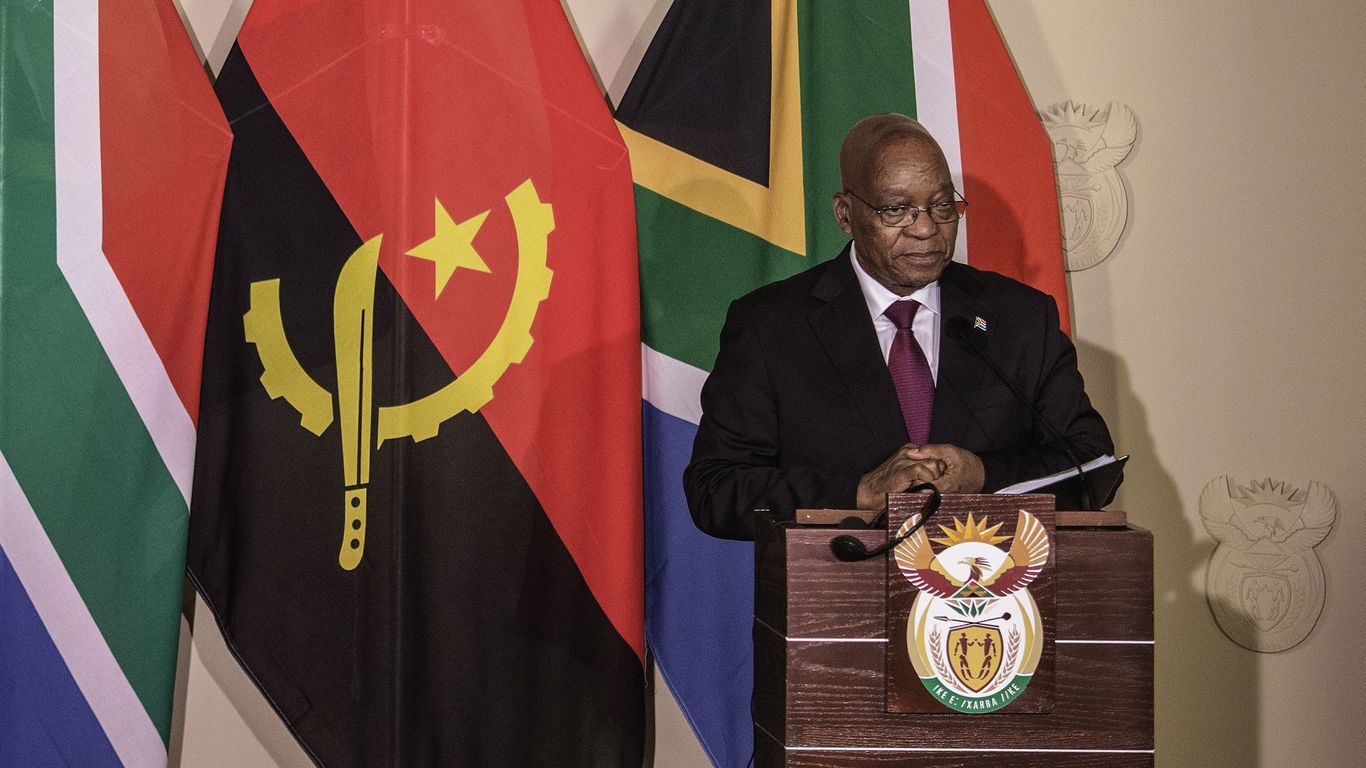
The 2026 landscape is further complicated by the rise of the uMkhonto we Sizwe (MK) party. Led by former President Jacob Zuma, the MK party has already proven it can hollow out the ANC’s base in KwaZulu-Natal. The municipal elections will be the first time the MK party contests at the local level across the country. If the 2024 national results were a tremor, 2026 could be the earthquake that levels the ANC's provincial influence.
In the past, the ANC could rely on its "Tripartite Alliance" partners for boots on the ground. Not anymore. COSATU, the country’s largest trade union federation, has signaled it is no longer a guaranteed vote for the ANC. Even more startling is the SACP's decision to run independently in certain areas. The alliance is not just fraying; it is actively competing against itself.
The Johannesburg Power Struggle
Nowhere is the ANC’s vulnerability more apparent than in Johannesburg. The Democratic Alliance (DA) has already played a high-stakes hand by naming Helen Zille as its mayoral candidate for the city. It is a move designed to project "big-beast" authority in a metro that has been paralyzed by unstable, "musical chairs" coalitions for years.
The ANC is now considering breaking its own long-standing tradition by announcing its candidate early to counter Zille. Usually, the ANC keeps its mayoral picks secret until after the votes are counted to prevent internal sabotage during the campaign. The fact that they are even discussing an early announcement shows how much the DA’s move has rattled the Luthuli House headquarters.
The Fiscal Noose
Local governments in South Africa are broke. The debt owed to Eskom and various water boards is measured in billions. This fiscal reality means that whoever wins in 2026 will not have a "honeymoon" period. They will inherit dry coffers and a mandate to collect rates from a population that is increasingly adopting a "no service, no pay" attitude.
- Total Parties Registered: 508 (a record high)
- Key Battleground: The 8 metropolitan municipalities
- Voter Sentiment: 47% feel no party represents them
- E-Voting Status: Confirmed that physical ballots will remain for 2026
The ANC’s new strategy of signing "performance contracts" with its mayors is a desperate attempt to show accountability. However, in the complex world of South African municipal governance, a mayor’s performance is often dictated by the provincial treasury and the national debt-to-GDP ratio. Signing a contract doesn't fix a burst pipe 50 feet underground.
The GNU Paradox
The Government of National Unity (GNU) at the national level has created a strange political paralysis. The ANC is currently governing alongside the DA in Pretoria, but they will be tearing each other apart on the campaign trail in the municipalities. This "split-brain" politics is confusing for the electorate. If the DA is good enough to run the country with the ANC, why is it the "enemy" in a local ward in Khayelitsha or Sandton?
This paradox favors smaller, more localized parties and independent candidates who can point to the "big two" and argue that they are both part of the same establishment. ActionSA, led by Herman Mashaba, is already positioning itself as the "common sense" alternative to the coalition chaos that has defined the last three years of urban governance.
The Mechanics of Disintegration
The ANC's loss of an absolute majority in 2024 was not a fluke. It was the result of a long-term trend where the party lost the urban middle class and is now losing the rural poor to populist movements like the MK and the EFF. In 2021, the ANC’s vote share in the Gauteng metros fell into the 30% range. To stay in power in 2026, it doesn't just need to stop the bleeding; it needs to win back people who have already moved on.
The introduction of the "competency test" for mayors is a signal to the business community and the markets that the ANC is trying to become a "normal" political party rather than a liberation movement. But "normal" parties get voted out when the lights go off. By professionalizing the candidate list, the ANC is inadvertently admitting that its previous leaders were incompetent. It is a difficult sell to an electorate that remembers who put those leaders there in the first place.
The Final Calculation
The 2026 local elections will likely confirm that South Africa has entered a permanent era of coalition governance at all levels. The ANC’s goal is no longer "total victory." It is "damage control." If the party falls below 40% in more metropolitan areas, the national GNU will become even more lopsided, with the ANC forced to give up more power just to keep its seat at the head of the table.
The "brutal truth" of the 2026 race is that the ANC is no longer the architect of South Africa’s future; it is a tenant in a building it no longer owns. The centralization of power in the candidate selection process may prevent another "thug" from taking a mayoral seat, but it cannot fix the fundamental problem of a party that has lost its connection to the people it purports to lead.
The strategy for the 2026 elections is a defensive crouch. The ANC is betting that by purging its most obviously corrupt local elements and professionalizing its front line, it can convince a skeptical public to give it one last chance. But in the townships and the suburbs, the patience has run out. Success will not be measured by the number of councils the ANC wins, but by how many it manages to keep through desperate, messy, and likely unstable coalitions. The era of the dominant party is over; the era of the administrator has begun.