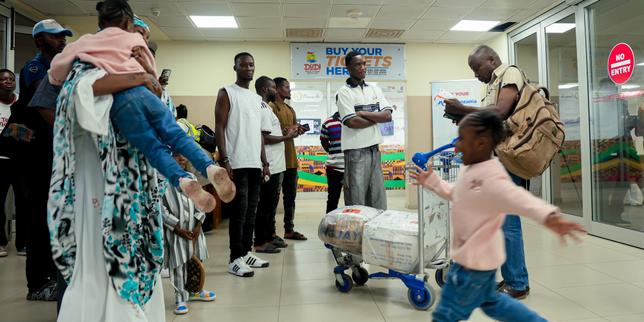
Hundreds of Ghanaian migrants are packing their bags and fleeing South Africa. The standard media script is already written, printed, and internalized: unchecked xenophobia, cultural hatred, and systemic violence are driving regional displacement.
This analysis is not just superficial. It is entirely wrong.
When observers reduce complex migration shifts to sheer hatred, they miss the underlying mechanics. Xenophobia in South Africa is real, visceral, and frequently deadly. But treating it as an isolated moral failure or a sudden surge in tribalism misses the point. The mass departure of West African entrepreneurs and workers is an economic symptom masquerading as a human rights headline.
The real driver behind this exodus is not just a hostile populace. It is the systemic collapse of South Africa’s economic machinery. Foreign nationals are not leaving simply because they are unwelcome; they are leaving because the economic premium of staying in South Africa has evaporated.
The Myth of the Job-Stealing Migrant
The loudest justification for anti-migrant sentiment in townships across Gauteng and KwaZulu-Natal is that foreigners are "stealing" jobs. It is a line repeated by politicians seeking cheap votes and echoed in mainstream reporting.
The data tells a completely different story.
Research from the World Bank and the African Centre for Migration & Society (ACMS) consistently demonstrates that immigrant populations in South Africa are disproportionately job creators, not job takers. In a country crippled by a rigid labor market, informal and micro-enterprises run by migrants provide vital goods, credit lines, and employment to locals.
When a Ghanaian trader closes shop in Johannesburg, three things happen, and none of them are good for South Africa:
- Local supply chains lose a high-velocity distributor of affordable goods.
- Property owners lose reliable commercial or residential rent.
- The informal tax and cash ecosystem contracts.
The lazy consensus views migration as a zero-sum game where one group's arrival equals another's loss. In reality, migrant capital and labor are highly adaptive forces that fill structural voids left by a stagnant domestic public sector.
The Cost of Staying Has Outpaced the Premium
For decades, South Africa operated as the undisputed economic engine of sub-Saharan Africa. Moving there, despite the security risks, offered a massive financial upside. The rand was strong, infrastructure functioned, and consumer purchasing power was unmatched on the continent.
That premium is gone.
Consider the operational reality of running a small business or working in South Africa today:
- Rolling Blackouts (Load Shedding): Decades of mismanagement at Eskom mean businesses must invest in expensive solar or diesel generators just to keep the lights on. For a small-scale Ghanaian importer or shopkeeper, these capital expenditures destroy profit margins.
- Logistical Stranglement: Transnet’s failures have crippled ports and rail networks. Moving goods into the country takes weeks longer and costs drastically more than it did a decade ago.
- Currency Depreciation: The volatility and long-term decline of the South African Rand against the US Dollar means that sending remittances home yields fewer Ghanaian Cedis every year.
Imagine a scenario where an entrepreneur risks their physical safety every day in an unstable environment. If the financial return is a 30% profit margin, they stay. If policy failures compress that margin to 5%, the risk-reward calculation flips completely. They do not leave because of a protest outside their door; they leave because the math no longer makes sense.
When the State Outsources Blame
South African politicians across the spectrum have masterfully used the foreign population as a political lightning rod. It is a classic diversionary tactic.
If the public is furious about a 32% unemployment rate, pointing at a Zimbabwean waiter or a Ghanaian shop owner redirects that anger away from government failure. It obscures the real culprits: restrictive labor laws, a failing education system, widespread corruption, and a lack of structural economic reform.
+------------------------------------+---------------------------------------+
| What Media Blames for the Exodus   | The True Structural Driver            |
+------------------------------------+---------------------------------------+
| Xenophobic rhetoric and attacks    | Collapse of basic infrastructure      |
| Cultural incompatibility           | Currency devaluation vs. home country |
| Competition for scarce resources   | State failure to grow the economy     |
+------------------------------------+---------------------------------------+
By framing the issue purely as a humanitarian crisis driven by xenophobia, international observers play directly into this political strategy. They treat the symptoms while ignoring the disease. The violence is not the cause of the economic decline; the economic decline and state failure are the fuel for the violence.
The Real Winner in This Shift
The migration conversation usually stops at the border. People ask, "Where will they go?" assuming these individuals will return to Ghana to sit idle.
This ignores the hyper-fluid nature of modern African entrepreneurship. Capital and talent flow to where they are treated best. As South Africa deteriorates, alternative regional hubs are aggressively positioning themselves to capture this displaced human capital.
Ghana itself has made massive strides in digitizing its economy, expanding its financial services, and positioning Accra as a stable, predictable corporate hub for West Africa. Countries like Rwanda and Kenya are reforming visa regimes to attract pan-African talent.
The Ghanaian nationals leaving South Africa are not broken refugees. They are rational economic actors pulling their investments out of a declining market and redeploying them into environments with better growth trajectories, more stable currencies, and functional infrastructure.
The Uncomfortable Truth
The downside of this analysis is bleak. Admitting that migration shifts are driven by structural economic decay means accepting that South Africa cannot fix this problem with a few anti-bias campaigns, police deployments, or human rights declarations.
Stopping xenophobia requires growing the pie, not just arguing over how to slice it. As long as the South African economy remains stagnant and state capacity continues to erode, the competition for survival will intensify.
The departure of hundreds of Ghanaians is not an isolated incident of racial or national tension. It is an early-warning signal. It is proof that the economic cost of operating in South Africa is finally outweighing the benefits. When the builders, traders, and risk-takers decide a market is no longer worth the hassle, the entire house is in deep trouble.
Stop looking at the borders. Look at the balance sheets.