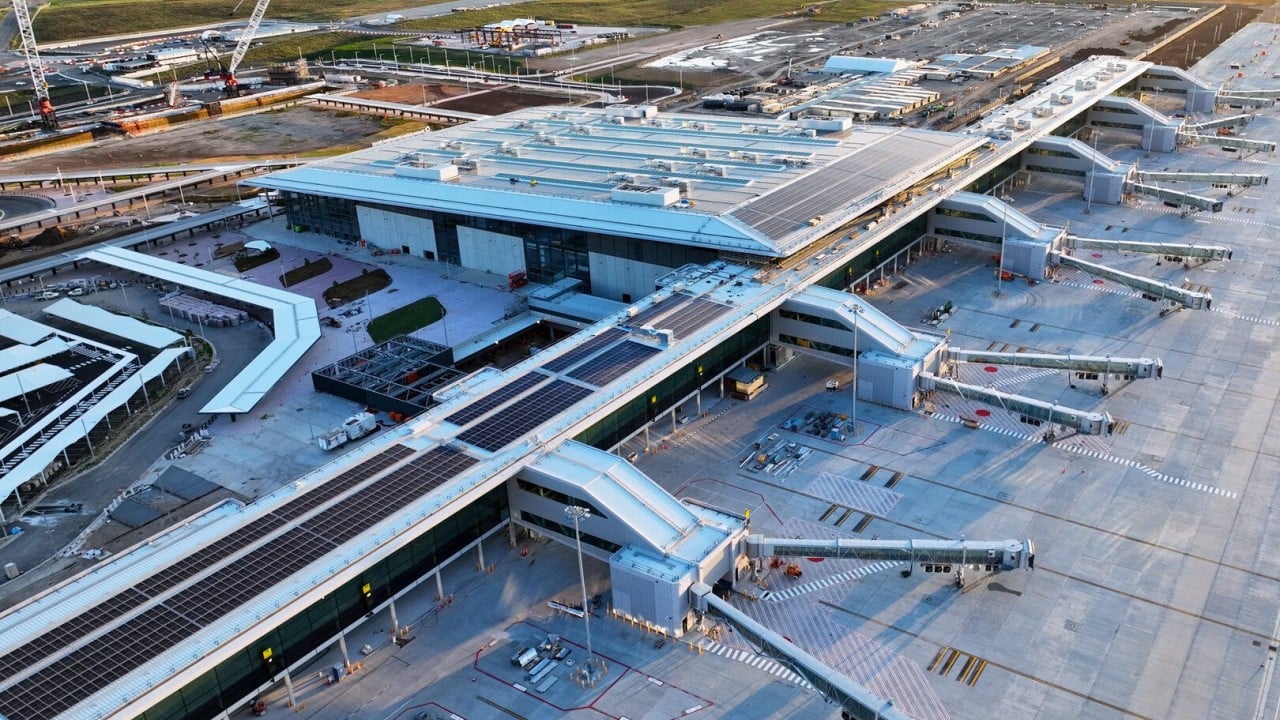
The lazy consensus across mainstream media is that a new multibillion-dollar infrastructure asset launching with a sparse timetable is an embarrassing failure. Every armchair pundit looks at a quiet tarmac, counts the daily departures on one hand, and assumes the project is misfiring out of the gate.
They are dead wrong.
A quiet opening isn't a glitch. It is the only reason Western Sydney International Airport will avoid the catastrophic operational meltdowns that plague almost every major aviation hub launched in the last twenty years.
The Terminal Capacity Fallacy
Critics love to point out that the freshly minted Nancy-Bird Walton Airport cost billions yet handles fewer flights in a week than Kingsford Smith handles in a couple of hours. This comparison assumes airports operate like retail superstores, where doors fly open on day one and every register must ring constantly to justify the floor space.
That mindset destroys complex systems.
I have watched multi-billion-dollar transit hubs collapse under their own weight within forty-eight hours of launch because management tried to run at 80% capacity before baggage handlers, air traffic control loops, and ground crews even knew where the breakrooms were. When Berlin Brandenburg Airport finally opened after years of delays, its initial rush was marred by systemic chaos because the operational muscle memory did not exist yet.
A staggered schedule allows the ecosystem to stabilize. When Jetstar flies out to the Gold Coast or Air New Zealand touches down from Auckland with modest initial frequencies, they are stress-testing baggage reconciliation systems, biometric gates, and aircraft turnaround times under real-world conditions without risking thousands of stranded passengers when a conveyor belt jams.
The Curfew Advantage That Changes Everything
Focusing purely on current flight counts misses the structural superpower of this asset: the complete absence of a curfew.
Sydney Kingsford Smith operates under a strict legislative straightjacket between 11:00 PM and 6:00 AM. That restriction creates a massive bottleneck for long-haul international carriers trying to optimize aircraft utilization. An aircraft sitting idle on a tarmac for seven hours overnight is bleeding capital.
Western Sydney does not have that anchor tied to its ankle. Singapore Airlines recognized this reality immediately, scheduling late-night arrivals to capitalize on 24-hour clearance.
The early-stage thinness of the timetable is the price of admission for establishing a 24-hour operational culture. Night-ime freight and long-haul movements require precise coordination with local airspace management and community noise abatement protocols. Rushing those slots before the underlying logistics are locked down invites immediate regulatory pushback from surrounding residential zones. A quiet runway builds social license. A packed runway on day one builds lawsuits.
The Transit Reality Check
Let address the loudest complaint from city-centric commentators: the transport links. Critics wring their hands over the fact that the dedicated Sydney Metro line to the airport is still rolling toward its 2027 completion date, leaving early passengers reliant on shuttle connections from St Marys.
This is a temporary friction point, not a permanent structural flaw. Mega-projects of this scale are phased deliberately because building a greenfield airport and a heavy rail transit link simultaneously often leads to bottlenecked capital allocation. The road infrastructure, including the M12 motorway, is ready, meaning passenger traffic via cars, buses, and freight trucks can flow without choking local suburban arteries while the rail network finishes its final integration.
If you want a seamless, high-speed train connection right into the heart of a bustling, high-frequency global terminal on day one, look at history and realize it rarely happens. Smart travelers understand that an airport operating below capacity during its transition phase offers the fastest security lines, the most attentive ground staff, and the smoothest terminal experience you will ever find at a major international gateway.
The sparse flight schedules are not a sign of weakness. They are a calculated runway for long-term survival.