Stand on the corner of Des Voeux Road during the afternoon rush, and you will understand the precise weight of a city built entirely upward. The air hums with a deep, vibrating frequency. Trams screech against iron tracks. Diesel exhaust hangs low between towers of glass and steel that block out the horizon. Everyone is rushing, yet no one is actually moving.
We have conquered the ground. We have packed millions of lives onto narrow strips of reclaimed coast, stacking apartments like matchboxes and weaving pedestrian bridges five stories in the air. But look up. That vast expanse of gray and blue above the parapets remains stubbornly empty.
For decades, that emptiness was treated as a ceiling. Now, it is an escape hatch.
Consider a hypothetical logistics worker named Marco, though he could just as easily be anyone watching a delivery van stall in the Cross-Harbour Tunnel for the third time this week. Marco spends his life chasing time. A medical sample needs to get from Queen Mary Hospital to a laboratory across the water before a sample degrades. A critical machinery part sits in a warehouse in Kwun Tong while a factory floor in Tuen Mun sits idle, losing thousands of dollars every minute the assembly line stays dark.
On the asphalt, distance is measured in friction. Red lights. Double-parked delivery trucks. Gridlock.
In the air, distance is just a straight line.
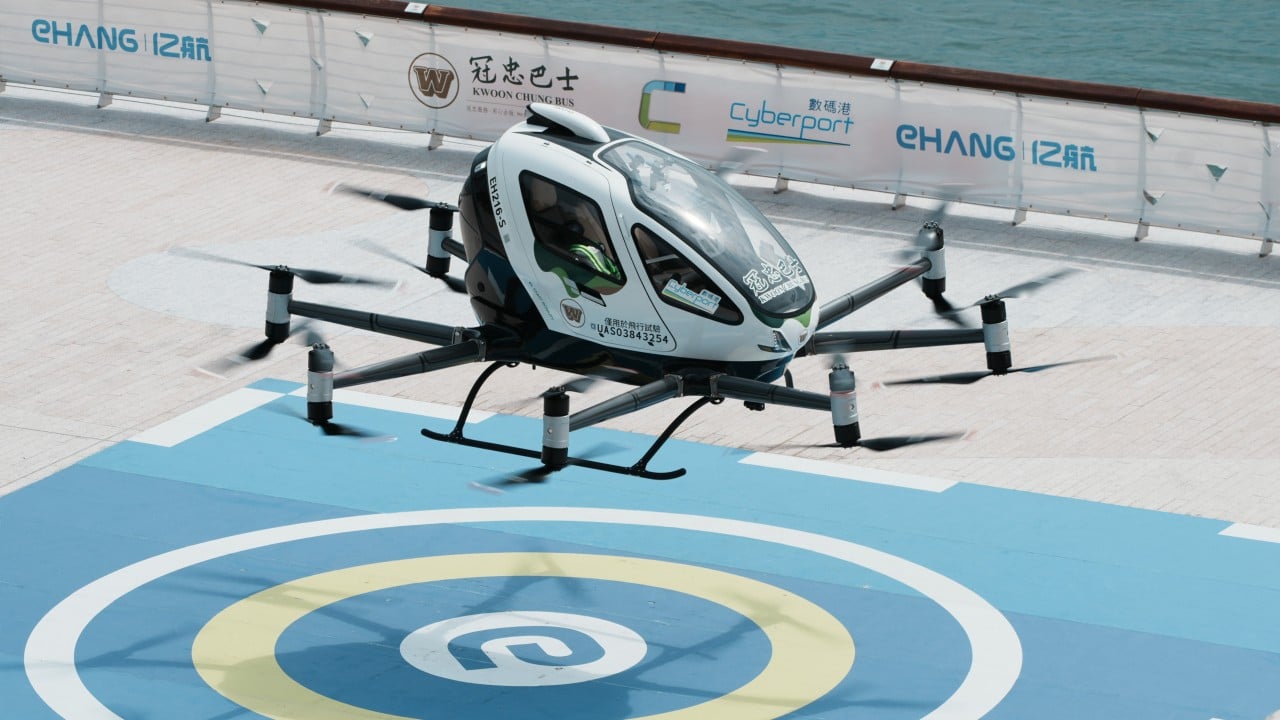
Hong Kong is quietly rewriting the rules of how a vertical metropolis breathes. Fifty different organizations—spanning aviation heavyweights, academic institutions, and technology pioneers—have locked arms to draft the blueprint for low-altitude economy standards. This is not a distant science fiction exercise involving gleaming flying cars for billionaire commuters. This is about heavy-lift drones hauling industrial components across Victoria Harbour in minutes instead of hours. This is about automated aerial corridors carving out invisible highways through the concrete canyons.
Traffic.
We accept it as a law of nature, like rain or gravity. But urban congestion is a design flaw. When cities grow too dense, two-dimensional planning hits a hard wall. The only way left to expand is the third dimension.
Yet, introducing thousands of autonomous or remotely piloted flying machines into one of the densest airspaces on Earth is terrifying.
Imagine standing on a rooftop in Mid-Levels on a foggy Tuesday morning. Now imagine a fleet of heavy-lift cargo drones buzzing overhead, carrying emergency supplies or commercial cargo. Without absolute precision, without rules written in stone, the sky becomes a hazard rather than a highway.
This is why the standardization effort matters more than the flashy prototypes. Before a single commercial drone can regularly shuttle goods between rooftops, the ground rules must be ironclad. How do you track thousands of low-altitude craft simultaneously? How do you prevent interference with the dense radio frequencies bouncing between skyscrapers? What happens when a sudden typhoon wind shears off the peak of Victoria Peak, altering wind tunnels in a heartbeat?
The fifty partners are currently hammering out these exact answers. They are defining the protocols for air traffic management systems specifically built for low altitudes. They are testing collision-avoidance algorithms that think faster than human reflexes. They are establishing the legal boundaries of who owns the airspace fifty meters above a residential tenement block.
To understand the scale of this shift, think back to the early days of maritime shipping in this very harbor. For centuries, junks and sampans navigated by local instinct and unwritten tradition. As steamships arrived and trade exploded, chaos threatened to swallow the port until precise navigation laws, lighthouse networks, and harbor master authorities were established.
The low-altitude sky is simply the new harbor.
And the stakes are intensely human. Every minute shaved off a cargo transit time reduces carbon emissions in a city choking on its own density. Every medical emergency bypass thwarted by gridlock is a life altered or saved because a blood pack took the vertical route.
We are standing at the exact midpoint of an industrial transformation. The hardware already exists. The carbon-fiber frames, the electric propulsion motors, the battery densities—they are ready. What has been missing is the invisible architecture of trust. Regulation sounds boring until you realize it is the only thing standing between innovation and catastrophe.
The concrete canyon will always be loud. The trams will still screech. But look up again.
The horizon is shifting downward. The sky is no longer just a view from a window. It is the next street over.