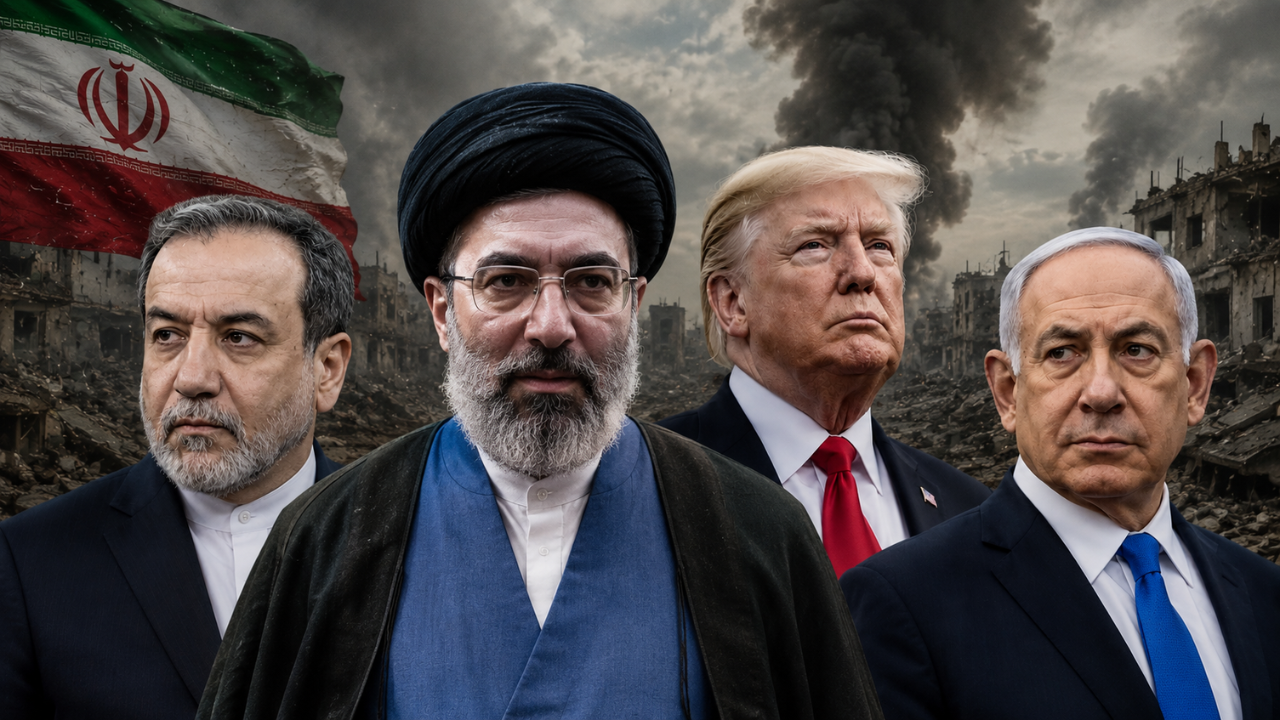
The digital ink on a memorandum of understanding dries instantly, but the air in Tehran remains heavy with the scent of dust and unburnt fuel. On June 17, 2026, when an electronic signature in Switzerland paused a war, a collective intake of breath echoed from the White House to the narrow alleys of the Grand Bazaar. A sixty-day countdown began.
Sixty days to dismantle a nuclear stockpile. Sixty days to lift a naval blockade. Sixty days to rewrite the fate of the Strait of Hormuz, where a fifth of the world’s energy had been choked down to a trickle.
To understand the weight of this ceasefire, look away from the diplomatic podiums in Geneva and consider someone like Javad. He is a fictional composite of the merchant class in Iran’s capital, but his reality is entirely concrete. For months, Javad watched the sky. He watched the currency exchange rates collapse on his phone screen. He watched the shuttered storefronts of his neighbors. For him, the war was not a chess match of regional proxies; it was the arithmetic of survival under the crushing weight of an American blockade and the looming threat of unconditional surrender.
Now, the guns are quiet. The American warships are peeling back from the coastline. But peace is a fragile architecture.
The foundation has been poured in the Swiss snow, yet the house itself does not exist. What exists is an agonizingly brief window of time—sixty days—where the line between a permanent settlement and total annihilation is as thin as a single stray spark in southern Lebanon.
The Illusion of the Reset Button
A ceasefire is often described as a pause button, but time does not stop for a nation that has been bleeding. The strategic reality behind this agreement is a paradox. Washington entered this conflict demanding total capitulation, aiming to crush Iran’s missile architecture and force a fundamental shift in its leadership. Tehran responded by demonstrating exactly how much chaos it could inflict, mining the shipping lanes and proving it could bring the global economy to its knees.
Consider the mechanics of the trade-off. Over the next month, Iran must clear the mines it dropped into the Persian Gulf. In return, temporary sanctions waivers will allow Iranian crude oil to flow back into the global market. To the global energy sector, this looks like a victory. Tankers can move without the immediate threat of a drone strike.
But look closer at the friction points. The agreement binds the hands of American economic and military pressure for the duration of the talks. It offers the promise of a staggering 300 billion dollar reconstruction fund and the unfreezing of 24 billion dollars in stranded assets. These are immense carrots. Yet, the stick remains hovering just out of sight.
The underlying rot has not been cured. The agreement ignores Iran’s ballistic missile program. It stays silent on the long-term governance of the shipping lanes. It treats a deep, generational enmity as a transactional problem that can be resolved by a committee before the summer ends.
The Tripwire in the Valley
The greatest threat to this sixty-day experiment is not found in the text of the memorandum, but in the geography of Lebanon. The document declares an end to military operations on all fronts. It allows Israel the right to self-defense while forbidding offensive maneuvers.
But words on paper cannot easily redraw the borders of fear.
In the rocky hills of southern Lebanon, the definition of defensive action changes depending on who holds the rifle. Israeli forces have made it clear they have no intention of abandoning the buffer zone they fought to establish. Conversely, the regional alignment of forces tied to Tehran insists that no true peace can exist while a single foreign soldier remains on Lebanese soil.
It is a classic security dilemma. If an operative fires a single rocket across the border, is it an act of aggression or a pre-emptive defense? If an Israeli aircraft strikes a command center in Beirut in response, has the ceasefire collapsed?
This ambiguity is where spoilers thrive. The timeline is an unforgiving master, and any localized escalation offers a pretext for either side to walk away from the table. The reality is that the war in the Levant has not ended; it has merely been compressed into a hyper-sensitive holding pattern.
The Anatomy of the Countdown
The clock dictating this diplomatic dance is relentless. Every morning that passes without a breakthrough shortens the runway for a final nuclear agreement, a goal that seasoned observers know is nearly impossible to achieve in two short months.
- Day 1 to 30: The immediate clearing of the waterways. Mines must be dragged from the shipping lanes. The physical blockade must lift. Oil must begin to move to ease the panic at Western petrol pumps.
- Day 31 to 60: The deep structural agony. Negotiators must tackle the verification of nuclear site destruction, the permanent mapping of sanctions removal, and the timeline for the withdrawal of American regional forces.
If this timeline feels rushed, it is because it was designed under the pressure of political survival rather than diplomatic patience. With major domestic elections looming on the horizon for the Western powers, the necessity of lowering energy prices overrode the traditional caution of international statecraft. It is a gamble of historic proportions.
The Long Shadow
The true stakes of these sixty days are hidden in the psychology of the transition. In Washington, the rhetoric frames this moment as a successful demonstration of strength that forced an adversary to negotiate. In Tehran, the narrative is spun as an act of resistance that broke a Western blockade without surrendering sovereign rights.
Both sides are projecting a victory they have not yet earned.
If the talks fail, the return to conflict will not look like the opening phases of the winter campaign. It will be faster, darker, and significantly more destructive. The American leadership has already warned that a failure to reach a final deal will result in bombs dropping directly on the infrastructure of the Islamic Republic. Tehran, having tested its leverage in the Strait, knows exactly which global economic arteries to sever if the pressure returns.
The sixty days are not a peace. They are an intermission in an arena where the audience is trapped in their seats.
As the weeks tick down, the merchants in the bazaar and the sailors on the oil tankers look to the horizon with the same anxious vigilance. The digital signatures have bought sixty days of quiet, but they have also created a ghost—the haunting certainty that when the sixty days expire, the world will either see the beginning of a reconstructed Middle East, or the resumption of a war that knows no boundaries.