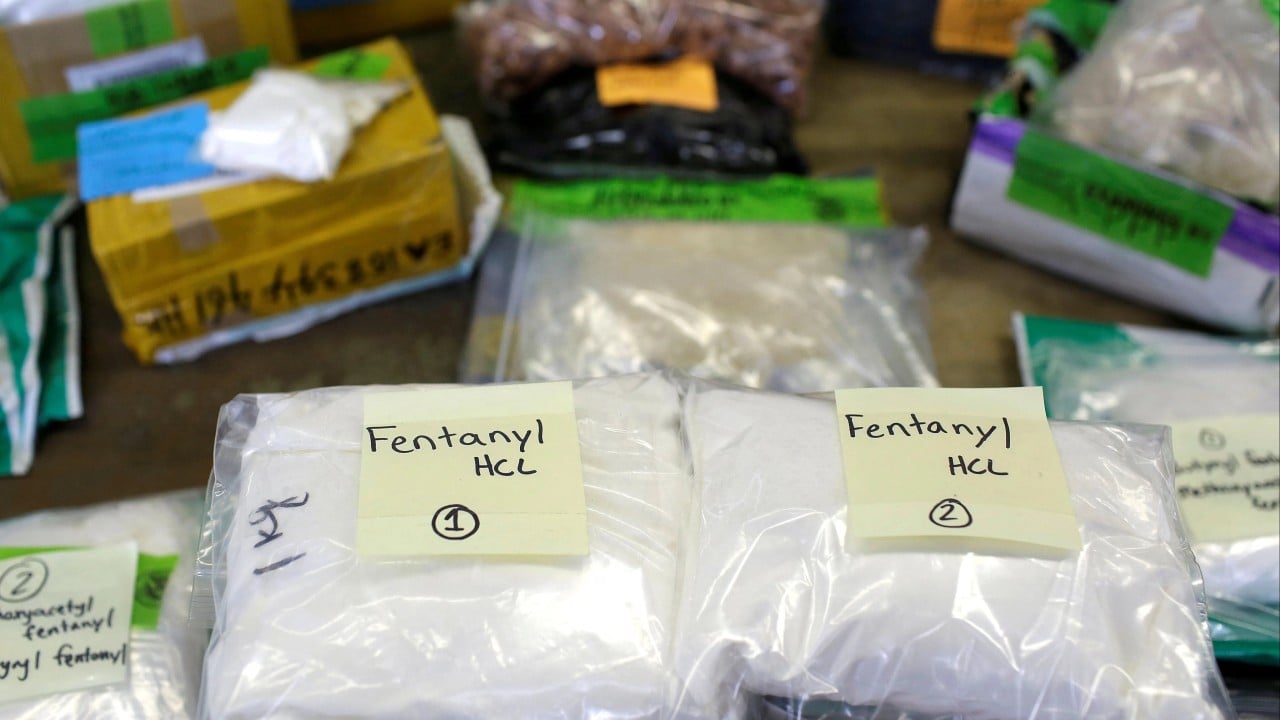
The unsealing of a federal indictment in the Eastern District of Virginia charging Chinese nationals Ruhuan Zhen and Hongce Wu exposes the terrifyingly efficient mechanism modern drug cartels use to vanish their profits. By utilizing mirror transfers, trade-based manipulation, and encrypted networks, these money-laundering organizations ensure that cash generated from American fentanyl sales is scrubbed and transferred to Mexico without a single physical dollar crossing a border. This case demonstrates that the war on drugs is no longer just fought in the shipping ports or the border desert. It is an economic warfare fought inside the global banking system.
For decades, the standard playbook for Mexican cartels like the Sinaloa Cartel and the Cartel de Jalisco Nueva Generación (CJNG) was simple but risky. They packed duffel bags with greenbacks, stuffed them into hidden vehicle compartments, and ran them south across the border.
That system is dead.
Today, transnational syndicates outsource their financial logistics to specialized Chinese Money Laundering Organizations (CMLOs). The indictment against Zhen and Wu, covering activities spanning from 2016 through April 2025, reveals how these groups have institutionalized the process. They operate not as gang members, but as elite merchant bankers for the underworld.
The Frictionless Architecture of Mirror Transfers
To understand how these operatives moved millions for the cartels without triggering international alarms, you have to look at the mechanics of a mirror transfer. It is a system built entirely on trust and ledger balancing, requiring zero cross-border bank wires.
Imagine a cartel cell sells a shipment of fentanyl in Virginia and collects $100,000 in bulk cash. Under the old model, trying to deposit this into a U.S. bank account would immediately trigger a Currency Transaction Report.
Under the CMLO model, the process changes completely:
- The Pickup: A local courier working for the Chinese network collects the physical U.S. cash from the cartel in a parking lot or safe house.
- The Verification: To confirm the transaction, the courier demands a specific receipt, often using the unique serial number of a specific dollar bill as a one-time cryptographic key via encrypted apps like Signal.
- The Mirror: Once the U.S. cash is secured, an equivalent value in Chinese yuan (RMB) is released from an account in China and transferred to an account controlled by a Chinese businessman or cartel proxy.
- The Conversion: This domestic yuan is then used to buy commercial goods—electronics, clothing, or chemical precursors—which are shipped to Mexico, sold for pesos, and delivered directly to the cartel leadership.
The physical cash never leaves the United States. The electronic money never crosses an ocean. The ledger simply mirrors itself on opposite sides of the globe.
Exploiting the Capital Flight Paradox
The real engine driving this alliance is not just criminal ingenuity. It is an economic vulnerability created by China's strict capital controls.
The Chinese government caps the amount of money its citizens can legally move out of the country at $50,000 per year. Yet, wealthy Chinese nationals frequently want to purchase real estate in Vancouver, pay elite university tuitions in California, or diversify their assets abroad.
This creates a massive, structural demand for U.S. dollars outside of China.
CMLOs sit perfectly at the intersection of this supply and demand. They take the raw, dirty cash collected from American drug sales and sell it directly to wealthy Chinese expats or investors looking for dollars. The investor gets their cash in the United States. In return, they transfer equivalent yuan from their domestic Chinese bank accounts to the accounts designated by the money launderers.
It is a perfect, self-sustaining ecosystem. The cartel gets its money cleaned and transferred to Mexico via commercial trade, while affluent citizens bypass Beijing's financial restrictions. The drug trade effectively funds an underground, alternative banking network that operates parallel to the legitimate financial world.
The Fatal Flaw in Western Compliance
Western banks have spent billions developing anti-money laundering (AML) software designed to flag suspicious transactions. They look for sudden spikes in account activity, unusual wire transfers to high-risk jurisdictions, and structured cash deposits.
The strategy employed by networks like the one run by Zhen and Wu bypasses these defenses entirely.
Because the system relies heavily on trade-based money laundering, the transactions look like legitimate global commerce. When a company in Culiacán imports thousands of cheap electronic components or plastic toys from Ningbo, the banking system sees nothing more than standard international trade. The invoices are real. The shipping containers are real. The only fiction is the true origin of the money paying for those goods.
This leaves law enforcement in an incredibly difficult position. To stop the flow of money, investigators cannot simply monitor bank accounts. They must meticulously trace supply chains, audit shipping manifests, and infiltrate highly insulated, encrypted communications.
The Geopolitical Standoff
Federal grand juries can hand down indictments, but bringing these financial architects to justice is a different matter. Both Zhen and Wu remain at large, likely protected by the vastness of the global underground network or international borders where extradition to the United States is non-existent.
While the U.S. Department of Justice continues to launch targeted initiatives to dismantle these cells, the underlying economic incentives remain untouched. As long as American demand for illicit narcotics remains high, and as long as capital flight restrictions exist elsewhere, the financial plumbing of global organized crime will continue to adapt. The indictment in Virginia is a detailed map of a highly sophisticated machine, but turning off the engine requires more than just paper charges.