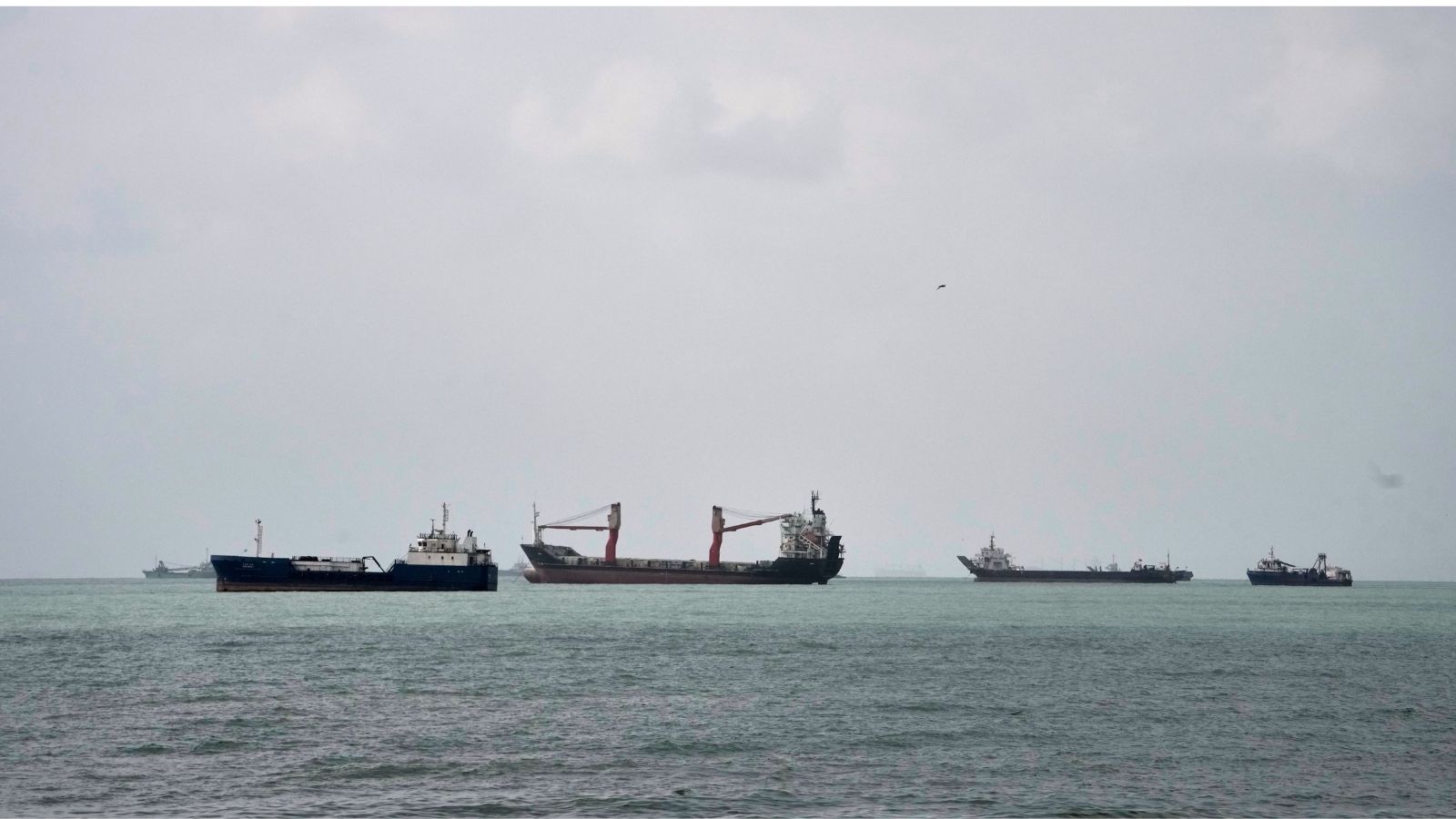
The media is hyperventilating over Pete Hegseth’s blunt declaration that Washington will match every missile fired at a U.S. warship by drowning three Iranian oil tankers at the bottom of the Gulf. Mainstream analysts are framing this as a bold tactical doctrine, a clean proportional response to Iranian provocations near the Strait of Hormuz. They are wrong. Focusing on the sinking of three shadow-fleet crude carriers misses the structural pathology of modern energy warfare. Sinking floating metal does not alter the calculus of a revolutionary regime; it merely validates a dangerous strategic delusion that economic coercion can substitute for coherent grand strategy.
Let us dispense with the lazy consensus that targeting an exposed and defenseless tanker fleet constitutes a masterclass in deterrence. Deterrence works only when the adversary values economic stability over ideological survival. The Islamic Revolutionary Guard Corps does not measure success in quarterly earnings reports or stable Brent crude benchmarks. When CENTCOM takes out tankers like the M/T Kylo or the M/T Downy, Washington pats itself on the back for imposing a higher cost. Yet, this assumes Tehran views those hulls as irreplaceable assets rather than expendable instruments of asymmetric attrition.
The Arithmetic of Asymmetric Retaliation
Evaluate the basic ledger. A rusted, forty-year-old Very Large Crude Carrier operating on the dark market costs a fraction of the advanced precision munitions used to send it to the seabed. When you trade multimillion-dollar defense architecture and global economic stability for a decaying hull carrying sanctioned oil, you are losing the economic exchange even if you win the tactical video clip.
Imagine a scenario where every single vessel belonging to Iran's shadow network is systematically hunted down and sent to the floor of the Gulf of Oman over the next month. Does the regime collapse? Do the mullahs throw their hands up and sue for peace? History shouts down this fantasy. Isolated regimes under severe blockade double down. They shift exports to overland pipelines, accelerate proxy harassment through asymmetric drone swarms, and mine choke points with impunity. Sinking commercial transport under the banner of reprisal does not open the Strait of Hormuz; it hardens the physical and psychological barriers to any future diplomatic off-ramp.
The Blind Spot in Washington Command Rooms
Expertise requires calling out tactical theater for what it is. The Pentagon’s current posture relies on a fundamental misreading of maritime geography and modern smuggling vectors. Iran does not need pristine, transponder-equipped supertankers to fund its operations. The shadow fleet is liquid, decentralized, and infinitely adaptable. Transferring crude via ship-to-ship operations in sheltered coves happens entirely outside the gaze of carrier strike groups.
When military officials boast that Iran has no functional navy or air force to protect its commercial maritime traffic, they are fighting the last war. Naval power projection matters very little when your opponent's primary weapon is the strategic manipulation of global energy anxiety. Every time a tanker erupts in flames off Kharg Island, insurance rates spike globally. Global refineries scramble. Freight forwarders re-route. The cost is quietly shifted away from the Iranian command structure and onto every consumer filling a tank in Chicago, Frankfurt, or Tokyo.
Rethinking Energy Security Realities
We need to stop evaluating these escalations through the lens of muscular posturing and start looking at second-order structural market failures. The notion that you can bomb a nation out of its geopolitical ambitions by choking its export capacity ignores decades of empirical evidence from Venezuela to pre-deal Iran. Economic warfare produces resilience, not capitulation. It forces black-market innovation, deepens alliances with external buyers who care nothing for Western sanctions, and permanently decouples regional actors from the dollar-dominated financial system.
The defense establishment loves a clean narrative: they shoot at our destroyers, we sink their tankers. It plays well in press releases and cable news segments. But it is a tactical sugar rush that masks a strategic vacuum. If the objective is securing open waterways and stabilizing global energy flows, turning the Persian Gulf into a burning scrap yard accomplishes the exact opposite.
Stop pretending that administrative chest-thumping replaces an actual policy for the Middle East. The next time a missile flies toward a guided-missile destroyer, look past the burning tanker footage and ask what happens when the insurance market stops underwriting trade through the Gulf entirely. That is the bill coming due, and no amount of naval firepower will sink it.