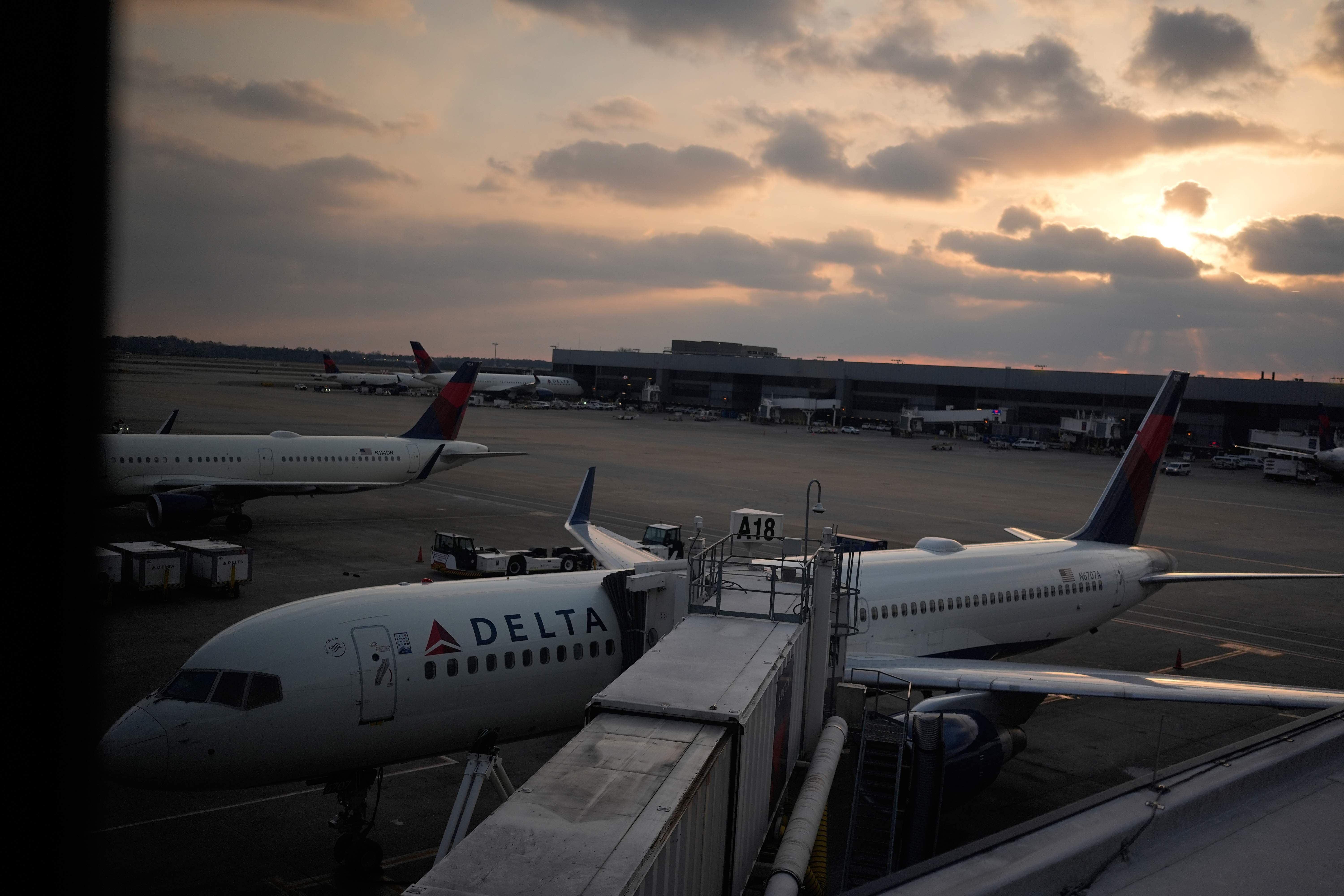
When an automated dispatch or weight-and-balance system stalls at Hartsfield-Jackson Atlanta International Airport, the resulting flight delays are not isolated software glitches. They are the predictable thermodynamic consequence of coupling a centralized, high-frequency hub-and-spoke network to tightly synchronized digital control planes. Surface-level aviation reporting treats these events as temporary operational hiccups—blaming an unspecified "automation system issue" and tracking departure boards until normal operations resume. That framing misses the structural fragility built into modern commercial aviation: when a single automated node degrades at a megahub, the recovery curve follows nonlinear queuing mechanics rather than linear catch-up rates.
To understand why an automation outage in Atlanta triggers multi-hour cascading disruptions across an entire airline network, analysts must examine three intersecting mechanisms: the architecture of airline operational control systems, the queuing theory governing banked hub schedules, and the regulatory constraints that prevent manual overrides from scaling.
The Architecture of Airline Automation Systems
Commercial flight operations do not run on a single monolithic piece of software. They rely on an interdependent stack of legacy mainframes, middleware message brokers, and modern cloud interfaces. When a carrier cites an "automation system issue" affecting departures out of a primary hub, the failure almost always originates in one of three mission-critical subsystems.
1. Weight and Balance Calculation Engines
Every commercial aircraft requires a precise center-of-gravity and takeoff-weight calculation before pushback. Modern airlines automate this process by ingesting real-time passenger check-in counts, checked baggage weights, cargo manifests, and fuel loads into a centralized calculation engine. This system outputs the trim settings and takeoff speeds directly to the flight deck via Aircraft Communications Addressing and Reporting System (ACARS) data links.
If the weight-and-balance server loses database synchronization or experiences a message-queue backlog, aircraft cannot legally depart. Dispatchers and load planners cannot simply guess passenger distributions. Under Federal Aviation Administration (FAA) regulations, an unverified weight manifest grounds the flight at the gate.
2. Flight Planning and Dispatch Release Systems
Before a captain signs a dispatch release, an automated flight-planning engine computes the optimal route, altitude profile, fuel burn, and alternate airport requirements based on upper-air wind models, convective weather, and Notice to Air Missions (NOTAM) restrictions. These systems process thousands of flight plans simultaneously.
When an automation fault interrupts the pipeline between meteorological feeds, dispatch workstations, and FAA air traffic flow management interfaces, flight releases stall. A five-minute interruption in automated release generation at a hub handling over 900 daily departures creates an immediate backlog of dozens of aircraft waiting for legal clearance to close their boarding doors.
3. Gate Management and Crew Pairing Optimizers
Hub airports operate on rigid spatial and temporal tolerances. Automated resource management systems assign arriving aircraft to specific gates based on wingspan, customs requirements, and outbound aircraft swaps. Simultaneously, crew tracking systems monitor flight attendant and pilot duty-time limits down to the minute.
An automation freeze blinds the operations control center (OCC) to real-time gate availability and crew legality. Without automated alerts flagging when a delayed inbound flight will cause a captain to exceed FAA Part 117 flight-duty limits, human controllers fall behind the operational curve, leading to sudden, late-stage crew timeouts even after the core IT issue is resolved.
Why Manual Fallbacks Fail at Megahub Scale
A common misconception in mainstream reporting is that airlines can simply switch to manual procedures when computers fail. While backup protocols exist—such as calculating weight and balance via paper load sheets or transmitting dispatch releases over VHF voice frequencies—these fallbacks were designed for low-volume regional outstations, not a fortress hub like Atlanta.
The bottleneck is throughput capacity. An automated weight-and-balance engine processes a narrowbody departure in milliseconds. A trained load planner executing the same calculation manually, verifying cargo bin positions, and reading the figures over a radio frequency to the flight deck requires 12 to 20 minutes per aircraft.
If 60 aircraft are queued for departure during a peak afternoon bank in Atlanta, manual processing requires 12 to 20 man-hours of continuous, error-free arithmetic. Most hub operations centers do not staff enough certified load planners or dispatchers on a single shift to absorb a tenfold drop in processing velocity. Manual fallbacks maintain safety compliance, but they intentionally sacrifice throughput to do so.
The Queuing Mechanics of a Banked Hub
Atlanta functions as the archetypal banked hub. Unlike point-to-point carriers that distribute flights evenly throughout the day, a hub-and-spoke airline concentrates arrivals and departures into tight waves, or "banks." Hundreds of flights land within a 45-minute window, exchange connecting passengers and baggage over 60 to 90 minutes, and depart in a synchronized outbound wave.
This design maximizes city-pair connectivity, but it eliminates operational slack. In queuing theory, when system utilization approaches 100 percent during a departure bank, any sudden drop in service rate causes queue lengths and wait times to grow exponentially rather than proportionally.
[Automation Freeze (t = 0 to 30 min)]
         │
         ▼
[Outbound Wave Stalls at Gates] ──► [Inbound Flights Hold on Taxiways / Aloft]
         │                                       │
         ▼                                       ▼
[Tarmac Delay Clock Starts (3-Hr Limit)]   [Gate Gridlock Blocks Arrivals]
         │                                       │
         └───────────────┬───────────────────────┘
                         ▼
         [Crew Duty-Time Limits (Part 117) Triggered]
                         │
                         ▼
         [Network-Wide Aircraft & Crew Displacement]
The Gate-Lock Feedback Loop
When an automation outage prevents outbound flights from pushing back, those aircraft remain parked at their gates. Meanwhile, inbound flights from across the domestic network continue landing on Atlanta's five parallel runways. Because the outbound wave has not cleared, arriving aircraft have nowhere to park.
Within 20 minutes, taxiways and ramp alleys fill with idling aircraft. This creates physical gridlock: even after the software system reboots and clears the digital backlog, a flight ready to depart may be physically blocked from pushing back by three inbound aircraft stacked behind it on the ramp.
The Three-Hour Tarmac Rule Cliff
Federal consumer protection regulations prohibit domestic flights from remaining on the tarmac for more than three hours without offering passengers the opportunity to deplane. During an automation-induced ground stop, the tarmac clock ticks relentlessly for every aircraft that pushed back just before the outage hit.
If the automation recovery extends past 90 minutes, the airline faces a brutal operational dilemma: either cancel flights outright to free up gate space for idling tarmac aircraft, or risk massive regulatory fines per passenger. Canceling a flight at a hub does not merely inconvenience those passengers; it strands an airframe and a flight crew out of position, removing capacity from downstream spoke cities for the next 24 to 48 hours.
The Part 117 Crew Timeout Cascade
Under FAA Part 117 regulations, pilot flight-duty periods are strictly capped based on report time and the number of flight segments. Hub schedules routinely build crew pairings with 45- to 60-minute buffers against maximum duty limits.
An automation delay of 75 minutes pushes dozens of outbound crews past their legal duty thresholds before their aircraft ever reach the runway. Once a crew times out, fixing the IT bug no longer allows the flight to depart. The OCC must pull reserve pilots from standby pools. When reserve pools at the hub are exhausted, flights must be canceled regardless of aircraft readiness and clear weather.
Distinguishing Known Facts from Operational Hypotheses
When analyzing early reports of an airline automation failure, separating verified operational realities from unconfirmed technical causes prevents faulty strategic conclusions.
- Verified Operational Facts: Delays concentrated specifically at a carrier's primary hub following an automation statement confirm that the failure occurred within a centralized dispatch, load-control, or resource-allocation pipeline rather than an onboard avionics issue. Onboard failures ground single airframes; ground-control software failures stall departure banks. Furthermore, the persistence of delays hours after system restoration is a documented mathematical certainty driven by gate congestion and crew duty-time resets.
- Educated Technical Hypotheses: Without a post-incident technical disclosure from the airline, observers cannot definitively isolate whether the root cause was a corrupted database index, an expired SSL certificate on an internal API gateway, a failed cloud region failover, or a third-party vendor outage (such as Sabre, Amadeus, or Jeppesen). Similarly, external analysts cannot verify whether the outage stemmed from a botched overnight software patch or an unexpected traffic spike without internal telemetry.
Strategic Imperatives for Aviation Operations Resilience
Eliminating all software failures in a complex distributed system is impossible. Resilience in high-frequency hub operations requires decoupling critical dispatch workflows so that a single software fault cannot halt physical aircraft movement across an entire airport.
Decouple Local Hub Execution from Centralized Cloud Dependencies
Airlines must architect edge-capable dispatch and weight-and-balance nodes at fortress hubs. If a centralized data center or cloud region experiences high latency or packet loss, local hub servers at airports like Atlanta must retain cached aircraft profiles, fuel tables, and localized compute capability to process departures independently for up to four hours before requiring central synchronization.
Implement Automated De-Banking Protocols
Operations control centers rely too heavily on human intervention to thin schedules during an active IT outage. Carriers should deploy pre-calculated schedule-thinning playbooks triggered automatically when an automation outage exceeds 15 minutes. By proactively canceling low-load factor flights to high-frequency spoke markets early in the disruption, the airline preserves gate capacity for long-haul and high-density trunk routes, preventing the physical ramp gridlock that paralyzes recovery.
Establish Cross-Trained Digital-to-Manual Surge Teams
Rather than relying on a skeleton crew of specialized load planners to execute manual paper fallbacks, hub staffing models should cross-train gate supervisors and ramp coordinators on simplified, pre-approved manual trim calculation matrices. Increasing manual processing throughput from three flights per hour to twenty flights per hour during a software blackout buys the IT incident response team the critical 45-minute window needed to execute a clean system failover before crew timeouts trigger a multi-day network meltdown.