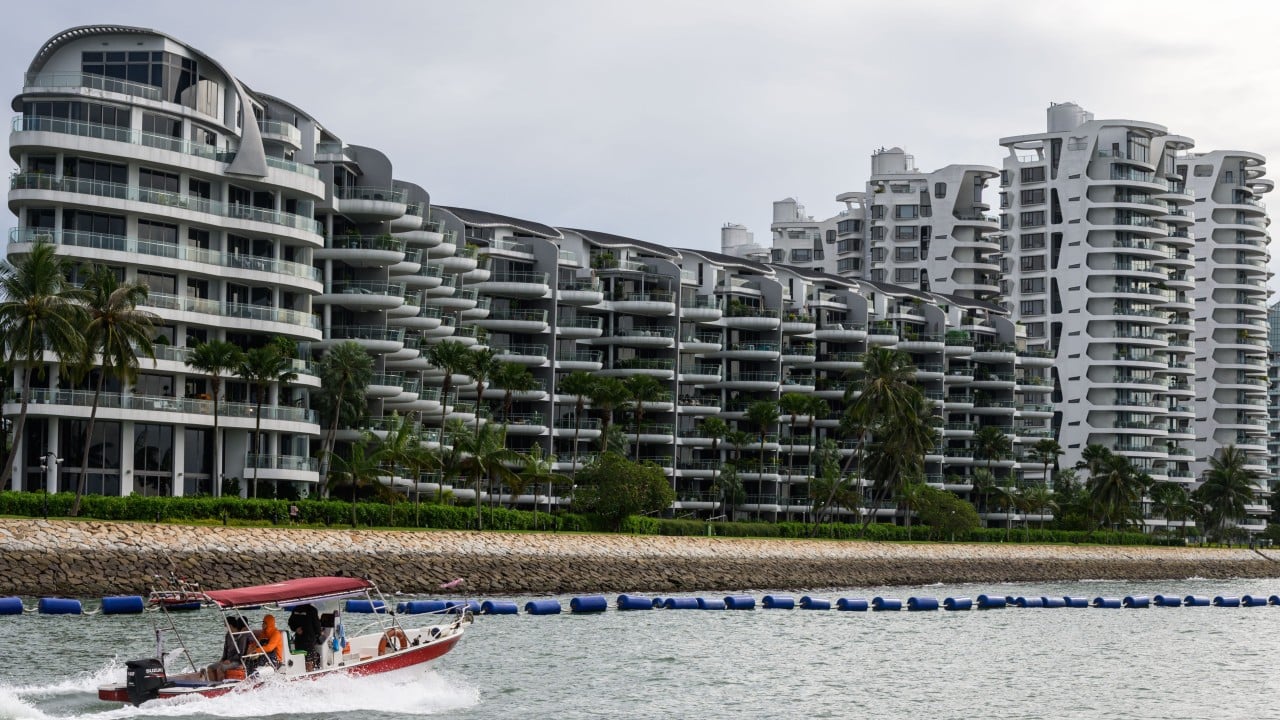
The annual Julius Baer Global Wealth and Lifestyle Report dropped, and right on cue, the entire financial media ecosystem copy-pasted the exact same headline: Singapore is the world’s most expensive city for luxury spending.
It is the fourth year running. The spreadsheets say Singapore is a playground exclusively for billionaires who enjoy being overcharged for hypercars and fine wine. The lazy consensus says the city-state has priced itself out of reality.
The spreadsheets are lying. Or more accurately, the people reading them do not understand how real wealth operates in Southeast Asia.
When mainstream reports tally up the cost of living lavishly, they track a fixed basket of goods: a Porsche Taycan, a bottle of Château Lafite Rothschild, a suite at a five-star hotel, and a degustation menu. They look at the sticker price, add the local tax, convert it to US dollars, and declare a winner.
By that superficial metric, Singapore wins because its tax structure deliberately penalizes specific, overt displays of consumption. But ranking Singapore as "expensive" for the ultra-wealthy misses the entire mechanics of modern capital preservation.
For the people actually moving hundreds of millions of dollars into the Lion City, Singapore isn’t an expensive destination. It is the cheapest insurance policy on earth.
The Car Tax Fallacy That Deceives the Media
Let’s dismantle the biggest data point every index uses to inflate Singapore’s cost profile: the automobile.
Yes, a luxury sedan in Singapore costs upwards of $200,000 more than it does in New York or London. The Certificate of Entitlement (COE) system and the Additional Registration Fee (ARF) pile on top of each other until a mid-tier luxury SUV costs the same as a suburban home elsewhere.
Mainstream analysts look at this and scream, "Unaffordable!"
But I have sat across from the family office executives managing money for Indonesian tycoons and mainland Chinese tech founders. Do you know how much they care about a 300% tax on a Bentley? They don't.
To a billionaire, a car is a rounding error. More importantly, it is a localized, depreciating asset.
When you look at the true markers of structural wealth—corporate tax rates, capital gains exemptions, and estate duties—Singapore is practically a discount outlet.
- Capital Gains Tax: 0%
- Inheritance/Estate Tax: 0%
- Dividend Income Tax: 0%
Compare that to London, where the top inheritance tax rate sits at 40%, or New York, where combined federal, state, and city income taxes can eat more than half of your earnings.
If you protect $50 million from capital gains and inheritance taxes by structuring your wealth through a Singaporean Single Family Office (under the 13O or 13U tax incentive schemes), you save millions every single year. Spending an extra quarter-million dollars on a Mercedes is not a cost. It is a minor transaction fee to access a tax haven with first-world infrastructure.
The media focuses on the price of the shiny object because it makes for a clickable headline. They completely overlook the tax-free engine underneath.
The Mistake of Comparing Singapore to Dubai or Monaco
The second flaw in the "most expensive" narrative is the peer group. Analysts love to group Singapore with Monaco, Dubai, and Zurich.
This is a fundamental misunderstanding of geopolitics.
Monaco is a sunny tax enclave for European retirees. Dubai is a high-octane real estate market prone to wild macroeconomic swings. Singapore is the sovereign clearinghouse for an entire continent's explosive growth.
Imagine a scenario where a regional crisis hits Southeast Asia or East Asia. Capital does not flee to Monaco; it flees to the jurisdiction with absolute rule of law, a military equipped with fifth-generation fighter jets, and a judicial system that enforces contracts flawlessly.
When a high-net-worth individual buys a luxury condo in District 9 or 10 for $15 million, they are not buying real estate. They are buying a premium call option on stability.
Price vs. Value: The Ultimate Arbitrage
Let’s look at what you actually get for your luxury spend in Singapore versus other global hubs:
| Expense Category | New York / London | Singapore | The True Context |
|---|---|---|---|
| Personal Security | High private security costs required | Virtually $0 | Singapore's low crime rate makes bodyguards obsolete. |
| Corporate Tax | 21% - 25% + local surcharges | 17% (with heavy exemptions) | Massive operational savings for family-owned businesses. |
| Luxury Property | High ongoing property taxes | High upfront stamp duties (ABSD) | Singapore charges you at the door, then leaves your asset growth alone. |
If you live in New York, your luxury lifestyle requires paying for private drivers, security detail, and complex legal structures to avoid being sued or targeted. In Singapore, the richest people on earth ride the MRT or walk through Marina Bay at 3:00 AM without a single thought for their safety.
How do you calculate the dollar value of total physical security in a lifestyle index? You can't. So the indices omit it, skewing the data toward raw sticker shock.
Dismantling the "People Also Ask" Assumptions
Whenever this ranking comes out, the public questions follow a predictable, flawed pattern. Let's fix the premises of those queries.
"How can anyone afford to live in Singapore if it's so expensive?"
This question confuses the cost of luxury imports with the cost of core living. Singapore operates on a dual-economy model. If you want to live like an expatriate who refuses to adapt—insisting on imported French cheese, air-conditioned luxury sedans, and a landed property—you will be bled dry.
But if you utilize the public housing system (HDB), eat at hawker centers that offer Michelin-starred meals for five dollars, and use a mass transit system that puts the rest of the world to shame, Singapore is remarkably efficient. The high price tag is a voluntary tax paid by those who insist on elite signifiers.
"Why don't billionaires just move to cheaper tax havens?"
Because cheap tax havens are boring, dangerous, or isolated. You can move your money to a Caribbean island, but you cannot run a multinational venture capital firm from a beach with spotty internet.
Singapore provides the lifestyle infrastructure of Manhattan alongside the fiscal benefits of the Cayman Islands. It has world-class hospitals (Mount Elizabeth and Gleneagles), top-tier international schools, and a geographical location that puts half the world's population within a six-hour flight. It is the only place where you can optimize your global tax burden without sacrificing your cosmopolitan lifestyle.
The Dark Side of the Lion City's Strategy
To be absolutely fair, this contrarian model comes with a brutal downside for the locals.
The government’s strategy is simple: price out the middle-class expatriate and invite the global elite. By raising the Additional Buyer’s Stamp Duty (ABSD) to 60% for foreign property buyers, Singapore effectively shut down the speculative market for mid-tier foreign investors.
It was a deliberate gatekeeping mechanism. The message was clear: If you are merely rich, go somewhere else. We only want the ultra-wealthy who can afford to absorb these costs as friction.
This creates an environment where the price of high-end services, international school tuition, and premium dining keeps skyrocketing. If you are a corporate executive on a standard expat package, Singapore is a meat grinder. The city is actively forcing out the mid-level executive tier to make room for the capital-allocator class.
Stop Looking at the Price Tag, Look at the Net Return
If you view Singapore through the lens of a consumer, it looks like a rip-off.
If you view it through the lens of a sovereign wealth manager, it is a masterpiece of financial engineering.
The most expensive city label is a feature, not a bug. It acts as a filter to keep out the noise and ensure that the capital residing within its borders is serious, sticky, and resilient.
Stop weeping for the billionaires paying $30 for a cocktail at a rooftop bar in Orchard Road. They are playing a much bigger game. They know that paying a premium on the surface is the only way to protect the foundation underneath.
The sticker price is irrelevant when the system lets you keep everything you build.