The political immunity of Rubén Rocha Moya, the governor of Sinaloa, finally hit its breaking point. For months, the veteran politician navigated a storm of allegations linking his administration to the highest echelons of the Sinaloa Cartel. But when the United States Department of Justice dropped a series of unsealed indictments and intelligence briefs directly implicating his inner circle in the logistics of international fentanyl trafficking, the pressure moved from the whispered halls of Culiacán to the global stage. Rocha Moya’s decision to step aside is not a simple resignation; it is a strategic retreat aimed at preserving what remains of the ruling party’s grip on Mexico’s most volatile state.
The fallout centers on a fundamental shift in how Washington handles Mexican state executives. Historically, governors in the "Golden Triangle" region enjoyed a level of protection provided by the complexity of local politics. That era ended with the arrest of Ismael "El Mayo" Zambada. The legendary kingpin’s capture on U.S. soil acted as a catalyst, triggering a cascade of testimony that placed Rocha Moya at the center of a meeting that should never have happened. While the governor initially claimed he was in Los Angeles on the day of Zambada’s abduction and the subsequent murder of political rival Héctor Melesio Cuén, the timeline presented by federal investigators tells a far more incriminating story.
The Myth of Neutrality in Culiacán
In Sinaloa, politics and organized crime are not separate entities but different departments of the same corporation. Rocha Moya campaigned as a reformer, an academic who would bring the "Four Transformation" ideals to a land scarred by the violence of the 1980s and 90s. He promised a "hugs, not bullets" approach that would prioritize social development over military confrontation. In reality, this policy created a vacuum.
When the state stops competing for the monopoly on force, the local hegemon takes over. The governor found himself in the impossible position of mediating between the warring factions of the Sinaloa Cartel—the "Chapitos" (sons of Joaquín Guzmán Loera) and the "Mayiza" (loyalists to Zambada). Intelligence reports suggest that the governor’s office was being used as a neutral ground for dispute resolution. This isn't just a failure of governance; it is the total absorption of the state by the shadow economy.
The U.S. interest in Rocha Moya peaked when the flow of synthetic opioids failed to slow down despite high-profile arrests. American agencies realized that taking down kingpins was a futile exercise if the regional political infrastructure remained intact to facilitate the transport. By targeting the governor’s credibility, the U.S. effectively severed the cartel’s political shield.
The Meeting That Destroyed a Career
The specific incident that forced this exit remains the July 25th ambush. On that day, Ismael Zambada was lured to a ranch outside Culiacán under the guise of settling a dispute between Rocha Moya and Héctor Melesio Cuén. Zambada’s own statement, released through his lawyers, explicitly mentioned that he expected the governor to be present.
The governor’s defense was a travel log. He insisted he flew to California to visit family, a move he documented with frantic precision. However, the discrepancies in his flight records and the lack of a clear security detail during his supposed American trip raised immediate flags for the FBI. If the governor was truly in Los Angeles, he was suspiciously invisible. If he was in Sinaloa, he was a witness to—or a participant in—the betrayal of the world’s most powerful drug trafficker.
This wasn't just a local murder. It was a tectonic shift in the criminal underworld. The killing of Cuén, a former university rector and political heavyweight, on the same day Zambada was flown to Texas, signaled a purge. Rocha Moya’s inability to explain these coincidences made him a liability to the National Palace in Mexico City.
Sovereignty versus Security
The tension between Mexico City and Washington has reached a fever pitch over this case. The Mexican presidency often views U.S. indictments of Mexican officials as an affront to national sovereignty. They see it as "judicial imperialism." Yet, when the evidence involves encrypted communications and financial trails that lead directly to the governor’s staff, the "sovereignty" argument loses its teeth.
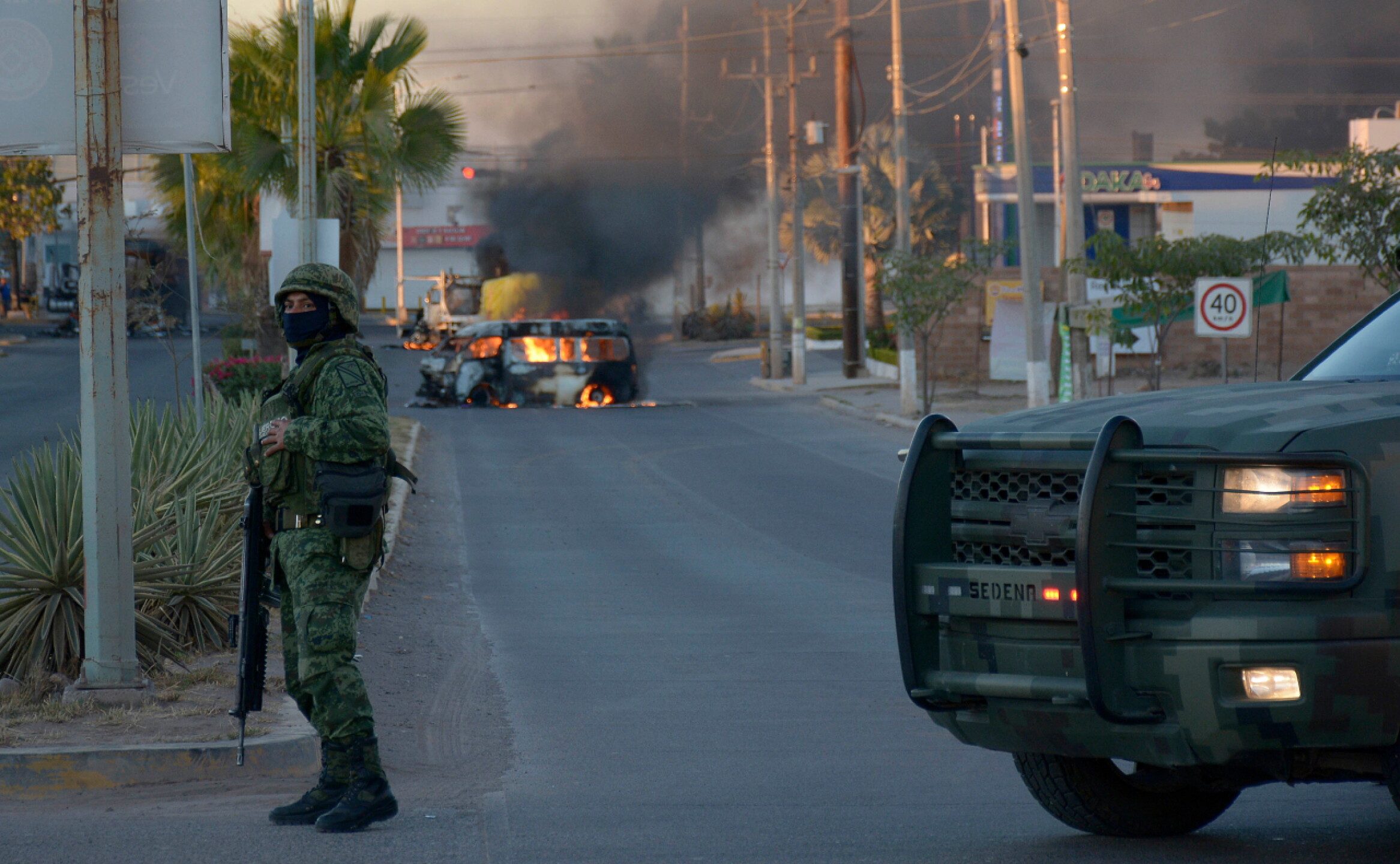
Rocha Moya’s exit was negotiated. It was the only way to prevent a total collapse of the security apparatus in Sinaloa. The state has been under a state of de facto martial law for weeks, with schools closed and businesses shuttered as the Chapitos and the Mayiza fight for control of the streets. The governor had lost the ability to govern; he was merely a spectator to the destruction of his state.
The Financial Trail and the Fentanyl Connection
Beyond the violent optics, the true driver of this investigation is money. The U.S. Treasury Department’s Office of Foreign Assets Control (OFAC) has been tracking several Sinaloan construction firms that received lucrative state contracts during Rocha Moya’s tenure. These firms are allegedly fronts for money laundering.
The mechanism is simple:
- Cartel proceeds are injected into legitimate-looking construction entities.
- State contracts are awarded to these entities for infrastructure projects.
- Public funds are then paid out to these companies, effectively "cleaning" the money through the government payroll.
This cycle provided the Sinaloa Cartel with a steady stream of legitimate capital, which was then used to purchase the precursors needed for fentanyl production. By exposing this link, the U.S. didn't just target a politician; they targeted a bank. Rocha Moya’s departure is an admission that this financial pipeline has been compromised.
The Power Vacuum in the Golden Triangle
What happens when a sitting governor steps down under the shadow of the cartel? History suggests the violence will intensify. The "Pax Mafiosa" that Rocha Moya tried to maintain is dead. Without a political intermediary, the warring factions have no reason to exercise restraint.
The federal government in Mexico City has sent thousands of paratroopers and National Guard members to Culiacán, but their presence is largely symbolic. They patrol the main boulevards while the real war happens in the rural foothills and the gated communities. The soldiers are often seen standing by as convoys of armored trucks move through the city. This passivity is the direct result of a decade of political messaging that prioritized avoiding conflict over enforcing the law.
The incoming leadership in Sinaloa faces a grim reality. Any attempt to genuinely crack down on the cartel will result in a bloodbath. Any attempt to continue the status quo will lead to further U.S. sanctions and indictments. The governor’s office is no longer a seat of power; it is a target.
Institutional Decay and the Path Forward
The Rocha Moya scandal highlights the rot within Mexico’s state-level institutions. The police forces in Sinaloa are effectively an auxiliary branch of the cartel. During the recent waves of violence, local officers were frequently reported "absent" from their posts or actively escorting cartel convoys.
Rebuilding these institutions requires more than just a new governor. It requires a complete purge of the state’s investigative and security agencies. However, the political will for such a move is nonexistent. To purge the police is to invite an immediate insurrection.
The United States is now using a "decapitation" strategy that isn't aimed at the cartels, but at the politicians who enable them. By making the cost of association too high, Washington hopes to force a divorce between the government and the narco-economy. Rocha Moya is the first major casualty of this refined strategy. He won't be the last.
The governor’s departure serves as a warning to other regional leaders in states like Sonora, Guerrero, and Michoacán. The old rules of "plata o plomo" (silver or lead) have a third variable now: the American extradition request. For years, Mexican politicians believed they could manage the violence within their borders as long as it didn't spill over too loudly. The fentanyl crisis changed that calculus. When 100,000 Americans die annually from overdoses, the "internal affairs" of a Mexican state become a matter of U.S. national security.
The streets of Culiacán remain empty as the sun sets. The citizens know what the politicians refuse to admit: the departure of a governor doesn't change the command structure of the city. The real power still resides in the mountain hideouts and the nondescript offices of "import-export" businesses. Rocha Moya is gone, but the system that produced him, sustained him, and eventually consumed him remains perfectly intact. The only thing that has changed is the name on the door and the depth of the betrayal felt by a population that actually believed things might be different this time.
The next few months will determine if Sinaloa remains a functional state or if it officially becomes the first fully realized narco-province of the 21st century. The transition of power will be written in the casualty counts on the 15th of September Highway. There is no middle ground left. You either serve the state or you serve the shadow. Rocha Moya tried to do both and found out the hard way that in the end, the shadow always demands full payment.
Sinaloa is not waiting for a new governor; it is waiting for the next strike. Whether that strike comes from a rival cartel’s drone or a U.S. federal prosecutor’s pen is the only remaining question. The silence in the state capital isn't peace; it is the breath held before a scream.
Sinaloa’s tragedy is its geography. It is the perfect funnel for the world’s most lucrative illegal trade. As long as the demand in the north remains insatiable, the politics in the south will remain transactional. Rocha Moya was just a temporary bookkeeper for a debt that can never be settled.


