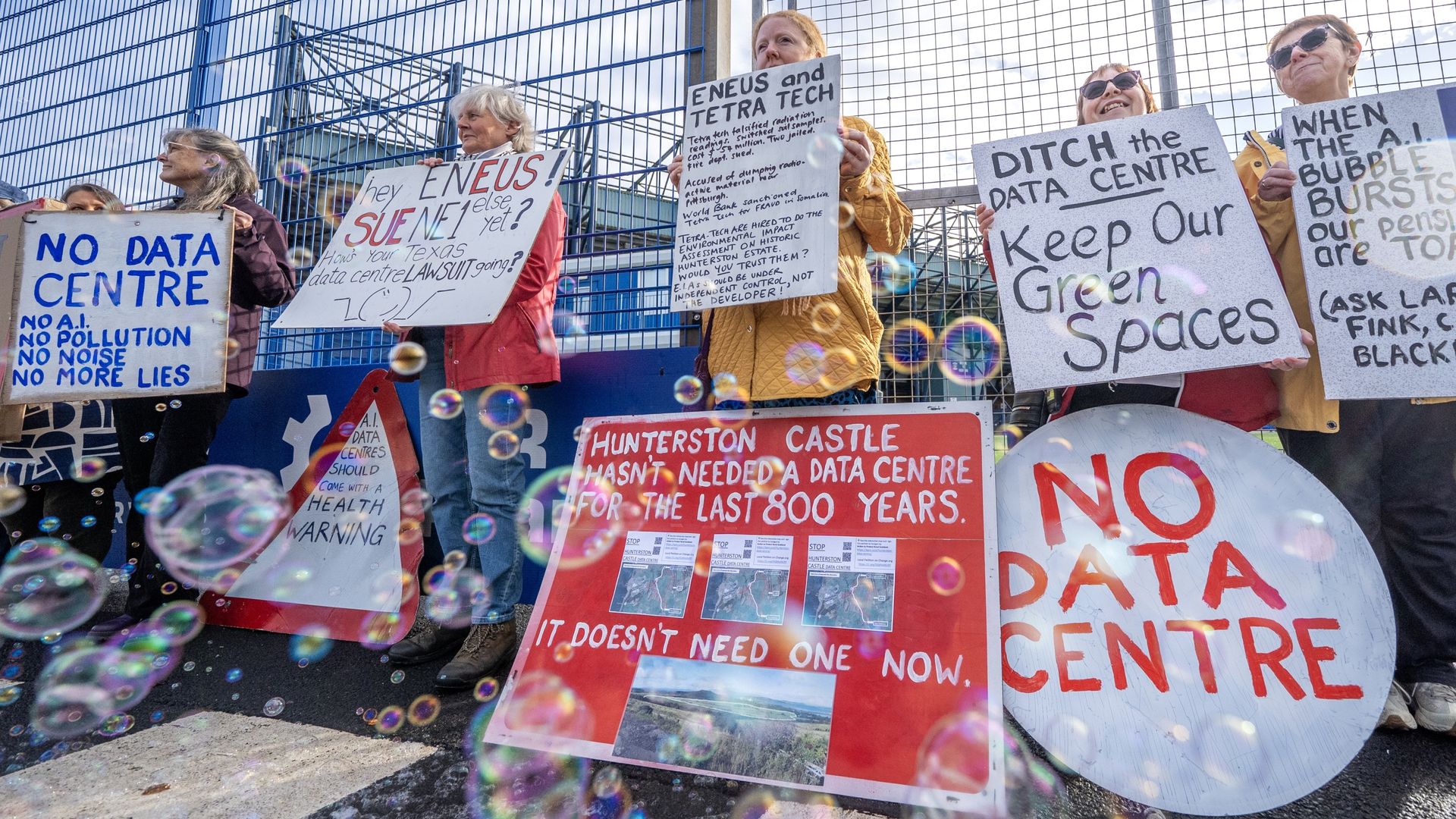
Every server rack hums with a quiet, relentless urgency. Modern computing demands raw, uninterrupted energy on a scale that municipal grids were never designed to shoulder. Across rural towns and suburban edges, local communities find themselves locked in quiet standoffs against sprawling digital infrastructure projects. When residents warn that a proposed data centre will inflict severe strain on their neighborhoods, they are pointing toward an invisible conflict between digital expansion and physical limits.
The immediate catalyst for these protests usually centers on two persistent realities: noise and resource consumption. Modern facilities require cooling arrays that generate a low-frequency drone, audible day and night across nearby property lines. More critically, the massive banks of processors demand continuous electrical supply and millions of gallons of water for thermal management. When a rural municipality learns that a new facility will draw as much power as a mid-sized town, skepticism turns swiftly into organized resistance.
To understand why these installations trigger such fierce opposition, one must examine the economics of site selection. Tech firms scout locations with cheap land, accessible fiber-optic trunk lines, and proximity to major electrical substations. Quiet agricultural zones or semi-rural areas often check every logistical box. Yet these very locations frequently lack the municipal infrastructure to absorb sudden industrial demands. Local roads crumble under the weight of heavy construction equipment, while the local electrical cooperative scrambles to secure transmission capacity.
The friction between residents and developers exposes a deeper systemic failure in how regional energy grids operate. Grid operators are legally obligated to connect large industrial loads if capacity exists, but upgrading transformers and high-voltage lines takes years. Consequently, data centre operators often plug directly into existing local feeds while regional upgrades lag behind. This temporary imbalance leaves local ratepayers absorbing the risk of grid instability and potential price surges.
Protesters frequently characterize these projects as invasive monoliths that offer very few permanent jobs in exchange for permanent environmental disruption. A fully operational facility might employ only a few dozen technicians for maintenance and security. For a community losing its quiet atmosphere and facing higher utility footprints, the economic trade-off feels entirely one-sided. Local politicians caught in the middle face an uncomfortable choice between courting corporate tax revenue and answering to angry voters at town hall meetings.
The technology sector has responded to these mounting disputes by promising efficiency gains and green energy commitments. Operators point to closed-loop cooling systems and direct power purchase agreements with solar or wind farms. However, renewable energy contracts signed by tech giants often pull clean power away from existing regional grids rather than adding new generation capacity immediately. The net effect on local carbon accounting remains a subject of intense debate among energy analysts.
Local opposition groups have evolved beyond simple petition drives. They now hire independent acoustic engineers, retain specialized land-use attorneys, and map out water table impacts with scientific precision. By transforming emotional neighborhood grievances into technical challenges, these coalitions have successfully delayed or derailed projects across multiple continents. Developers can no longer rely on quiet administrative approvals behind closed doors.
The tension between digital necessity and local livability will only intensify as artificial intelligence workloads expand the appetite for computing power. Every new model trained and every automated query processed requires physical hardware anchored somewhere on the map. Until transmission lines catch up with processor demand, every new facility will arrive accompanied by the roar of local protest.
The grid stretches thin, the servers keep running, and the debate over who bears the cost of our digital life remains entirely unresolved.