The air in the South China Sea does not move; it weighs. It sits on the skin like a wet wool blanket, thick with salt and the faint, metallic tang of diesel exhaust from distant trawlers. For the fishermen rolling on the swell a hundred miles off the coast of Da Nang, the horizon is a blur where a gray sky meets a gray ocean. They watch the radar screens with a practiced, weary vigilance. They know that peace in these waters is not a settled state. It is an active negotiation, renewed minute by minute, second by second.
For decades, that negotiation was entirely one-sided.
When a superpower decides to move its coast guard vessels or construct artificial islands on your traditional fishing grounds, a wooden-hulled boat has very little say in the matter. Power, in its most brutal definition, is the ability to ignore the objections of the weak. For smaller nations rimming these disputed waters, sovereignty was beginning to feel like a polite fiction written on paper that was rapidly dissolving in the salt water.
Then came the rustle of paper in New Delhi and Hanoi.
It was a bureaucratic sound, easily missed beneath the roar of regional geopolitics. Defence Secretary R.K. Singh confirmed what whispered dispatches had hinted at for months: the deal is signed. Vietnam has officially acquired the BrahMos supersonic cruise missile system. A similar pact with Indonesia is shivering in its final stages, waiting for the ink to dry.
To the untrained eye, this is a standard defense transaction, a routine transfer of military hardware from one nation's inventory to another. The headlines frame it in the cold language of balance-of-power mechanics. But look closer. Look at the faces of the strategists staring at digital maps in Hanoi, or the planners tracing shipping lanes in Jakarta. This is not just a purchase.
This is a psychological earthquake.
To understand why a piece of machined metal can change the emotional temperature of an entire ocean, you have to understand the machine itself.
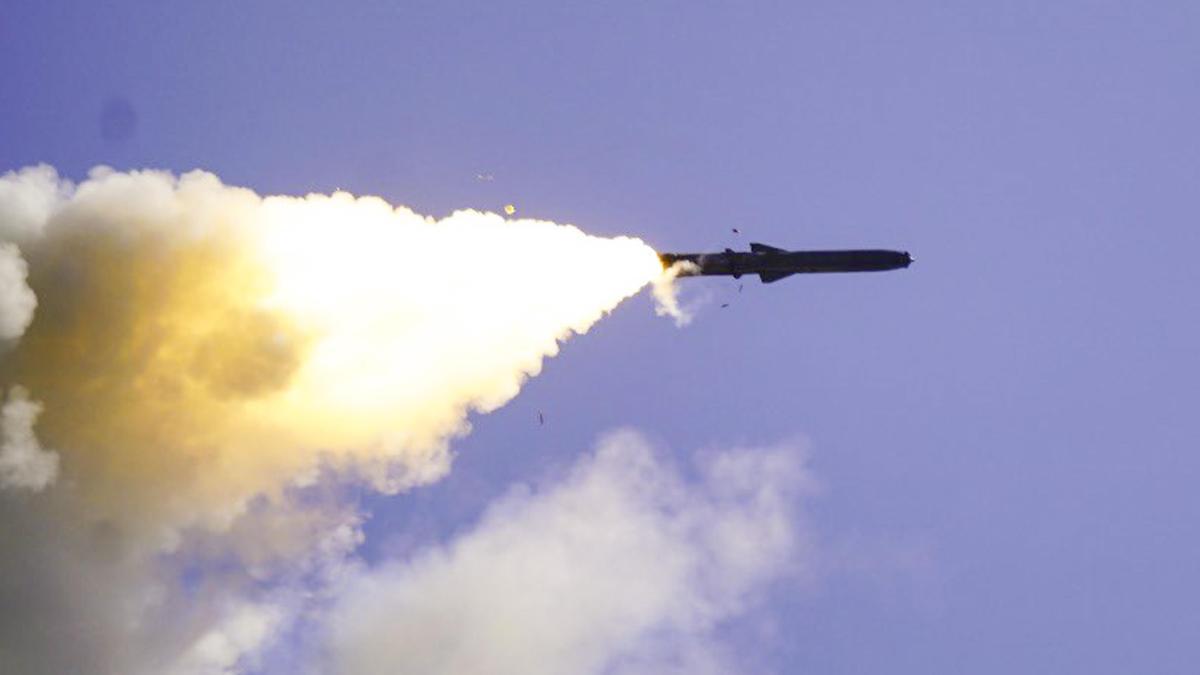
Imagine a weapon that does not merely fly, but tears through the atmosphere. The BrahMos is a ramjet-powered beast, a collaborative child of Indian and Russian engineering. Most cruise missiles are slow. They are essentially small, unmanned airplanes that trundle along at subsonic speeds, relying on stealth or low-altitude flight to slip past enemy radars. They give the defender time to think, time to react, time to counter.
The BrahMos does not give gifts.
It travels at Mach 3. Three times the speed of sound. If you are standing on the deck of an adversarial warship, by the time the acoustic boom of its approach reaches your ears, the missile has already arrived. It flies so low it skims the whitecaps, hiding beneath the curvature of the earth and the clutter of the waves until the very last moment. Then, in its terminal phase, it rises and dives with a violent, erratic maneuverability designed to spoof automated defense systems.
Consider the physics of impact at that velocity. It is not just the warhead that destroys; it is the sheer, kinetic catastrophe of nine tons of metal striking an object at three thousand feet per second. The energy release is absolute. It turns steel hulls into shrapnel and command centers into dust in the blink of an eye.
For a long time, the nations of Southeast Asia felt exposed. Their navies were modest, their budgets constrained. They were facing a neighbor with an insatiable appetite for maritime territory and a shipbuilding program that turned out new destroyers like a factory churning out sedans. The math was depressing. If it came to a conventional fight, the smaller nations would be overwhelmed by sheer mass.
The BrahMos changes the math by rewriting the cost of aggression.
It is the ultimate asymmetric equalizer. A country like Vietnam does not need a fleet of aircraft carriers to defend its coastline anymore. It needs batteries of these truck-mounted, highly mobile missiles hidden in the jungle foliage along the coast, or tucked into the bays of modest corvettes. Suddenly, every hostile warship entering those waters is no longer a dominant predator. It is a target. The calculus shifts from "Can we take this territory?" to "Are we willing to lose a billion-dollar cruiser to find out?"
But the real transformation lies elsewhere, far beneath the technical specifications and the lethal geometry of missile ranges. The true impact of the BrahMos sale is found in the subtle, profound shift in regional psychology.
Fear is a quiet poison in international relations. It makes nations accommodating when they should be firm. It makes them yield an inch here, a mile there, until their sovereignty is a hollow shell. For years, the prevailing narrative in the Indo-Pacific was one of inevitable dominance. One giant power would eventually dictate the rules of the road, and everyone else would simply have to adapt or suffer what they must.
India’s decision to export the BrahMos shatters that narrative of inevitability.
By placing this weapon in the hands of Vietnam and, soon, Indonesia, New Delhi is drawing a line in the water. It is an assertion that the Global South is not a passive theater where superpowers play out their ambitions. It is an declaration that these nations possess the agency, the will, and now the teeth, to defend their own backyards.
Think of the strategic silence that now blankets the region. When India first tested the missile, the world viewed it as a domestic achievement—a feather in the cap of New Delhi's self-reliance drive. But weapons on a test range are mere abstractions. They are engineering triumphs, nothing more. It is only when they cross oceans, when they are bolted to the decks of foreign ships and integrated into the command structures of nations on the front lines, that they become history.
The journey to this point was not easy. It required navigating a minefield of international sanctions, diplomatic protests, and deep structural anxieties. Russia, which co-developed the missile, had to agree to the export. India had to build the industrial capacity to manufacture these complex systems at scale while satisfying its own military's insatiable hunger for them. Every milestone was met with quiet resistance from those who preferred a compliant, unarmed Southeast Asia.
Yet, the deals moved forward anyway. They moved forward because the shared anxiety of the buyers overrode the diplomatic friction of the onlookers.
In Jakarta, the final stages of the negotiation are progressing behind closed doors. The conversations are no longer about whether to buy, but how many, how fast, and where to deploy them to maximum effect. Indonesia, an archipelago of over seventeen thousand islands, presents a different strategic puzzle than Vietnam’s solid coastline. It is a labyrinth of straits and choke points.
If you control the straits, you control the veins through which global commerce flows.
A BrahMos-equipped Indonesia changes the strategic architecture of the entire Malacca Strait and the Natuna Sea. It means that the maritime gateways connecting the Indian and Pacific Oceans can no longer be forced open by sheer intimidation. The keys to those gates remain firmly in local hands.
This is the new reality that R.K. Singh’s brief announcement portends. It is a world where deterrence is democratized. The possession of such lethal, unstoppable technology by middle powers creates a dense web of complications for any nation harboring expansionist ambitions. It forces a return to diplomacy. When you cannot guarantee the survival of your fleet in a conflict, you become much more interested in talking rather than pushing.
Back on the rolling swells of the South China Sea, the gray sky begins to break, letting through a pale, watery sunlight that glints off the crests of the waves. The fishermen continue their work, hauling in nets, eyes occasionally drifting to the horizon.
They do not know the technical specifications of a ramjet engine. They do not read the defense ministry press releases issued in distant capitals. But they understand the language of strength. They know that when the small grow teeth, the big become polite. And for the first time in a very long time, the silence across these waters feels less like a surrender, and more like a truce.