The rain in eastern Europe does not fall; it hangs. It clings to the wool of uniforms, turns the clay into a heavy, sucking paste, and coats the lenses of optical sensors in a fine, stubborn mist.
In a damp bunker buried three meters beneath a nameless treeline, a soldier we will call Andrei stares at a cracked monitor. His eyes are bloodshot. For seventy-two hours, his world has been reduced to a gray feed of static and thermal shadows. Somewhere out there, hidden by the canopy and the fog, thermal signatures are moving. In the old days—which, in the brutal arithmetic of modern conflict, means three years ago—Andrei would have had to manually squint through the fuzz, trying to distinguish a wind-blown branch from the heat of a idling engine.
Today, he does not look at the raw feed. He looks at a clean, vectorized map.
A small blue box blinks on his screen. It is not guessing. It has analyzed three different audio sensors, a scrambled radar sweep, and a fleeting infrared glint. The software has reconstructed the invisible. It tells Andrei exactly what is coming, how fast it is moving, and where it will emerge.
This is not the warfare of science fiction. There are no humanoid terminators or sentient satellite lasers. There is only a silent, lightweight layer of code running on hot, commercial-grade microprocessors tucked into the back of armored vehicles.
And at the heart of this quiet revolution is a European company that did not exist five years ago.
The Weight of the Invisible
For decades, the business of defense was a business of weight.
To win a contract, you built something heavy. You poured steel, forged titanium, and riveted armor plating. Success was measured in tons, caliber, and maximum speed. The defense giants of the twentieth century grew massive by perfecting the physics of kinetic force. Software was an afterthought, a clunky digital interface slapped onto a multimillion-dollar piece of hardware, locked in proprietary black boxes that took ten years to update.
But steel is slow. Code is fast.
In 2021, three founders in Munich looked at this reality and saw a terrifying vulnerability. Gundbert Scherf, Torsten Reil, and Niklas Köhler did not come from the traditional defense establishment. Reil had spent years in the gaming industry, teaching virtual characters how to move realistically using biology-based algorithms. Scherf had served in the German Ministry of Defense. They understood a hard truth that many tech hubs in Silicon Valley preferred to ignore: the next war would not be won by the side with the thickest armor, but by the side with the fastest processing cycle.
They called their company Helsing.
From the beginning, their pitch was radical. They would not build weapons. They would not manufacture drones, missiles, or tanks. Instead, they would build the brain. They wanted to create an artificial intelligence platform that could digest torrents of raw data from the battlefield—radio signals, video feeds, infrared sweeps, sonar—and turn it into an instantly actionable picture of reality.
The timing of their wager was tragic and precise.
When tanks rolled across the Ukrainian border in February 2022, the continent woke up from a thirty-year slumber. The comfortable assumption that large-scale state conflict in Europe was a relic of the past dissolved in forty-eight hours. Suddenly, the talk in Brussels and Berlin was no longer about trade agreements, but about ammunition stockpiles and air defense.
But as European militaries scrambled to modernize, they ran into a wall of bureaucracy and outdated tech. They realized that their multi-billion-dollar fighter jets and frigates were essentially computers from the 1990s wrapped in modern metal.
The Eighteen-Billion-Dollar Question
When news broke that Helsing had secured a new, jaw-dropping valuation of eighteen billion dollars, the financial world gasped. In the tech sector, valuations of that scale are usually reserved for social media giants, enterprise software monopolies, or speculative generative AI plays promising to write marketing copy.
To see a European defense technology startup command such a figure is unprecedented. It signals a profound shift in where power, and capital, is flowing.
But to understand why investors are pouring billions into this Munich-based outfit, you have to look past the spreadsheets and look at the sky over the Baltic Sea.
Consider a modern fighter jet. When a pilot takes off on a patrol mission, they are bombarded with information. The cockpit is a cacophony of beeps, flashing lights, and radar warnings. The pilot must fly the aircraft, monitor fuel, communicate with command, and try to make sense of a dozen different sensor feeds. It is cognitive overload.
Under Helsing's approach, the AI acts as an invisible co-pilot. It does not pull the trigger. It does not fly the plane. Instead, it quietly sifts through the electromagnetic noise, filters out the decoys, identifies the genuine threats, and presents the pilot with a clean, prioritized list of decisions.
This is what the defense industry calls "information dominance."
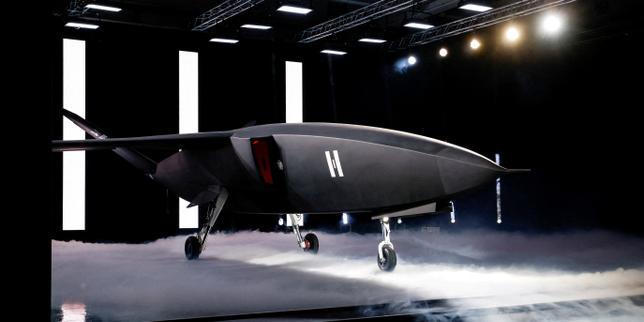
It is the difference between guessing and knowing. And because Helsing’s software is designed to be hardware-agnostic, it can be retrofitted onto thirty-year-old fighter jets just as easily as it can be integrated into the next generation of stealth drones. This adaptability is what makes the business model so terrifyingly lucrative. In the past, upgrading a fleet of fighter jets meant sending them back to a hangar for five years of physical rewiring. Now, it requires a software update.
Traditional Defense Procurement vs. Software-Defined Defense

[Old Model]
Hardware-First -> 10-Year Development -> Locked Proprietary Systems -> Physical Upgrades

[New Model (Helsing)]
Software-First -> Continuous Updates -> Hardware-Agnostic -> Over-the-Air Deployments
Yet, this rapid rise is not without its friction.
For many in the traditional European tech ecosystem, the idea of venture capital funding defense technology is deeply uncomfortable. For years, European tech was defined by consumer apps, fintech startups, and food delivery platforms. The moral clarity of building software designed to assist in lethal operations is a heavy burden to carry.
The founders of Helsing have never shied away from this tension. They frame their mission not in terms of militarism, but of preservation. Their stated goal is to protect democratic societies. They argue that the only way to prevent conflict is to make the defense of democracies so technologically superior that no adversary would dare to test it.
It is a philosophy of deterrence through algorithms.
The Friction of the Human Loop
But let us step away from the clean glass offices of Munich and return to the mud.
The biggest challenge facing this new era of warfare is not technical. It is human.
When we give an algorithm the task of analyzing the battlefield, we are trusting it with lives. A false positive could mean targeting an ambulance instead of a command vehicle. A false negative could mean a missile defense system ignoring a incoming strike until it is too late.
The defense establishment speaks proudly of keeping the "human in the loop." This is the comforting doctrine that says an AI will only suggest options, and a human being will always make the final decision to fire.
But this doctrine carries a quiet flaw.
When an AI presents a decision in a fraction of a millisecond, backed by millions of data points that no human brain could possibly process in a lifetime, how can a human truly second-guess it? If the screen tells Andrei that a target is an enemy tank, and he has only three seconds to act before his position is compromised, does he really have a choice? Or does he simply become a rubber stamp for the machine's conclusions?
This is the psychological terrain that the industry is only beginning to navigate.
There is a fragile line between using technology to assist human judgment and allowing technology to replace it entirely. The trust we place in these systems must be earned, continuously, in conditions of extreme stress and confusion.
Furthermore, the technology itself is locked in a relentless evolutionary race. The algorithms that work today on the eastern flank will be studied, countered, and jammed by adversaries tomorrow. It is an endless game of digital cat-and-mouse played out in lines of code, where a single update can render an entire defense system obsolete overnight.
The Silent Frontier
We are witnessing the end of the era of mechanical warfare.
The factories that once churned out artillery shells are still vital, but they are no longer the ultimate arbiters of power. The true front line is now invisible. It exists in the copper traces of silicon chips, in the fiber-optic cables running beneath the Atlantic, and in the minds of software engineers writing code in the dead of night.
Europe, historically hesitant to embrace the harsher realities of geopolitics, has found itself at the absolute center of this transformation.
The eighteen-billion-dollar valuation of a software company is not just a financial milestone. It is a declaration of independence. It is the sound of a continent realizing that in the twenty-first century, sovereignty cannot be outsourced.
Back in the damp bunker, Andrei watches the blue box on his screen. The system has updated. The threat has changed course, moving away into the safety of the deep forest. He takes a long, slow breath, his fingers resting lightly on the cold plastic of his keyboard.
The monitor glows softly in the dark, a silent guardian waiting for the next byte of data to arrive.