The hum of a server rack sounds remarkably like rain hitting a tin roof.
I stood in a facility outside of Austin three years ago, watching liquid coolant pump through copper veins to keep a stack of graphics processing units from melting. The air smelled of ozone and hot dust. The engineers there spoke in shorthand, trading whispers about power grids, transformer shortages, and the terrifying velocity at which our hunger for intelligence was outstripping our capacity to generate electricity.
We forget that digital things require physical space. They demand megawatts. They demand copper, silicon, cooling towers, and acres of flat land.
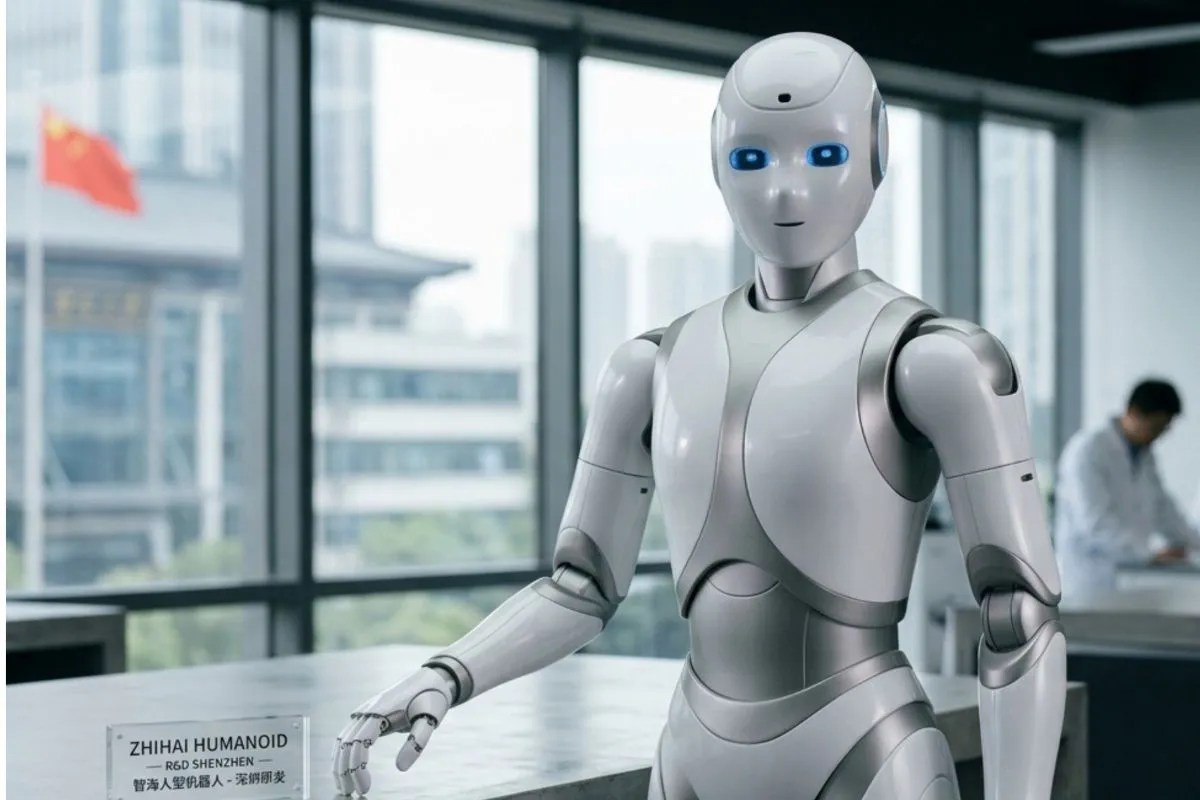
When the news broke regarding the administration's restrictions on importing new Chinese humanoid robots to protect the United States artificial intelligence buildout, most people read it as another geopolitical chess move. Another tariff. Another headline to scroll past while waiting for a train.
They missed the underlying panic.
Because this is not simply about metal limbs or plastic faces walking across a warehouse floor. This is about a brutal, unyielding bottleneck: power. And right now, we are running out of it.
The Weight of a Watt
Meet Marcus. Marcus is hypothetical, but his morning is entirely real. He manages a mid-sized logistics hub in Ohio. Rows of yellow shelves stretch into the dim distance, holding everything from orthopedic shoes to car alternators.
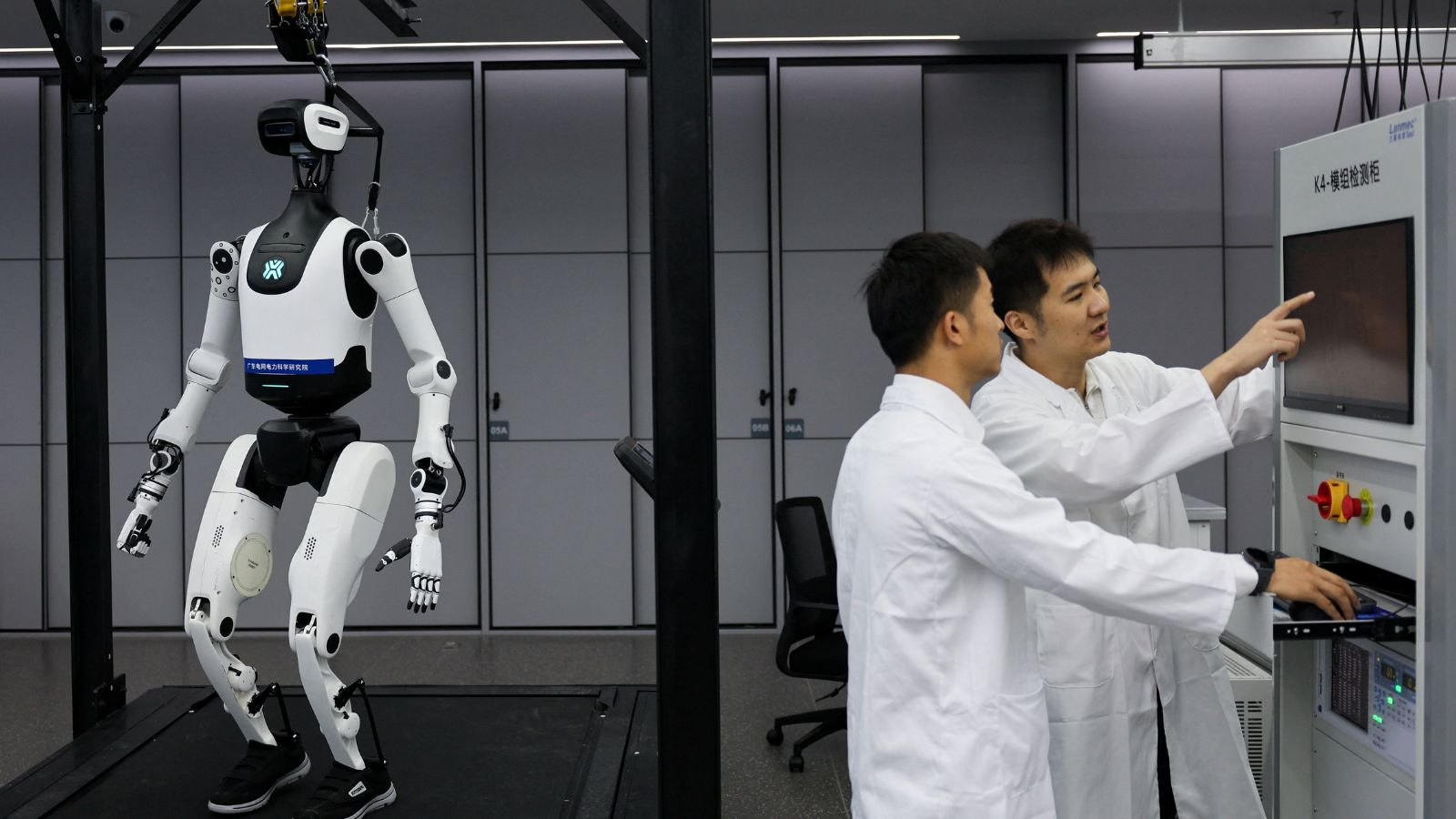
For months, Marcus has heard the pitch. The future is embodied. The future has legs, arms, and a neural network that can lift a fifty-pound crate for twelve hours straight without a coffee break. Companies from Shenzhen to Silicon Valley have promised an army of mechanical workers to solve the labor shortage that keeps Marcus awake at night.
Then the policy door slammed shut.
Why? Why block humanoid robots when every factory floor in the country is begging for hands?
To understand that decision, you have to look past the hardware and stare directly into the power outlet.
Training and running advanced artificial intelligence models requires an astronomical amount of electricity. Every time a large language model processes a query, or a robotic neural net learns how to balance on uneven gravel, data centers drink power. Not kilowatts. Gigawatts. Entire towns worth of energy sucked into black boxes of silicon.
The American AI buildout—the massive infrastructure race to dominate foundational models and data centers—is currently colliding with a physical wall. Our electrical grid is aging. Our energy generation is capped.
If we divert massive amounts of electrical power to animate millions of humanoid utility robots right now, the data centers that train the very brainpower steering our technological future might go dark. Or worse, they might fail to scale fast enough to keep pace with global competitors.
It is a zero-sum game of electrons.
The Geography of Code and Copper
We tend to think of software as ethereal. It lives in the cloud, floats through fiber-optic cables, and materializes on our glass screens. But the cloud is anchored to the dirt.
Consider what happens next: A nation cannot afford to build everything at once.
If your grid can support X amount of energy, you must choose where to spend it. Do you spend it on the brains—the centralized server farms crunching petabytes of data to invent the next generation of machine reasoning? Or do you spend it on the brawn—millions of mechanical bodies deployed in warehouses across the country?
The administration chose the brain.
By restricting incoming Chinese humanoid hardware, policymakers are buying breathing room. They are attempting to insulate the domestic software and infrastructure ecosystem from a flood of foreign robotics that would accelerate energy consumption before our power generation can catch up.
It is protectionism, yes. But it is also triage.
I remember talking to an electrical engineer who looked at me with dead tired eyes and said, "People want the future to be wireless. But the future is anchored to a very thick, very expensive copper cable."
When foreign competitors flood the market with cheap, efficient embodied AI hardware, they create an immediate demand for operational power. If domestic data centers are starved of that power because the juice is being routed to charge factory androids, the United States risks losing the foundational AI race.
Software scales infinitely. Hardware requires supply chains, factories, and literal tons of raw material. More importantly, intelligence at the core is infinitely more strategic than labor at the edge. If you control the foundational intelligence, you dictate the rules of the entire global economy. If you merely own a lot of walking metal workers, you are renting space in someone else's intellectual ecosystem.
The Human Cost of the Wall
Protective walls always have shadows.
For Marcus in Ohio, the wall means his labor shortage continues. It means he will spend another year chasing human applicants who burn out, quit, or demand higher wages to keep pace with inflation. He does not care about geopolitical strategy when his shipping backlog is three days deep.
For the robotics startups trying to innovate, the friction is immense. Innovation requires cross-pollination. When borders harden and hardware imports freeze, the natural evolution of engineering stumbles.
Yet, the anxiety driving this policy is palpable. We are living through an industrial revolution where the factory floor is no longer filled with steam and pistons, but with silent arrays of GPUs humming in temperature-controlled darkness.
We are drawing lines in the sand, or rather, in the silicon.
The humanoid robot standing idle at the port of entry is a symbol of a deeper realization. We wanted the future. We dreamed of mechanical helpers walking beside us, lifting our burdens, cleaning our streets, tending our elderly.
Instead, we found ourselves staring at a flickering lightbulb, realizing that we simply do not have enough electricity to turn on the whole house at once.
The door is locked for now. The servers keep humming. And somewhere in the dark, a cooling fan spins a little faster, swallowing the power that could have given a machine its first breath.