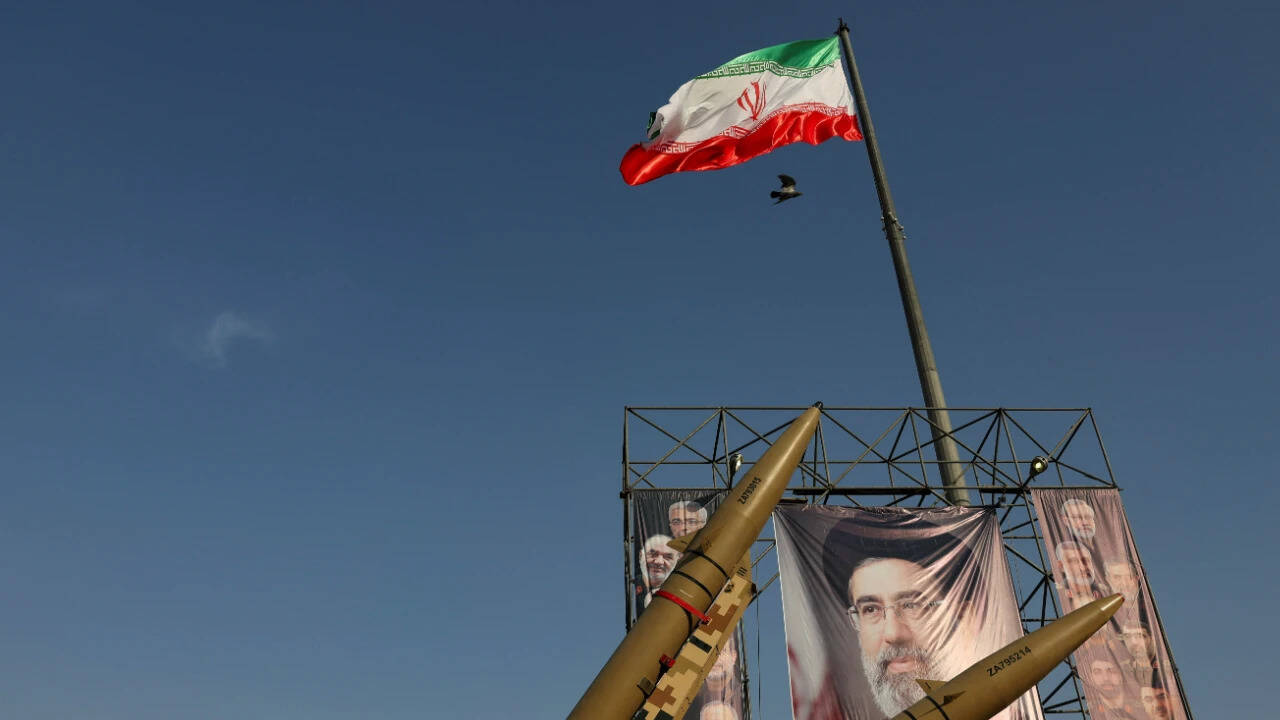
The air in Tehran does not taste like victory or defeat. It tastes like concrete dust and old petrol, hanging heavy in the autumn heat as the afternoon bleeds into a restless dusk.
Consider a man standing on a rooftop in the sprawling concrete expanse of the capital. He is middle-aged, his hair silvering at the temples, wearing a faded cotton shirt that smells of cardamom and stale tea. Below him, the streets hum with the frantic choreography of a metropolis refusing to stop, even as the shadow of distant capitals looms over its horizon. Motorcycles weave through lanes of gridlocked sedans; merchants pull down corrugated steel shutters over storefronts, their hands moving with practiced, rhythmic speed. If you liked this piece, you should check out: this related article.
He looks toward the jagged silhouette of the Alborz mountains cutting into the violet sky. Somewhere deep beneath those ancient, arid peaks, and buried beneath the sun-baked plains of Natanz and Fordow, men are pouring tons of reinforced concrete. They are hardening steel casings, sinking centrifuge halls deeper into the earth, and wrapping the nation’s atomic ambitions in layers of stone and soil designed to shrug off the hammer of modern air power.
We forget that geopolitics is rarely enacted in air-conditioned conference rooms where maps are smoothed flat by diplomatic palms. It is lived here. In the tightened jaw of a shopkeeper watching the currency ticker. In the quiet calculation of a university professor packing old journals into cardboard boxes. In the sudden, sharp mobilization of loyalist militias gathering in drafty assembly halls across the provinces. For another perspective on this development, refer to the latest coverage from TIME.
The midterm ballots have been cast thousands of miles away across an ocean, tallied in fluorescent-lit school gymnasiums and televised on screens glowing in suburban kitchens. But the shockwaves of those distant political shifts ripple outward, washing up directly against the heavily guarded perimeter fences of Iranian nuclear facilities.
Power changes hands in Washington. And in Tehran, the response is neither surprise nor panic. It is preparation.
For months, the cadence of life inside the Islamic Republic has accelerated. The rhetoric from state television has sharpened, shifting from economic grievances to the grim calculus of national survival. Across the country’s vast network of loyalist strongholds, commanders of the Basij and the Islamic Revolutionary Guard Corps are holding closed-door briefings. They are distributing encrypted communications equipment, positioning mobile anti-air units near critical infrastructure, and drilling auxiliary forces on how to maintain order if the skies suddenly split open with fire.
To understand why this matters, you have to look past the sanitized language of strategic defense analysts who speak of "degraded capabilities" and "mitigation strategies."
Stand close enough to the barbed wire surrounding a sensitive military zone, and the abstraction evaporates. You hear the crunch of gravel beneath the heavy boots of a teenage conscript clutching a service rifle, his eyes darting across the empty desert horizon. You feel the palpable tension of a nation that has spent decades staring down the barrel of economic strangulation, proxy conflicts, and the persistent, low-level hum of covert sabotage—from cyber-attacks that crippled industrial centrifuges to the targeted assassinations of its top nuclear scientists on leafy suburban boulevards.
They have learned a hard, bitter lesson from history: treaties can be ripped apart with the stroke of a pen, and diplomatic overtures can evaporate overnight when a new administration takes the oath of office.
So they build. And they consolidate.
In the high-altitude valleys where the air bites cold at night, engineers work in shifts beneath subterranean fluorescent tubes. They are refining the cascading loops of advanced uranium enrichment centrifuges, pushing the technology closer to the threshold where the line between civilian energy and military capability blurs into invisibility. Each successful test is heralded by state media not merely as a scientific triumph, but as a shield—a metallic insurance policy bought and paid for by the sacrifices of an ordinary citizenry crushed beneath the grinding weight of international sanctions.
Listen to the conversation at a corner bakery in central Tehran.
"They won't dare," a young delivery driver insists, wiping flour from his forehead as he hands over a warm, flat loaf of barbari bread. His voice is too loud, trying a little too hard to convince himself.
An older man standing behind him adjusts his spectacles, laughing dryly. "They don't have to invade. They just have to drop the hammer from five miles up, and we are the ones who pay for the rubble."
That is the invisible stake. Not the abstract balance of global power, not the arcane debates over uranium enrichment percentages, but the ordinary human collateral caught in the crossfire of empires playing high-stakes poker.
When political analysts talk about "bracing for possible attacks after midterms," they are using the clinical shorthand of war rooms. But translation is required. It means families stocking up on cooking oil and dried lentils, tucking away savings in gold coins beneath floorboards. It means airlines quietly rerouting flights over the western border. It means hospitals checking generator fuel supplies and trauma kits, preparing for contingencies that no one prays for, yet everyone expects.
The loyalists are rallied not merely by ideological fervor—though that engine still burns hot among the faithful—but by a shared, calcifying narrative of siege. Every threat issued from a podium in a foreign capital serves as proof to the population that outside forces seek their subjugation. It silences internal dissent, at least for a moment, binding a fractious society together with the iron bands of shared peril.
Consider the paradox at the heart of this standoff.
The more resources Iran pours into fortifying its nuclear sites—sinking them deeper into bedrock, scattering redundant command nodes across the desert, dispersing missile batteries into hidden mountain silos—the more provocative the gesture appears to its adversaries. And the more provocative it appears, the louder the drums of preemptive intervention beat in foreign capitals.
It is a vicious, self-fulfilling spiral. Each side reads the other's defensive preparations as an offensive provocation.
Yet, beneath the surface posturing, there is a profound, exhausting weariness. The people of this country have lived in the crosshairs of history for generations. They know the sound of air raid sirens; their parents remember the charred cityscapes of the eight-year war with Iraq in the nineteen-eighties. They know how quickly a political dispute can transform into a humanitarian catastrophe.
As the autumn wind sweeps down from the mountains, rustling the fading plane trees along Vali-Asr Street, the city seems to hold its collective breath.
The ballots have been counted across the sea. The political winds have shifted. And deep beneath the earth, in chambers shielded by concrete and silence, the heavy wheels keep spinning. The countdown has already begun, measured not in seconds on a clock, but in the quiet, resolute footsteps of a people waiting to see where the lightning strikes.


