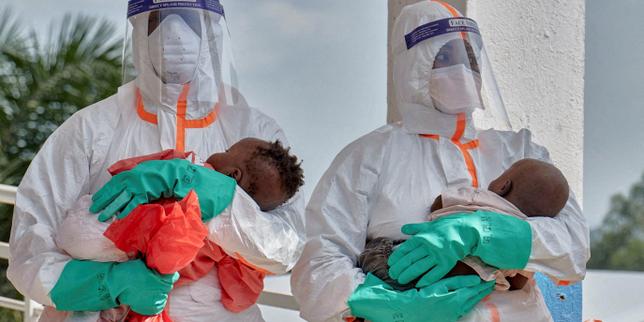
The heat in the equatorial forest does not merely surround you. It weighs upon your shoulders like a wet woolen blanket, thick with the scent of damp earth, rotting foliage, and the copper tang of fear. In the eastern provinces of the Democratic Republic of Congo, life moves to the rhythm of rustling banana leaves and the distant, low murmur of the mighty river. But right now, beneath the broad green canopies of North Kivu and Ituri, another rhythm beats. A slower, more insidious pulse. The silent march of an ancient pathogen.
Ebola does not announce itself with a trumpet blast. It begins as a whisper in a remote clinic, a sudden fever that feels like malaria, a deep, bone-aching fatigue that drains a mother before she can even finish preparing evening cassava. Then comes the turn. The body begins to betray itself. And in a region already fractured by decades of conflict, displaced families, and crumbling infrastructure, every single fever becomes a question mark charged with mortal peril.
According to the World Health Organization, the ongoing epidemic continues to progress and to kill. Yet, amid the relentless grimness of the daily toll, healthcare workers on the ground speak in hushed, trembling tones of signs that are cautiously encouraging. A small spark of hope in a vast, suffocating dark.
To understand what is happening right now, we must look past the cold spreadsheets of global health agencies and walk the red-clay paths of a Congolese village during an outbreak.
Imagine standing at the edge of a bustling market square in Beni. Smoke rises from charcoal braziers where street vendors roast plantains. Children chase a makeshift football made of tied-together plastic bags. Laughter fills the air, bright and resilient. This is the ordinary heartbeat of central Africa.
Now, picture the invisible line dividing that laughter from absolute terror.
When a family member falls ill here, the instinct is deeply human, fiercely protective, and tragically dangerous. You hold them. You wipe their brow with a cool cloth. You gather close to offer comfort as the fever spikes. In Western hospitals, patients are isolated behind sterile glass barriers guarded by negative-pressure airlocks and robotic machinery. In rural DRC, isolation is an unnatural act of cultural defiance. It asks a grieving, terrified family to bar their doors to their own flesh and blood.
This is where the true battle is fought. Not just in high-tech laboratories, but in the muddy courtyards of mud-brick homes where community mobilizers—local nurses, teachers, and recovered survivors—sit on wooden benches for hours. They speak gently in Swahili or Kinande. They explain why a safe and dignified burial is not an insult to the dead, but a shield for the living.
Consider the logistical nightmare of tracking a virus in a region where roads wash away in torrential downpours and armed militias control swaths of territory. Contact tracing here is not done via automated smartphone apps or central databases. It is done on foot. Young epidemiologists walk miles through dense vegetation under a relentless sun, notebook in hand, asking neighbors if they saw who visited the house with the blue chalk mark on the door. Blue chalk means infection. Blue chalk means danger.
Yet, the WHO’s recent declarations point to a profound shift in momentum. Why? Because science has finally caught up with the crisis, and community trust—hard-won through sweat, tears, and immense heartbreak—has finally taken root.
The introduction of experimental vaccines and targeted therapeutics has fundamentally altered the trajectory of modern outbreaks. When the first ring-vaccination campaigns began years ago, skepticism was rampant. Rumors spread like wildfire through local radio stations and whispered conversations at the well. People feared the syringe more than the virus.
Today, the story has changed.
Walk into a treatment center at dawn, and you will see neighbors bringing neighbors. They have seen the miracle of monoclonal antibodies. They have watched patients carried in on stretchers, gasping and near death, walk out weeks later under their own power to the sound of joyful singing from the medical staff. That living proof is more powerful than any government decree or international press release. It builds an impenetrable wall of collective defense.
We must be brutally honest about the fragility of this progress, however. An epidemic of this scale in a conflict zone is a coiled spring. One security incident, one displaced population fleeing violence into an unmonitored forest, one delayed alert, and the embers can instantly reignite into a roaring inferno. The virus is patient. It does not sleep, it does not negotiate, and it exploits every single crack in our collective armor.
When the WHO reports signs of encouragement, it is an invitation to hold our breath, roll up our sleeves, and push harder. It is not a declaration of victory. Victory over Ebola is never permanent; it is merely a temporary state earned every single day by vigilance, courage, and unconditional compassion.
As the sun dips below the horizon in the Congo basin, casting long, bruised shadows across the canopy, the day shift at the treatment center hands over to the night shift. Flashlights click on. Monitors beep softly in the gloom. Inside a high-isolation tent, a nurse adjusts the intravenous drip of a young girl fighting for every breath.
Outside, the crickets begin their deafening night song. The forest waits. But tonight, for the first time in a long time, the shadow does not hold all the cards. The spark is alive, flickering fiercely against the dark.


