Darkness does not creep. It falls.
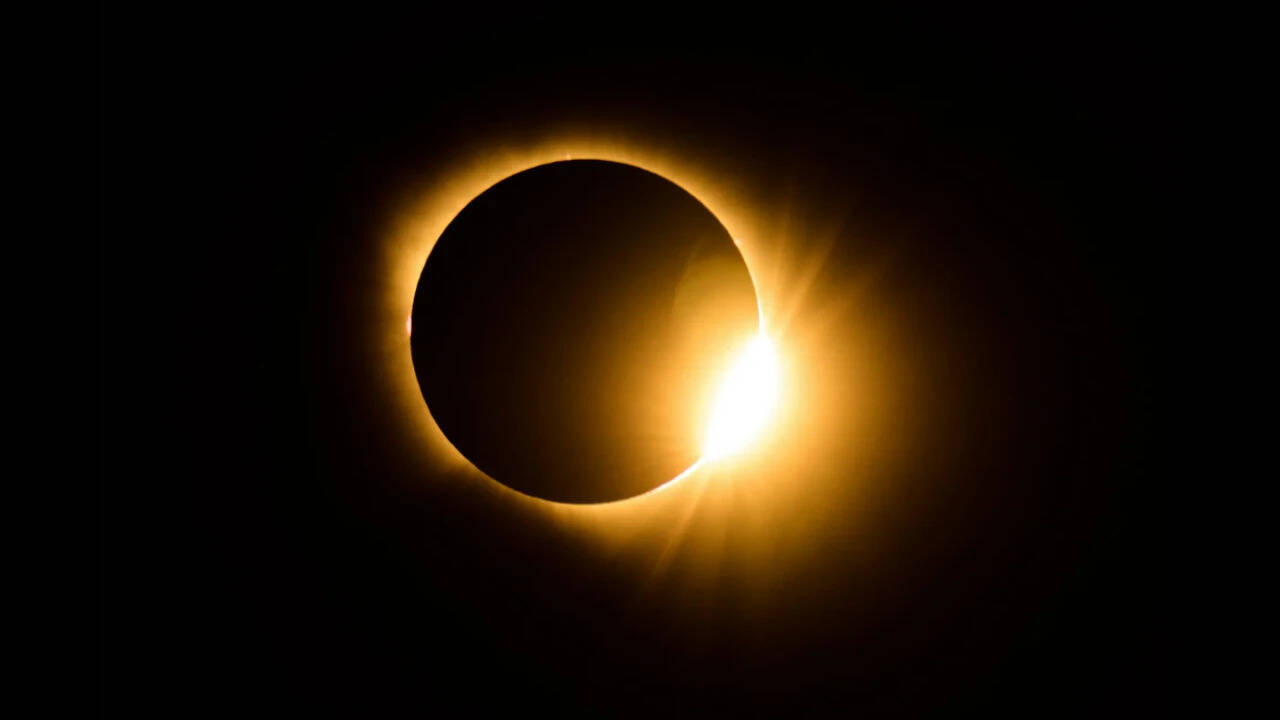
In August of 1905, the sky over the Iberian Peninsula did something terrifying. It emptied. The sun, a reliable engine of warmth and light across centuries of human empire, simply vanished at high noon. In its place hung a bruised, spectral eye—a jagged halo of silver fire burning against a bruised indigo void.
To the people watching from the sun-baked hills of Burgos and the shores of Valencia, the world was ending. Church bells pealed in frantic, disorganized terror. Livestock huddled together, confused by the premature midnight. Women wept in the dust, clutching rosaries as the ambient temperature plummeted and the stars flickered into uninvited existence during broad daylight.
Yet, miles away from the panicked villagers, perched on rocky outcrops and peering through heavy brass instruments, men in stiff naval uniforms watched in dead silence. They were not Spanish. They wore the crisp white and navy blue of the United States Navy.
History remembers the politicians of 1905. It remembers treaties, tariffs, and the rumbling industrial machinery of a new century. It forgets the sailors who chased shadows.
The Long Voyage to the Dark
Imagine standing on the rolling wooden deck of a steamship weeks before the celestial alignment, staring into an empty horizon. You are thousands of miles from home, carrying delicate glass plates, heavy telescopes, and chronometers that cost more than a small house.
The U.S. Navy did not send these men to fight. They sent them to look.
In the opening years of the twentieth century, solar astronomy was a frontier as wild and unpredictable as the American West. The sun was a mystery wrapped in incandescent gas. Scientists knew it governed the tides, the weather, and the very rhythm of agricultural life, but its corona—that ghostly white crown visible only when the moon blocked the blinding disk—remained entirely unmapped.
So, when calculations revealed that the path of totality for the August 30, 1905 eclipse would slice directly across Spain, the scientific establishment looked to the sea. The Navy possessed the most precise navigators, the most durable transport, and the discipline required to execute an operation where a single second of hesitation meant missing the entire event.
Consider the sheer logistics. There were no digital clocks, no atomic synchronizations, no instant telegraph alerts from distant observatories. Success relied on pocket watches wound with trembling fingers, heavy iron tripods planted firmly in Spanish soil, and a shared, desperate hope that the Mediterranean clouds would hold their breath for just three minutes and twenty-eight seconds.
Waiting in the Dust
Lieutenant John Doe—a hypothetical name for the thousands of nameless officers who logged these expeditions—sweated through his wool uniform beneath the merciless Spanish sun. (Note: While naval logs record the official rosters, the human friction of waiting remains a hypothetical reconstruction based on period diaries).
He checked his pocket watch for the fourth time in a minute.
Around him, the Spanish countryside hummed with the cicadas' afternoon chorus. The locals viewed the American interlopers with a mixture of suspicion and awe. What business did foreign sailors have setting up brass tubes in their olive groves? To the agrarian communities, the eclipse was an omen. To the sailors, it was data.
Then came the drop.
It is a sensation modern humans rarely experience. When the moon begins to swallow the sun, the light changes before the temperature does. A strange, metallic twilight bleeds into the landscape. Shadows sharpen into impossible, eerie contrasts. The colors of the world drain away, leaving everything painted in shades of slate and ash.
"First contact," a voice murmurs down the line.
In that instant, the tension breaks. The academic detachment evaporates. The sailors are no longer representatives of a rising global superpower; they are simply human beings standing in the sudden, freezing shadow of the cosmos, watching the edge of the moon take its first bite out of the solar fire.
Capturing the Invisible
Photography in 1905 was an act of alchemy. It was not a matter of tapping a glass screen or adjusting an ISO setting. It involved glass plates coated in silver halide emulsions, chemical baths mixed in stifling field tents, and glass negatives that cracked if a sudden gust of wind rattled the camera housing.
When totality finally struck—when the sun was entirely snuffed out and the corona burst outward like a frozen explosion of pearl and ivory—the window of eternity opened.
Three minutes.
That was all they had.
In those precious moments, the naval photographers operated like surgeons in a war zone. Plate after glass plate was slid into place, exposed, and rushed into the darkroom tent. Every motion was choreographed by weeks of relentless rehearsal. If a hand shook, the image blurred. If a stray particle of Spanish dust settled on the emulsion, a crucial coronal streamer would be lost forever.
They were racing against the inevitable return of the light.
When the diamond ring burst forth—the blinding flash of the sun returning from behind the moon's edge—the experiment was over. The instruments were packed. The silence broke.
The Echoes of a Forgotten Shadow
The photographs returned to Washington wrapped in protective crates. They were developed in government laboratories, studied by astronomers, and filed away into archival drawers, destined to gather dust while the world marched toward the industrial slaughter of the First World War.
Today, we look at solar eclipses with casual luxury. We track them on smartphone apps, wear certified polymer glasses bought online, and livestream totality from the comfort of suburban backyards. We take the mechanics of the solar system for granted.
We forget the men who crossed an ocean with glass plates and iron nerve, trusting their watches in the Spanish dust, just to steal three minutes of darkness from the sun.