The sea near the Sunda Strait does not look like a battleground. It looks like glass.
In the early morning, before the equatorial sun turns the humidity into a heavy, wet blanket, the water is a bruised shade of blue. Fishermen out of Jakarta haul in nets heavy with silver-scaled mackerel, their wooden hulls rhythmically slapping against the swell. They are looking at the horizon for squalls, for sudden tropical storms that whip up black clouds in an hour. They are not looking for submarines.
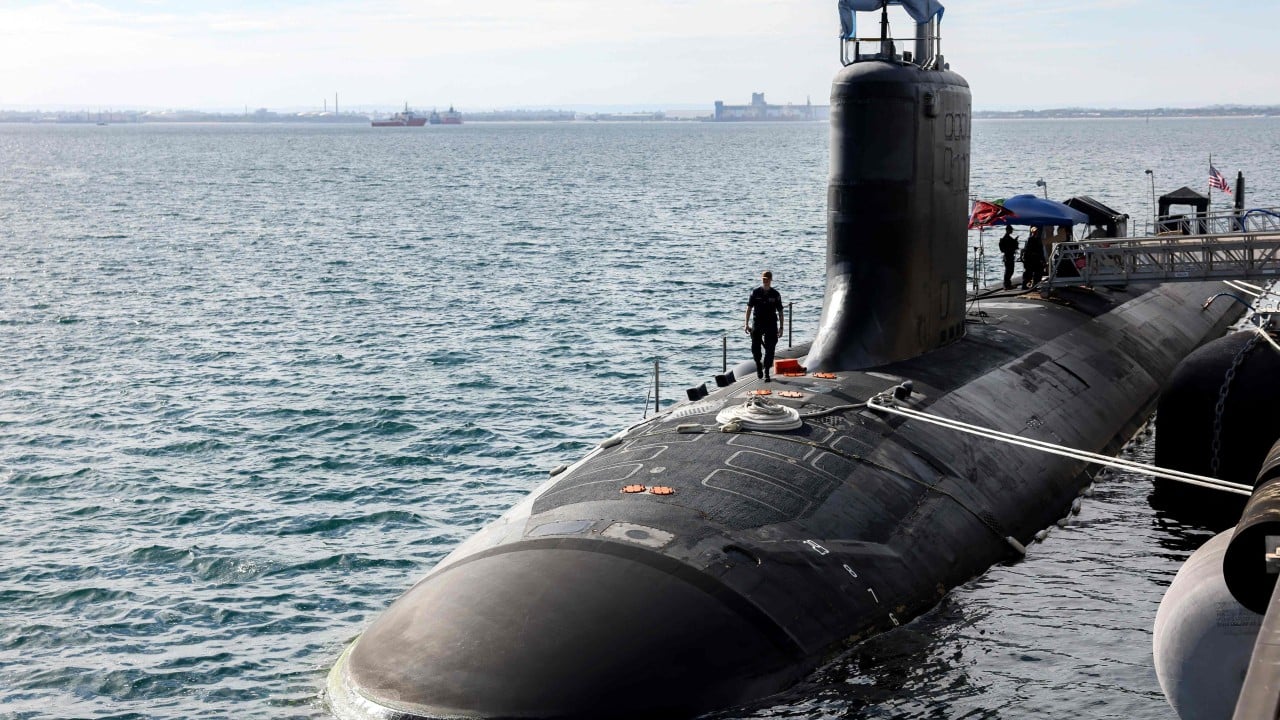
Yet, beneath that glass, something heavy is sliding through the deep trenches. It is nuclear-powered, silent, and flying a flag that belongs to a continent three thousand miles away.
To understand what Indonesia feels right now, you have to stand on the crowded asphalt of Tanjung Priok port, smelling the mix of diesel, clove smoke, and salt, and realize that the map of the world is being redrawn over your head.
For decades, Jakarta held to a sacred doctrine. It was called bebas aktif—free and active. It meant non-alignment. It meant standing in the middle of a crowded room of giants and refusing to hold anyone’s hand. During the Cold War, Indonesia walked that tightrope with a master’s balance. They hosted the Bandung Conference in 1955, giving voice to a post-colonial world that refused to be a chessboard for Washington or Moscow. They bought weapons from East and West alike, smiled at everybody, and traded with the world.
Independence was a bruised prize. They fought too hard, bled too much, and lost too many millions to ever let another foreign uniform dictate the rhythm of their waters.
Then came Aukus.
The announcement hit foreign ministries across Southeast Asia like a sudden squall line. Australia, the United Kingdom, and the United States forged a security pact centered on one terrifyingly expensive, technologically opaque promise: at least eight nuclear-powered submarines for Canberra.
In Western capitals, the calculation was framed through the cold lens of deterrence. A counterweight. A shield against a rising, assertive Beijing that treats the South China Sea like a private lake. From London and Washington, it looked like smart strategy.
From Jakarta, it looked like the sound of glass breaking in the night.
Consider what a nuclear-powered submarine actually is. It is not a defensive patrol boat. It is a predator designed to cross oceans without surfacing, to linger off foreign coasts for months at a time, whispering sonar pulses into the dark. And suddenly, those predators are going to be operating in maritime zones that Indonesia’s founders vowed would remain a zone of peace, freedom, and neutrality.
A retired Indonesian diplomat, a man who spent forty years in smoke-filled rooms arguing over maritime boundaries with men twice his size, told me over a cup of bitter black coffee in Menteng: "We didn't ask for this. We spent half a century trying to stitch this region together into a community where neighbours talk to each other instead of buying torpedoes. Now, the big boys are dropping an anchor right in our backyard and telling us not to look at the chain."
The anxiety is not just about submarines. It is about sovereignty.
Under the United Nations Convention on the Law of the Sea, foreign vessels have the right of innocent passage through territorial waters, and archipelagic sea lanes passage through waters like the Sunda and Lombok straits. But nuclear propulsion changes the psychological and strategic calculus. When a foreign warship carrying advanced military technology slips through the narrow maritime corridor separating Java and Sumatra, it crosses waters that Indonesians consider their living room.
And the silence from Canberra has been deafening.
When Australian Prime Ministers fly to Jakarta for their first official visit—a long-standing diplomatic tradition that signals respect for Indonesia as the anchor state of ASEAN—they bring handshakes, trade deals, and polite talking points about regional stability. But behind closed doors, Indonesian generals and foreign policy experts are asking hard, blunt questions.
Will these submarines dock in Australian ports facing us? Will they patrol the Timor Gap? Who takes the blame if a nuclear reactor malfunctions in the shallow, congested archipelagic waters where local fishermen drop their nets?
The answers, when they come, sound like legalistic evasions. They talk about international law. They talk about freedom of navigation. They speak in the bloodless vocabulary of alliance management.
Language matters. When you call an ally an "enemy," you make a mistake. Indonesia does not view Australia as an enemy. To use such a blunt word is to misunderstand the subtle, excruciating choreography of Southeast Asian diplomacy. Jakarta is not preparing for war with Canberra.
Instead, they are experiencing something far more complex: a profound sense of alienation.
They are watching the security architecture they helped build—the Association of Southeast Asian Nations, or ASEAN—fracture along fault lines they cannot control. Some members, like the Philippines, are leaning hard into American security guarantees as Chinese maritime militia ships swarm their reefs. Others, like Cambodia and Laos, are economically tethered so tightly to Beijing that they function as diplomatic speed bumps against any collective ASEAN criticism of Chinese expansionism.
And Indonesia, the heavyweight champion of the group by size, population, and moral authority, is stuck in the middle. They are trying to hold together a regional consensus that resembles a house built on sand during a rising tide.
Walk through the leafy neighborhoods of Kebayoran Baru in Jakarta, past the colonial-era houses turned into sleek modern cafes where young tech entrepreneurs tap on MacBooks. Talk to twenty-somethings about Aukus, and you will get a shrug. They are worried about inflation, about finding decent jobs, about the cost of housing in a megalopolis that is literally sinking into the Java Sea.
Yet, beneath that youthful indifference runs a fierce, quiet nationalism.
Indonesia’s national motto is Bhinneka Tunggal Ika—Unity in Diversity. But in foreign policy, their operational motto is bebas aktif. The moment that freedom of action is compromised by the nuclear posturing of distant Western allies and an aggressive rising superpower, the ghost of colonialism stirs.
No one in Jakarta wants to be someone else’s staging ground. They remember the Japanese occupation. They remember the Dutch gunboats. They remember the Cold War proxies who turned neighboring countries into killing fields. They survived all of it by refusing to pick up a rifle for someone else’s ideological crusade.
Now, the stakes are higher because the weapons are silent and nuclear.
When you look at a map of Indonesia from Washington, you see a collection of strategic chokepoints—the Malacca, Sunda, and Lombok straits—vital arteries of global commerce that must be kept open at all costs.
When you look at that same map from Jakarta, you see home. You see seventeen thousand islands where people are trying to build hospitals, schools, and a digital economy without getting caught in the crossfire of a superpower cold war that feels increasingly hot.
The danger of Aukus is not that it will trigger an immediate naval engagement in the Java Sea. The danger is much more insidious. It normalizes militarization. It tells every nation from Singapore to Papua New Guinea that the only language that matters anymore is the deep, cold hum of a nuclear submarine cruising beneath the waves, ignoring the fishermen overhead, and rewriting the future of the world without asking permission.
Out on the water, the sun is finally breaking through the haze, turning the strait into hammered gold. A lone fisherman stands at the prow of his boat, pulling up an empty net, shading his eyes against the glare, staring out toward the deep horizon where nothing is visible, and everything is about to change.