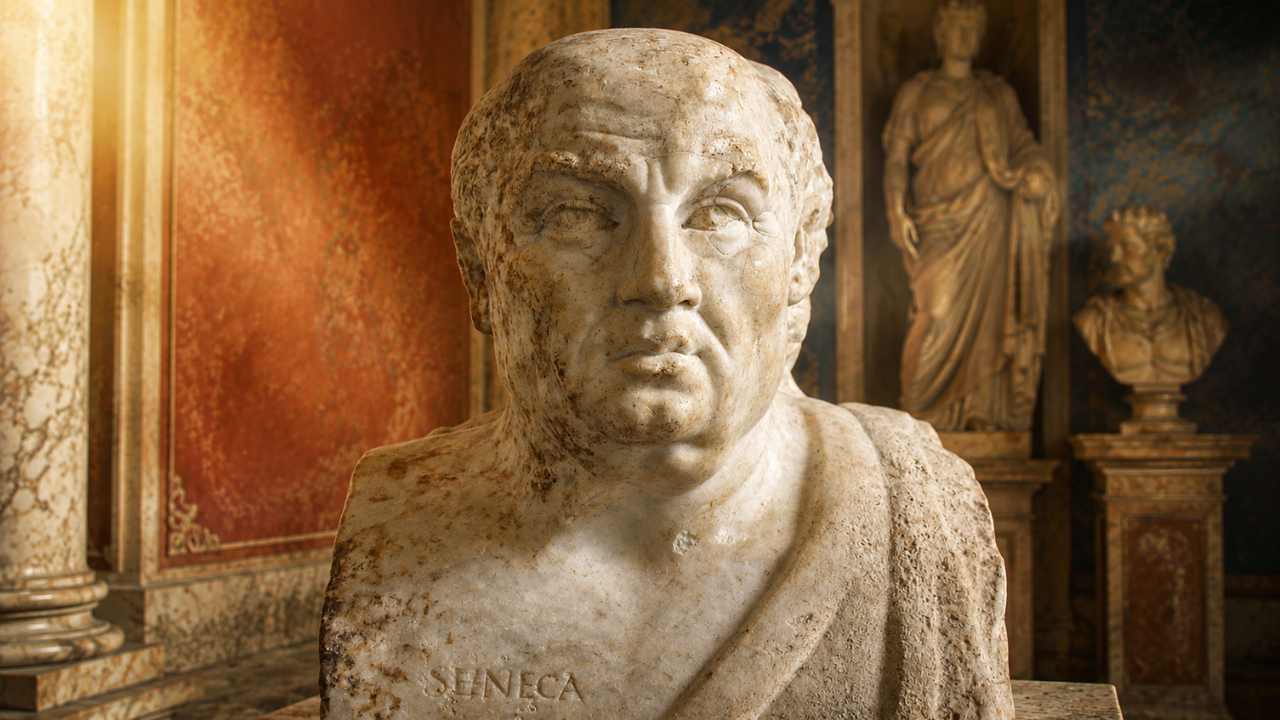
The Roman statesmanLucius Annaeus Seneca wrote that anticipation destroys existence. He argued that waiting for tomorrow steals the only currency humans actually own, which is the present moment. Millions of modern readers highlight this passage in cheap leather-bound journals and share it on professional networks to signal depth. They nod sagely at the ancient warning against expectancy. Then they close the book, check their retirement portfolios, map out a five-year career strategy, and spend forty hours a week banking entirely on outcomes that have not happened yet.
Expectancy is not the thief of life. It is the engine of civilization.
Strip away human anticipation, and progress flatlines. No one builds a bridge, plants an orchard, or founds a company without betting heavily on a future they will only experience partially or not at all. The philosophical rejection of hope and waiting sounds poetic in a quiet garden in Campania, but it collapses the moment it hits the friction of modern reality. People do not suffer because they look forward to things. They suffer because they misunderstand the mechanics of waiting and mismanage the gap between action and arrival.
Modern productivity culture repackages Seneca into daily affirmations, telling workers to stay present, mindfulness apps pinging every two hours to drag attention back to the breath. Meanwhile, venture capitalists demand three-year projections, and mortgage lenders require proof of future income. Society runs on expectancy. Pretending otherwise creates a quiet neurosis where individuals feel guilty for wanting things to get better while frantically trying to make them better.
The Biology of Looking Forward
Neuroscience paints a starkly different picture of waiting than ancient philosophy. The human brain evolved primarily as a prediction machine. Dopamine, contrary to popular belief, does not spike when a reward is received. It surges during anticipation.
When a person plans for an upcoming project launch, studies show that the prefrontal cortex lights up with activity designed to map variables and calculate risk. This mechanism kept ancestors alive on the savanna. Waiting was never passive stillness. It was strategic scanning for threats and opportunities.
Treating expectancy as a moral failure ignores basic neurology. The brain demands a trajectory. Without a horizon to aim toward, motivation decays into apathy. The mistake lies in treating the future as a guaranteed destination rather than an iterative draft. When people pin their entire emotional well-being on a single future event, disappointment follows not because they waited, but because they abdicated responsibility for the present variables they could actually control.
Consider a hypothetical mid-level manager named Sarah who spends eighteen months miserable in a toxic corporate department simply because she expects a promotion. She endures poor treatment, skips family dinners, and puts her health on hold, all fueled by the mental image of a corner office. When the promotion goes to someone else, she collapses under the weight of wasted time.
Seneca would point to this and say expectancy ruined her. A hard-nosed analysis reveals a different culprit. Sarah did not fail because she waited. She failed because she traded agency for passivity. She treated the future as an inheritance rather than a negotiation.
Why Strategic Delay Beats Constant Presence
The obsession with being entirely in the now creates a paradox in professional and personal growth. Mastery requires delayed gratification, which is nothing more than structured expectancy.
Look at any high-stakes discipline. Software architecture, surgical training, or macroeconomic forecasting all require living in tomorrow while executing today. A master carpenter measures twice and cuts once because they visualize the finished joint before the saw touches the timber. That mental projection dictates the precision of the present cut.
If you eliminate expectancy, you eliminate strategy.
The market punishes those who refuse to anticipate shifts in consumer behavior, regulatory frameworks, or supply chain vulnerabilities. Companies that focus exclusively on quarterly earnings without looking three steps ahead find themselves disrupted by competitors playing a longer game. Survival requires living in two time zones simultaneously.
Yet, the anxiety of waiting remains a massive drain on human capital. People burn billions of cognitive cycles worrying about outcomes they cannot influence. The fix is not to stop waiting, but to change the nature of the wait.
Active expectancy transforms passive dread into tactical preparation. Instead of waiting for a client to reply to a proposal, a top-tier account executive uses that silence to audit three alternative prospects. Instead of waiting for the economy to recover, a resilient business owner restructures overhead. The calendar remains filled with future dates, but the focus stays locked on immediate adjustments.
The Cost of the Mindfulness Industry
A multi-billion-dollar wellness apparatus profits from convincing people that mental suffering stems from looking ahead or behind. Books, retreats, and subscription apps preach radical presence as the ultimate cure for burnout.
This philosophy works wonderfully if you have independent wealth or zero structural obligations. For the average working adult facing inflation, childcare costs, and job insecurity, telling them to stay in the present moment is an insult. The present moment is precisely where their stress lives.
Denying the future is a luxury of the detached elite. For everyone else, the future is where problems get solved. Rent is paid with future wages. Health is preserved through future-oriented habits. Education is an investment in a tomorrow that justifies the sacrifice of today.
When modern thinkers recycle classical stoicism to argue against ambition and anticipation, they accidentally promote a form of quiet resignation. If expectancy is the ultimate enemy, then striving for systemic change, career advancement, or creative breakthroughs starts to look foolish. Why build anything lasting if the mere act of looking toward completion poisons the experience?
Society needs less romanticized antiquity and more tactical honesty.
Rewiring the Waiting Period
The transition from anxious waiting to effective anticipation requires structural changes in how projects, careers, and personal goals are approached.
First, decouple self-worth from outcome validation. When a person ties their identity to a specific future milestone, every delay feels like a personal indictment. Shifting focus to system integrity rather than goal attainment changes the psychological equation.
Second, shorten the feedback loops. Waiting years for a single massive payoff invites burnout. Breaking long-term ambitions into micro-milestones provides the dopamine hit of progress without requiring a blind leap of faith across a decade of silence.
Third, inventory the variables. Separate what requires patience from what requires labor. Patience is for market shifts, regulatory approvals, and healing processes. Labor is for skill acquisition, network maintenance, and execution. Conflating the two leads to paralysis.
The ancient philosophers had brilliant insights into emotional self-control, but they lived in a static world with low technological velocity and rigid social strata. They could afford to dismiss tomorrow because tomorrow looked remarkably like yesterday.
Today demands relentless foresight. Expectancy is the price of admission for anyone attempting to build, create, or improve. Stop apologizing for looking ahead. Just make sure that while your eyes are fixed on the horizon, your hands are doing the work right where you stand